Tag Archives: Truth

LOGOS — HOW GENESIS GOT THE WORLD (BIG) BANG-ON

Before the beginning, according to Genesis, there was not a thing, not a place, not even light. There was formlessness. An undifferentiated nothingness or what modern physics might call a pre-state, a condition without structure, without time, without order, but with a pre-existing purpose encapsulated in pure thought.

Genesis doesn’t open with an entity hammering rocks into planets or sketching animals in the dust. It starts with darkness, with deep possibility, and with a universe not yet constrained by rules. That alone should make any modern reader pause and take time to deeply reflect on the world as it really is.

Then something remarkable happens. Not violence as in a literal, mega-explosive big bang. Not randomness. Not magic. Order arrives through differentiation. Light separates from darkness. Time appears with evening and morning. Space takes shape as waters and land are divided. Structure emerges step by step, layer by layer, boundary by boundary.

This isn’t ancient superstition. It’s a surprisingly—actually astonishing—faithful narrative paralleling what physics, astronomy, and cosmology now understand about the origin story. The universe unfolded through progressive constraint, governed by laws, symmetry breaks, and irreversible sequencing. Genesis doesn’t read like science because it isn’t science. But it follows the precise logic of emergence.

Call it God-driven or Logos-ordered, the Book of Genesis in the Old Testament appears to have got the world (big) bang-on.

What Genesis infers “God speaking” is not best understood as sound waves vibrating in empty space. Speech here is metaphor. The Hebrew word dabar means word, action, and ordering principle all at once. What comes into being is not merely created. It’s named, classified, and set within limits. Much of which we’re yet to fully comprehend.

This isn’t a personal deity tinkering with matter like a potter at a wheel. This is Logos in motion. Intelligibility, structure, rule-governed reality coming online. Physics would later discover equations. Philosophy would later generalize reason. Theology would later debate personality. Genesis simply says, “There will be order starting from day one.”

By the time life appears—first plants, then animals, then humans—the pattern is already established. The universe is not chaotic. It’s habitable. It runs on rules and regularities. Seasons repeat. Cause precedes effect.

And humans are placed not as rulers by whim, but as image-bearers—pattern recognizers capable of classifying, tending, and understanding the reality they inhabit. In modern terms, we’re organisms evolved to model existence well enough to survive inside it. Genesis gets that right, too.

And here’s the uncomfortable thought. If Genesis correctly grasped the shape of reality’s beginning—order emerging out of a vacuum through Logos—then it may also be pointing forward. Not to apocalypse or utopia, but to universal responsibility of mature human beings.

A universe that runs on law doesn’t forgive ignorance. A reality governed by Logos rewards clarity and punishes self-deception. And a species capable of understanding that order is now facing the consequences of how well—or how poorly—it’s lived within it or is willing to peacefully co-exist with something far, far greater than themselves.

If an ancient text understood the deep structure of reality better than many modern ideologies do today, what else might we have misunderstood—or forgotten?

Genesis is Logos — Logos is Genesis

Some people approach Genesis already decided. Believers insist it’s literal. Skeptics insist it’s a primitive myth. Both approaches miss something far more interesting.

Genesis isn’t a science textbook. It’s not a children’s story. And it isn’t a theological trapdoor that requires suspending reason. Genesis is something far rarer and more durable. It’s a compressed, pre-scientific model of reality itself, expressed through metaphor, sequence, and constraint written in the vernacular of its time. A masculine voice, for sure, but look beyond.

Long before physics, cosmology, biology, or information theory existed as disciplines, Genesis attempted to answer foundational questions that every civilization must confront. What kind of universe do we live in, and what does that imply about us? And where did it come from and how did it unfold?

When read carefully, Genesis doesn’t contradict modern science. It calculates universal structure. What it describes is not “God doing magic”, but order emerging from nothingness through Logos—through intelligibility, differentiation, and law-like regularity.

Let’s walk through Genesis chronologically, epoch by epoch or time-phase by time-phase, comparing what the scripture says with what modern disciplines now understand to be true about the origin and progression of the universe. Not to collapse religion into science, and not to smuggle science into theology, but to show that both are pointing at exactly the same underlying reality.

Prologue — Before All Things

Prior to the beginning, God or Logos just was. (Be still, and know that I am.)

Not a person in the sky, not a voice in a language, but the timeless order of reality itself—the deep structure of what can exist, how it can change, and what must remain consistent.

Within Logos lie the possibilities of time, energy, matter, information, and consciousness. Nothing is yet emerging, but everything that can ever unfold is already permitted in principle.

No light. No dark. No here or there. Only the lawful probabilities of them being allowed.

Epoch One — Ignition, Light, and the Birth of Order

“In the beginning God created the heavens and the earth. And the earth was formless and void, and darkness was over the surface of the deep.” ~Genesis 1:1–2

Genesis opens with a startling revelation. Nothing yet exists.

There’s no planet. No sky. No stars. No living things. The text describes a condition of tohu wa-bohu—formless and void. Undifferentiated. Chaotic, as in not ordered. Unusable. This is not naïve storytelling. It’s an accurate intuition. Without structure, nothing meaningful can exist.

Then comes the pivotal line: “Then God said, Let there be light: and there was light.” ~Genesis 1:3

This isn’t about illumination. Genesis places light before the sun, moon, or stars, which tells us immediately that “light” is symbolic of something more fundamental. In modern physics, light, or electromagnetic energy, isn’t just brightness. It’s information, causality, and measurability. Light defines what can interact, what can be known, and what can change.

As physicist Albert Einstein famously showed, light is not merely something in the universe. It governs the universe’s structure. The speed of light constrains time, space, and causation itself.

Einstein put it this way. “The distinction between the past, present, and future is only a stubbornly persistent illusion.”

Genesis begins by dissolving that illusion. Time does not meaningfully exist until order begins. “Evening and morning” appear only after light introduces distinction. This aligns perfectly with modern cosmology. Time, as we understand it, emerges only once the universe becomes structured enough for sequences to occur.

Genesis doesn’t say “matter appeared.” It says order appeared. That is Logos at ignition.

Epoch Two — Separation of Realms and the Architecture of Reality

“And God said, Let there be an expanse in the midst of the waters, and let it separate the waters from the waters.” ~Genesis 1:6

The second epoch is entirely about separation. The text repeatedly emphasizes division of states. Solid, liquid, gas, and plasma. This isn’t ancient meteorology. It is an attempt to describe domain formation—the partitioning of reality into regions governed by different rules.

In modern terms, the early universe underwent symmetry breaking. Fundamental Newtonian forces emerged. Gravity. Electromagnitism. The strong nuclear force and the weak nuclear force. Space-time expanded. Matter, created by energy transformation, cooled. Constraints developed. Without separation, nothing complex can persist.

Physicist Stephen Hawking described it this way. “The universe doesn’t allow perfection. Because of symmetry breaking, you get the beautiful structures that exist.”

Genesis intuits the same principle. Order does not arise through sameness. It arises through difference, boundary, and limitation. This is Logos expressed as universal architecture.

Epoch Three — Land, Seas, and the Precondition for Life

“Then God said, Let the waters below the heavens be gathered together into one place, and let the dry land appear.” ~Genesis 1:9

Only after separation do physical environments stabilize. Land emerges. Seas are gathered. Until then vegetation cannot appear.

This sequence mirrors everything modern earth science understands. Habitability precedes biological evolution. Life doesn’t force itself into existence. It arises when conditions allow.

Astrobiologist Carl Sagan observed, “We are made of star-stuff. We are a way for the universe to know itself.”

Genesis doesn’t speak of atoms or chemistry, but it grasps the process. Environment first, complexity second. Logos sets the stage before anything can act upon it.
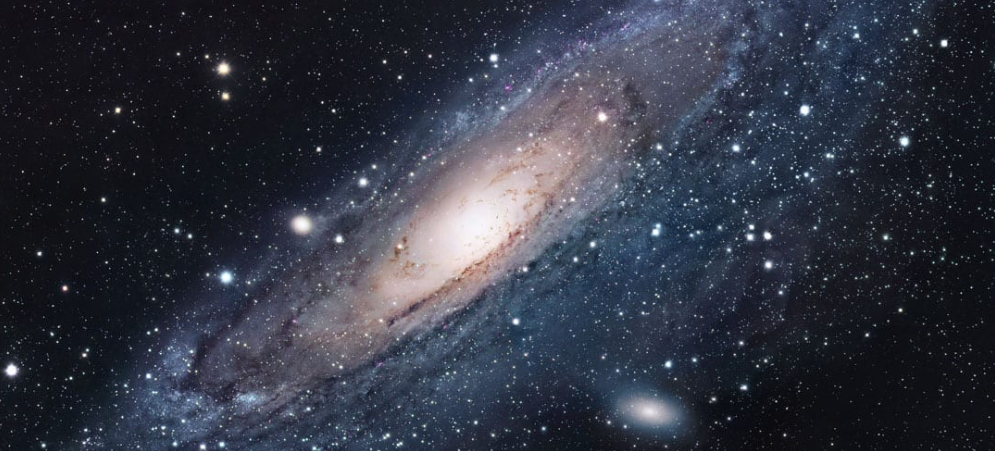
Epoch Four — Lights in the Heavens as Signals and Timekeepers

“And God said, Let there be lights in the expanse of the heavens to divide the day from the night; and let them be for signs, and for seasons, and for days, and years.”~Genesis 1:14

Genesis introduces stars not as objects of worship or spectacle, but as tools for orientation. Signs. Seasons. Calendars. Predictability.

This is crucial. The text is not concerned with astronomy as beauty, but as reliability. Cycles allow planning. Planning allows agriculture. Agriculture allows civilization. Civilization allows human flourishing…

Astronomer Johannes Kepler wrote, “The laws of nature are but the mathematical thoughts of God.”

Whether one accepts the theological framing or not, the insight stands. The universe runs on regularities. Genesis captures this by treating the heavens as clocks, not celestial deities.

Epoch Five — Life in the Waters and the Air

“Then God said, Let the waters teem with swarms of living creatures and let birds fly above the earth in the open expanse of the heavens.” ~Genesis 1:20

Life appears first where conditions are buffered—oceans and skies. This aligns with evolutionary biology. Liquid water stabilizes temperature. It allows chemical complexity. Air enables dispersal and migration.

Biologist Charles Darwin noted, “There is grandeur in this view of life, with its several powers, having been originally breathed into a few forms or into one.

Genesis does not describe mechanisms. It describes sequence. And the sequence is right.
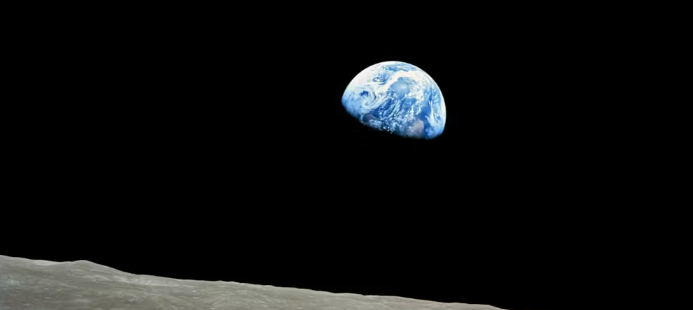
Epoch Six — Land Animals, Humans, and the Rise of Consciousness

“And God said, Let us make man in our image, in our likeness, and let them rule over the fish in the sea and the birds in the sky and over the cattle and over all of the earth and over every creeping thing that creeps the earth.” ~Genesis 1:26

This line has been abused for centuries. Read literally, it sounds like divine favoritism. Read structurally, it means something else entirely.

Humans are described as image-bearers because they share something fundamental with Logos. That’s the capacity to recognize, name, model, and steward reality. Humans classify animals. They understand plant patterns. They consciously anticipate consequences of husbanding both.

Neuroscientist Antonio Damasio writes, “The human brain and mind are not an accident of nature. They are instruments shaped by evolution to manage life.

Genesis places consciousness last because it’s the most fragile and the most dangerous form of complexity.

Epoch Seven — Rest, Completion, and Moral Responsibility

“And by the seventh day God completed his work which he had done and he rested.” ~Genesis 2:2

Rest here does not imply exhaustion. It implies temporary system completion. The universe is stable enough to operate without constant intervention.

Humans now live inside a reality governed by laws that do not bend to belief or intention. Ethics emerges not as command, but as consequence. Actions matter because the system remembers them.

Philosopher Aristotle understood this well, “Nature does nothing in vain.”

Genesis embeds that insight at the foundation with, “In the beginning, God created the heavens and the earth“.

Epoch Eight — Logos and the Future of Human Intelligence

Genesis ends before the story is finished, because the future is still ours to write.

We now understand Logos well enough to encode it into machines. Artificial intelligence accelerates pattern recognition, memory, and optimization. But Logos is not intelligence and creration alone. It’s continual alignment with reality.

Machines can calculate. Only humans can judge. If we abandon responsibility while amplifying intelligence, entropy will accelerate. Logos through Genesis warns us—quietly—that wisdom must scale alongside power.

Genesis is not about ancient cosmology. It is about how reality’s operating system was made. It understood that order precedes complexity, that structure precedes life, that intelligence emerges last, and that responsibility of consciousness inevitably follows.

That insight has aged astonishingly well. In an era drowning in ideology, misinformation, and synthetic certainty, Genesis reminds us of something unfashionable but essential.

Reality is not negotiable, but it is intelligible. That intelligibility is Logos and ignoring God has real consequences.
Dyingwords.net is powered by a Centaur Intelligence System and its EXPONENTIAL Thought Engine
centaursystems.ai

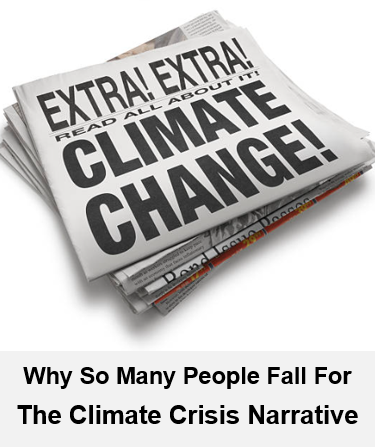
WHY SO MANY PEOPLE FALL FOR THE CLIMATE CRISIS NARRATIVE

You’ve seen them. Earnest young activists shouting at clouds, gluing themselves to museum walls, and blocking traffic with coroplast signs warning that the world will end in twelve years unless we obey their vision of salvation—complete with windmills, solar panels, and vegan diets. They’re the same people Xing and Instagramming about carbon footprints from their iPhones made in Chinese factories run on sulphur and lignite coal-fired electricity.

It’s easy to dismiss them as naive or misguided, but the uncomfortable truth is this: many of these people are neither stupid nor insane. They are simply caught in a powerful psychological, cultural, and financial machine that has turned “climate change” into a form of religious belief—a doctrine too sacred to question and too profitable to abandon.

Let’s set something straight. I’m not a climate change denier. Climate change is real. The Earth’s climate has always changed. And it always will—human-contributed through emitted greenhouse gas or not.

But the apocalyptic narrative that dominates headlines, policy, and corporate strategy today isn’t just about facts. It’s about framing—about controlling how people think, feel, and act in relation to a deeply complex system they barely understand. And that makes the climate crisis one of the most successful psychological operations in modern history.

In this post, we’ll take a hard look at why so many people have bought in—blindly and without skepticism—to the idea that we’re on the brink of planetary collapse, and that the only solution is top-down control, mass compliance, and the destruction of energy systems that built the modern world.

Some of what I’m going to say may be uncomfortable to some, and I know some will unsubscribe. But that doesn’t make it untrue, and this needs to be said.

The Climate Crisis as a Religion (aka The Church of Carbon)

First, let’s call it what it is.

For a growing number of people—especially in the West (Europe particularly included)—the climate crisis has become a belief system. It functions just like a fundamentalist religion, complete with original sin (industrialization), prophets (Greta, Gore, Gates), sacred texts (IPCC reports), rituals (recycling, carbon offsets), heretics (climate skeptics), and a promised apocalypse for those who fail to convert.

It’s not about science anymore. It’s about meaning.

People—especially young people raised in secular cultures—are starving for purpose. They want to feel morally righteous, socially important, and part of a grand, redemptive story. The climate narrative offers all of that in a tidy, emotionally satisfying package. It turns ordinary people into saviors. It makes them matter.

You can’t underestimate how powerful that is.

Fear is the Fuel

The second driver is fear.

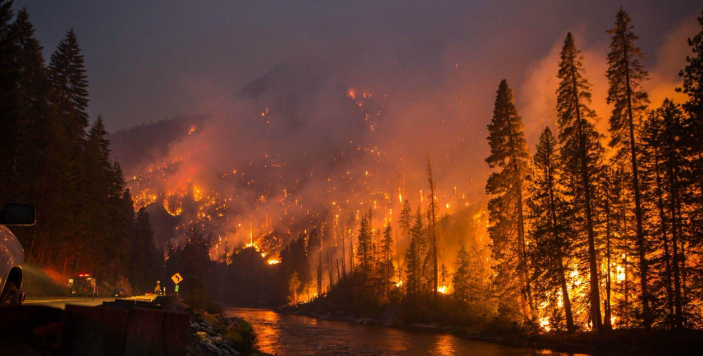
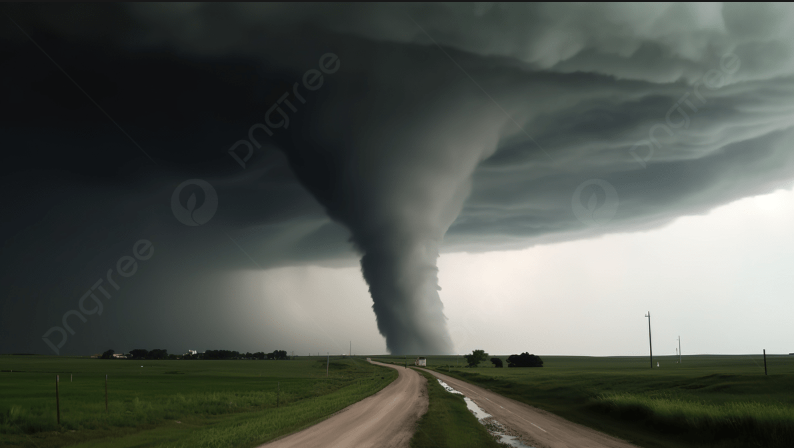
For decades, we’ve been bombarded with doom-laden, global-warming headlines: ice caps melting, oceans rising, hurricanes and tornados worsening, apocalyptical flooding, forests burning, deserts parching… The messaging is relentless—and expertly crafted to trigger our limbic systems. When people are afraid, they don’t reason. They react.

This isn’t new. Back in the 1970s, experts warned of an imminent ice age. Then came acid rain. Then ozone depletion. Each time, the world was supposed to end unless we handed over more power to government, more money to NGOs, and more control to unelected technocrats.

It’s always the same pattern:

  1. Declare a crisis.
  2. Blame human behavior.
  3. Offer a sweeping solution that just happens to consolidate control.

The only difference now is scale. The climate crisis is global, not regional. And the proposed solutions are systemic, not marginal.

 The Collapse of Critical Thinking

But fear alone doesn’t explain the blind belief.

There’s another piece of the puzzle: the steady erosion of critical thinking. Schools no longer teach logic, debate, or how to evaluate competing hypotheses. Instead, they promote conformity, activism, and groupthink. You don’t learn how to think. You learn what to think.

By the time students hit university, the programming is complete. Professors reinforce the dogma. Campus culture punishes dissent. Climate change isn’t a topic for exploration—it’s a moral litmus test. Students who question it risk grades, reputation, or worse. Being cancelled.

So, they comply. They absorb. They repeat.

And when they graduate into journalism, academia, NGOs, or politics, they carry that unexamined belief system with them—passing it on like gospel.

The Media Echo Chamber

The next layer is media.

Legacy outlets like CNN, BBC, CBC, and the New York Times frame climate change in religious terms: “Climate emergency,” “existential threat,” “code red for humanity.” Any nuance is treated as heresy. Any questioning is framed as denialism.

Science itself has been rebranded. Instead of a method of inquiry, it’s now a set of conclusions—conveniently aligned with elite interests. The phrase “The science is settled” is a dead giveaway. No real scientist would ever say that.

Meanwhile, dissenting voices—many with serious credentials—are marginalized, shadowbanned, or censored outright. Their data doesn’t fit the narrative. Their views make people uncomfortable. So, they are erased.

And most people? They never notice.They assume if something was true, they’d hear about it. But when every channel is playing the same tune, they don’t realize they’re listening to a carefully curated soundtrack.

Social Conformity and Virtue Signaling 

But here’s the deeper truth.

Most people don’t believe the climate crisis because they’ve studied the data. They believe it because everyone else does. That’s the power of social conformity. Nobody wants to be the outlier—the one who raises their hand and asks the uncomfortable question.

Especially in a culture obsessed with virtue.

Believing in the climate crisis is a modern form of moral signaling. You drive a Tesla. You compost. You use a keep-cup. You care. You’re not like those backward Boomer-deniers who love oil and hate penguins.

  • You’re evolved
  • You’re ethical
  • You’re better

That’s what this has become—not a conversation about climate, but a competition for social status.

And once belief becomes part of your identity, it becomes non-negotiable. Any challenge feels like a personal attack. Facts don’t matter. Feelings do.

Follow the Money

Now let’s talk about power.

The climate industry is worth trillions—yes, trillions of dollars. It’s the perfect grift: a never-ending crisis that justifies endless funding, regulation, and surveillance.

  • Governments rake in carbon taxes.
  • Universities secure research grants.
  • Corporations get ESG ratings and subsidies.
  • NGOs fundraise on fear.

It’s an entire ecosystem of incentives, none of which reward skepticism or moderation. And when that much money is on the table, the truth becomes secondary to the narrative.

Even energy companies play along. They don’t want to be regulated out of existence, so they slap green labels on their products and talk about “net zero” while quietly hedging their bets. It’s theater. Everyone’s pretending.

But the costs are real.

China’s Role in the Global Equation

While the West ties itself in knots trying to decarbonize, one country is playing a different game entirely: China

Beijing talks green, but burns black. Coal remains its dominant energy source, powering steel, manufacturing, and military growth at a staggering scale. As of 2024, China alone consumes over half the world’s coal supply—and shows no sign of slowing down.

They’re not stupid. While we argue over wind farms and carbon credits, they build aircraft carriers, drones, and power grids. While we teach kids to fear climate collapse, they teach theirs to master engineering and geopolitics.

They make the solar panels we install. They mine the rare earths we need. They profit from the very policies we impose on ourselves.

And we call that progress.

Weaponized Guilt

So why don’t people wake up?

Because they’ve been trained to feel guilty. Every gas-guzzling SUV trip, every propane-grilled burger, every jet-fueled flight—is framed as a moral failing. You’re killing the planet. You’re harming future generations. You’re part of the problem.

It’s exhausting, and it’s effective.

People internalize this guilt. They try to cleanse themselves through ritualistic consumption: reusable straws, oat milk, biodegradable trash bags, canvas totes at the farmer’s market. None of it makes an infatismal sub-fraction of a surface dent in global emissions—but it feels redemptive.

That’s the point. It’s not about fixing the planet. It’s about managing the soul.

The Useful Idiots

Now we come to the crux.

The term “useful idiot” originated in Soviet times. It referred to Western sympathizers who unknowingly supported the goals of a regime they didn’t understand. They weren’t evil—just naive, manipulated, and eager to be on the “right side of history.”

That’s where we are today. Millions of well-meaning people have been seduced by a narrative that exploits their fears, flatters their vanity, and blinds them to the larger game at play. They march, post, and protest—believing they’re saving the world, while unwittingly aiding those who want to dominate it.

They’re not villains. They’re pawns. And when you try to wake-the-wokes, they look at you like you’re the crazy one. Then they viscerally turn on you.

What’s At Stake

Here’s what’s really at stake.

If we continue down this path, we don’t just risk economic collapse or energy poverty. We risk civilizational suicide. We are dismantling the very systems—energy, industry, sovereignty—that made the modern world possible.

And we’re doing it not for the planet, but for appearances.

Meanwhile, the nations that reject this ideology are gaining power, leverage, and independence. They’re not afraid to use fossil fuels while experimenting with futuristics. They’re not ashamed of their ambitions. And they’re not held hostage by narratives designed to make them feel guilty for existing.

They’re playing to win. We’re playing to look virtuous. That’s a losing hand.

So, what do we do?

First, stop apologizing. There is no shame in using energy. Civilization runs on it. Human flourishing depends on energy, regardless of how it’s generated. Without it, we return to darkness—literally and figuratively.

Second, think for yourself. Ask questions. Follow incentives. Trace the money.
Be skeptical of anything presented as a one-sided moral truth.

Third, reclaim courage. Don’t be afraid to speak the truth, even when it’s unpopular. Especially when it’s unpopular. History doesn’t remember those who went along to get along. It remembers those who stood up, pointed at the naked emperor, and said, “This is madness.”

And finally, understand this: We are not in a climate crisis. We are in a clarity crisis. Clarity—real, hard-won, human clarity—is the first step back to sanity.

The next time someone tells you the world is ending, ask who’s funding the message—and what they’re selling with it.

Because if you look closely, you’ll find it’s not about saving the planet. It’s about controlling the people on the planet by getting them to fall for the climate crisis narrative.

Powered by a Centaur Intelligence System

COMMUNICATING — 6 UNCONVENTIONAL NEW RULES FOR 2024

This piece is reproduced from Ted Gioia’s Honest Broker. The Dyingwords site gives full attribution to Ted Gioa and does not benefit in any way by sharing it.

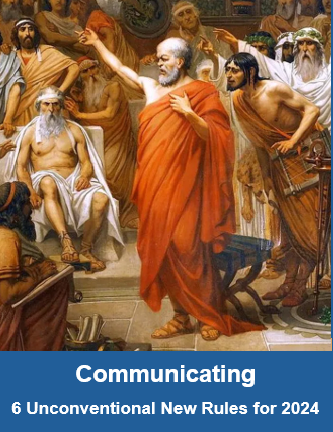
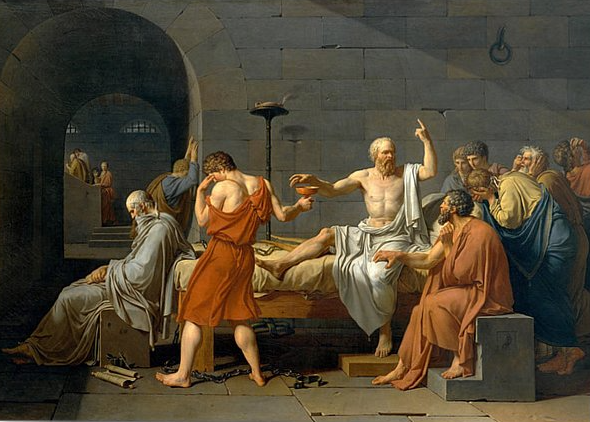
Before they executed Socrates in the year 399 BC—on charges of impiety and corrupting youth—the philosopher was given a chance to defend himself before a jury. Socrates started his defense with an unusual plea. He told his listeners that he had no skill at making speeches. He just knew the everyday language of the common people.

Socrates explained that he had never studied rhetoric or oratory. He feared that he would embarrass himself by speaking so plainly in his trial defense. “I show myself to be not in the least a clever speaker,” Socrates told the jurors, “Unless indeed they call him a clever speaker who speaks the truth.”

He knew that others in his situation would give “speeches finely tricked out with words and phrases.” But Socrates only knew how to use “the same words with which I have been accustomed to speak” in the marketplace of Athens.

Socrates wasn’t exaggerating. His entire reputation was built on conversation. He never wrote a book—or anything else, as far as we can tell.

Spontaneous talking was the basis of his famous “Socratic method”—a simple back-and-forth dialogue. You might say it was the podcasting of its day. He aimed to speak plainly—seeking the truth through open and unfiltered conversation.

That might get you elected President in the year 2024. But it didn’t work very well in Athens, circa 400 BC. Socrates received the death penalty—and was executed by poisoning.

Is that shocking? Not really. Western culture was built on one-way communication. Leaders and experts speak—and the rest of us listen.

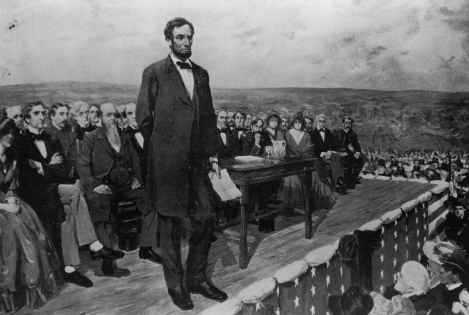
Socrates was the last major thinker to rely solely on conversation. After his death, his successors wrote books and gave lectures. That’s what powerful people do. They make decisions. They give orders. They deliver speeches.

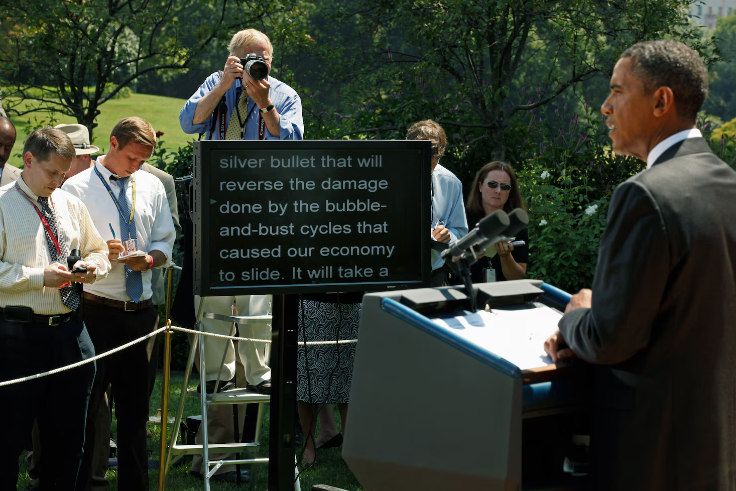
But not anymore. In the aftermath of the election, the new wisdom is that giving speeches from a teleprompter doesn’t work in today’s culture. Citizens want their leaders to sit down and talk.

And not just in politics. You may have seen the same thing in your workplace—or in classrooms and other group settings. People now resist one-way orders from the top.

The word “scripted” is now an insult. Plainspoken dialogue is considered more trustworthy. This is part of the up-versus-down revolution I’ve written about elsewhere—a conflict that, I believe, may have even more impact on society than Left-versus-Right.

For better or worse, the hierarchies we’ve inherited from the past are toppling. To some extent, they are even reversing. The era of teleprompters and talking points has come to an end.

This is now impacting how leaders are expected to speak. Events of the last few days have raised awareness of this to a new level—but the ‘experts’ should have expected it. That’s especially true because the experts will be those most impacted by this shift.

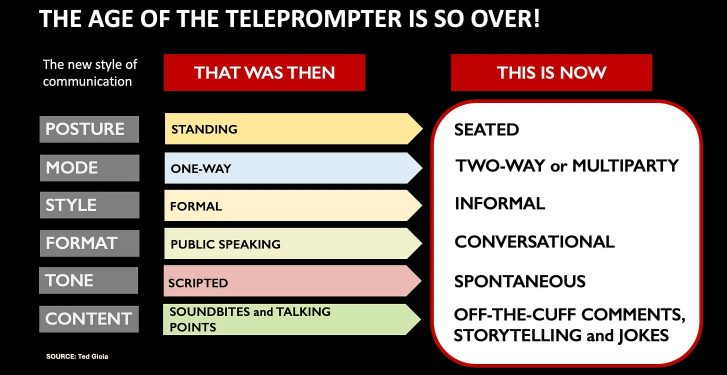
Here are the six new rules of engagement—for politicians, broadcasters, and all aspiring experts, decision-makers, and leaders.

  1. You gain more trust when seated, not standing.
  2. Don’t speak at people—speak with them.
  3. An informal tone is more persuasive now. Even leaders must adjust to this.
  4. Conversations have more influence than speeches.
  5. Spontaneous communications delivered from a personal standpoint are considered more ‘real’ than a script created by a team or speechwriter.
  6. Soundbites and talking points are less impactful than storytelling, humor, and off-the-cuff comments.

We could debate endlessly whether this is good for society. For my part, I expect both costs and benefits from this new style of communication. But the more significant fact is that this is now inevitable.

The results may be clumsy and painful to watch. Institutional media will now try to prove that it can be edgy and alternative and freewheeling. This will often look like a dinosaur pretending that it’s a ballerina.

But they have no alternative. You might as well try to rebuild the Tower of Babel from a Lego set. The old hierarchies aren’t coming back anytime soon.

Back in March, I reflected on how my writing style has become more conversational during the last three years. I tried to explain why—but it just boiled down to that fact that it felt right to adopt this conversational tone.

What I wrote back then now seems a bit prophetic of this new style of public discourse. A few months after I launched on Substack, I noticed that my sentences and paragraphs were changing. And not in a small way.

This surprised me. I had been publishing in commercial media since I was a teen, and felt I really found my stride around the time I reached my forties. Ten books written since then validated this complacent confidence by attracting enthusiastic readers.

Why would I change now? What made it more unsettling was that I didn’t understand why I was writing differently….

I only gradually figured out that I was now writing the same way I spoke in private conversation. It was almost as if I’d let my guard down, and was talking off the record, or with a close friend. I didn’t know that could be a writing style. But it felt right, so I kept doing it.

I believe that a lot of people are coming to the same realization. The world has changed, and communication styles must adapt to the new reality.

Why is this happening now?

Here’s the reality—rhetorical skills and speechmaking got degraded during the last decade. This top-down approach works best when it is rigorous, logical, and organized. But in an age of insults, taunts, and denunciations, speechifying starts to feels like browbeating—a never-ending harangue.

Too much of public discourse, in recent years, has boiled down to powerful people (sometimes of limited intellect) screaming into a microphone from a bully pulpit. That’s not what oratory should be, but it’s what it has become.

These things feed on themselves. If you grasp the dominant Girardian mimicry in society today, you shouldn’t be surprised to see that screaming from one elite eventually causes others to scream back. And the conflicts thus escalate—getting angrier and more shrill with each passing year.

Don’t tell me that you haven’t noticed. Most of us are now burned out on this kind of hot oratory—whether from friends or enemies. A conversational style feels refreshing by comparison.

Rhetoric and speechifying won’t regain their influence until they get cleaned up. We need different leaders from the current crop before that will happen. Oratory won’t come back until genuine orators emerge as leaders.

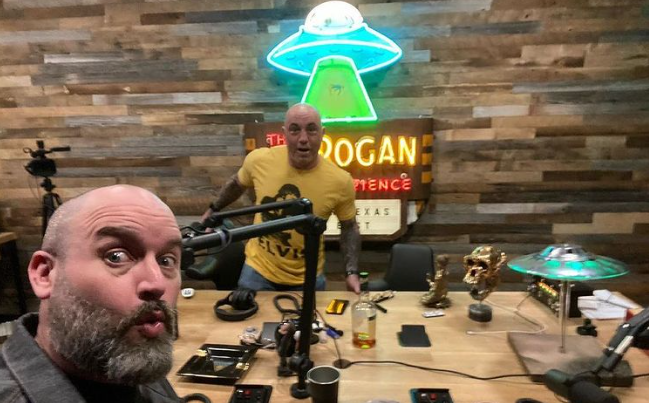
Until then, get ready for the new era of rambling conversations. Not long ago, those endless three-hour Joe Rogan podcasts seemed bizarre. Even more to the point, they ran against the conventional wisdom. The audience wanted short soundbites—the ‘experts’ all agreed on this. Nobody had time to listen to a three-hour podcast.

But now every media outlet is shifting to conversational formats. Podcasting is thriving because of this approach. Many successful YouTubers are doing the exact same thing. Writers (on Substack and elsewhere) are also embracing a more conversational tone. Leaders will now have more authority when they speak while sitting—not standing.

TV news channels have grasped this new reality. Until quite recently, broadcast journalism was built on talking heads who could read a script with confidence. Those days are over—instead of the declamatory news anchor, expect to see more spontaneous interactive formats like The View or The Five.

Don’t say I didn’t warn you.

In 1921, President Warren Harding hired the first full-time presidential speechwriter. His predecessor, Woodrow Wilson was the last president who wrote his own speeches. In the aftermath, no serious candidate could afford to rely on spontaneous communicating in everyday words. A leader needed to be a powerful orator, and every word needed to be perfect.

Around that same time, the broadcasting industry was born with the rise of radio—and it followed the same rules. News reels and (later TV journalism) also adopted a polished rhetorical style.

Consider Walter Winchell—the most famous broadcaster in the United States during the 1940s. Does anybody speak in this declamatory way nowadays? It sounds grating to our ears today. It feels fake. But every broadcaster talked like this until the second half of the twentieth century.

TV softened this style—but only a tiny bit. Unscripted conversational styles got adopted in talk shows and game shows. But TV news journalists still sounded like orators delivering a carefully written speech.

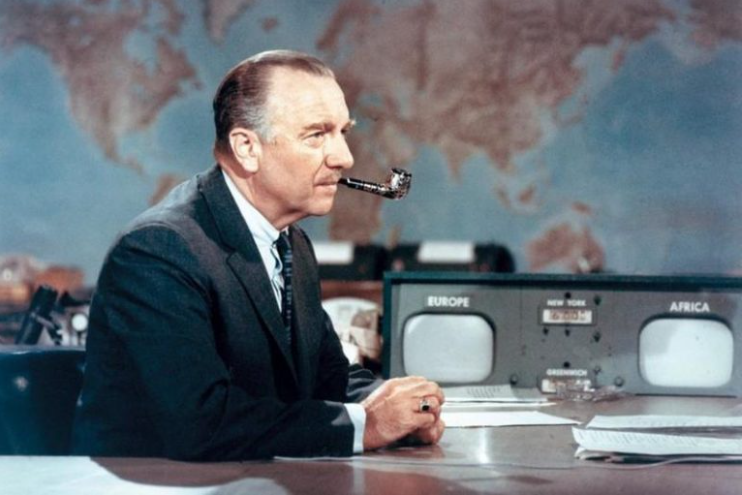
Even the best of them—for example, Walter Cronkite, the most popular TV journalist of the 1960s—still sounded very staged and scripted and extremely unlike anybody having a conversation. Could you imagine Joe Rogan—or even Anderson Cooper or Oprah Winfrey—talking like this?

You can’t really do broadcasting like this anymore. Some people try—for example, NPR hosts still hold on to a variant of this scolding tone (even when conducting interviews!). But how’s that been working lately?

Yet, even back in the 1960s, if you stayed up late and watched The Tonight Show, you got introduced to an entirely different way of talking to an audience. This is the true forerunner of today’s new conversational tone.

The Walter Cronkite and Johnny Carson film clips come from the same year—and show the huge gap between professional discourse of politicians and journalists as compared with the more informal, unscripted approach of entertainers.

This gap is now disappearing in every communication forum. Social media is the most obvious place, but spontaneity is now the rule almost everywhere. The Age of the Talking Head is over.

Broadcasters will feel the pinch. But so will almost everybody else—politicians, educators, doctors, ministers, coaches, managers, and any other individual who needs to exercise leadership in any group setting whatsoever.

Many are not ready for this. Some will believe that they are immune to change and will keep bullying from the bully pulpit. Don’t be one of them—because their power and influence will erode very quickly.