Tag Archives: God

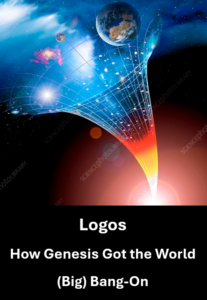
LOGOS — HOW GENESIS GOT THE WORLD (BIG) BANG-ON

Before the beginning, according to Genesis, there was not a thing, not a place, not even light. There was formlessness. An undifferentiated nothingness or what modern physics might call a pre-state, a condition without structure, without time, without order, but with a pre-existing purpose encapsulated in pure thought.

Genesis doesn’t open with an entity hammering rocks into planets or sketching animals in the dust. It starts with darkness, with deep possibility, and with a universe not yet constrained by rules. That alone should make any modern reader pause and take time to deeply reflect on the world as it really is.

Then something remarkable happens. Not violence as in a literal, mega-explosive big bang. Not randomness. Not magic. Order arrives through differentiation. Light separates from darkness. Time appears with evening and morning. Space takes shape as waters and land are divided. Structure emerges step by step, layer by layer, boundary by boundary.

This isn’t ancient superstition. It’s a surprisingly—actually astonishing—faithful narrative paralleling what physics, astronomy, and cosmology now understand about the origin story. The universe unfolded through progressive constraint, governed by laws, symmetry breaks, and irreversible sequencing. Genesis doesn’t read like science because it isn’t science. But it follows the precise logic of emergence.

Call it God-driven or Logos-ordered, the Book of Genesis in the Old Testament appears to have got the world (big) bang-on.
What Genesis infers “God speaking” is not best understood as sound waves vibrating in empty space. Speech here is metaphor. The Hebrew word dabar means word, action, and ordering principle all at once. What comes into being is not merely created. It’s named, classified, and set within limits. Much of which we’re yet to fully comprehend.

This isn’t a personal deity tinkering with matter like a potter at a wheel. This is Logos in motion. Intelligibility, structure, rule-governed reality coming online. Physics would later discover equations. Philosophy would later generalize reason. Theology would later debate personality. Genesis simply says, “There will be order starting from day one.”

By the time life appears—first plants, then animals, then humans—the pattern is already established. The universe is not chaotic. It’s habitable. It runs on rules and regularities. Seasons repeat. Cause precedes effect.

And humans are placed not as rulers by whim, but as image-bearers—pattern recognizers capable of classifying, tending, and understanding the reality they inhabit. In modern terms, we’re organisms evolved to model existence well enough to survive inside it. Genesis gets that right, too.

And here’s the uncomfortable thought. If Genesis correctly grasped the shape of reality’s beginning—order emerging out of a vacuum through Logos—then it may also be pointing forward. Not to apocalypse or utopia, but to universal responsibility of mature human beings.

A universe that runs on law doesn’t forgive ignorance. A reality governed by Logos rewards clarity and punishes self-deception. And a species capable of understanding that order is now facing the consequences of how well—or how poorly—it’s lived within it or is willing to peacefully co-exist with something far, far greater than themselves.

If an ancient text understood the deep structure of reality better than many modern ideologies do today, what else might we have misunderstood—or forgotten?
Genesis is Logos — Logos is Genesis

Some people approach Genesis already decided. Believers insist it’s literal. Skeptics insist it’s a primitive myth. Both approaches miss something far more interesting.

Genesis isn’t a science textbook. It’s not a children’s story. And it isn’t a theological trapdoor that requires suspending reason. Genesis is something far rarer and more durable. It’s a compressed, pre-scientific model of reality itself, expressed through metaphor, sequence, and constraint written in the vernacular of its time. A masculine voice, for sure, but look beyond.

Long before physics, cosmology, biology, or information theory existed as disciplines, Genesis attempted to answer foundational questions that every civilization must confront. What kind of universe do we live in, and what does that imply about us? And where did it come from and how did it unfold?

When read carefully, Genesis doesn’t contradict modern science. It calculates universal structure. What it describes is not “God doing magic”, but order emerging from nothingness through Logos—through intelligibility, differentiation, and law-like regularity.

Let’s walk through Genesis chronologically, epoch by epoch or time-phase by time-phase, comparing what the scripture says with what modern disciplines now understand to be true about the origin and progression of the universe. Not to collapse religion into science, and not to smuggle science into theology, but to show that both are pointing at exactly the same underlying reality.
Prologue — Before All Things

Prior to the beginning, God or Logos just was. (Be still, and know that I am.)

Not a person in the sky, not a voice in a language, but the timeless order of reality itself—the deep structure of what can exist, how it can change, and what must remain consistent.

Within Logos lie the possibilities of time, energy, matter, information, and consciousness. Nothing is yet emerging, but everything that can ever unfold is already permitted in principle.

No light. No dark. No here or there. Only the lawful probabilities of them being allowed.

Epoch One — Ignition, Light, and the Birth of Order

“In the beginning God created the heavens and the earth. And the earth was formless and void, and darkness was over the surface of the deep.” ~Genesis 1:1–2

Genesis opens with a startling revelation. Nothing yet exists.

There’s no planet. No sky. No stars. No living things. The text describes a condition of tohu wa-bohu—formless and void. Undifferentiated. Chaotic, as in not ordered. Unusable. This is not naïve storytelling. It’s an accurate intuition. Without structure, nothing meaningful can exist.

Then comes the pivotal line: “Then God said, Let there be light: and there was light.” ~Genesis 1:3

This isn’t about illumination. Genesis places light before the sun, moon, or stars, which tells us immediately that “light” is symbolic of something more fundamental. In modern physics, light, or electromagnetic energy, isn’t just brightness. It’s information, causality, and measurability. Light defines what can interact, what can be known, and what can change.

As physicist Albert Einstein famously showed, light is not merely something in the universe. It governs the universe’s structure. The speed of light constrains time, space, and causation itself.

Einstein put it this way. “The distinction between the past, present, and future is only a stubbornly persistent illusion.”

Genesis begins by dissolving that illusion. Time does not meaningfully exist until order begins. “Evening and morning” appear only after light introduces distinction. This aligns perfectly with modern cosmology. Time, as we understand it, emerges only once the universe becomes structured enough for sequences to occur.

Genesis doesn’t say “matter appeared.” It says order appeared. That is Logos at ignition.
Epoch Two — Separation of Realms and the Architecture of Reality

“And God said, Let there be an expanse in the midst of the waters, and let it separate the waters from the waters.” ~Genesis 1:6

The second epoch is entirely about separation. The text repeatedly emphasizes division of states. Solid, liquid, gas, and plasma. This isn’t ancient meteorology. It is an attempt to describe domain formation—the partitioning of reality into regions governed by different rules.

In modern terms, the early universe underwent symmetry breaking. Fundamental Newtonian forces emerged. Gravity. Electromagnitism. The strong nuclear force and the weak nuclear force. Space-time expanded. Matter, created by energy transformation, cooled. Constraints developed. Without separation, nothing complex can persist.

Physicist Stephen Hawking described it this way. “The universe doesn’t allow perfection. Because of symmetry breaking, you get the beautiful structures that exist.”

Genesis intuits the same principle. Order does not arise through sameness. It arises through difference, boundary, and limitation. This is Logos expressed as universal architecture.

Epoch Three — Land, Seas, and the Precondition for Life

“Then God said, Let the waters below the heavens be gathered together into one place, and let the dry land appear.” ~Genesis 1:9

Only after separation do physical environments stabilize. Land emerges. Seas are gathered. Until then vegetation cannot appear.

This sequence mirrors everything modern earth science understands. Habitability precedes biological evolution. Life doesn’t force itself into existence. It arises when conditions allow.

Astrobiologist Carl Sagan observed, “We are made of star-stuff. We are a way for the universe to know itself.”

Genesis doesn’t speak of atoms or chemistry, but it grasps the process. Environment first, complexity second. Logos sets the stage before anything can act upon it.
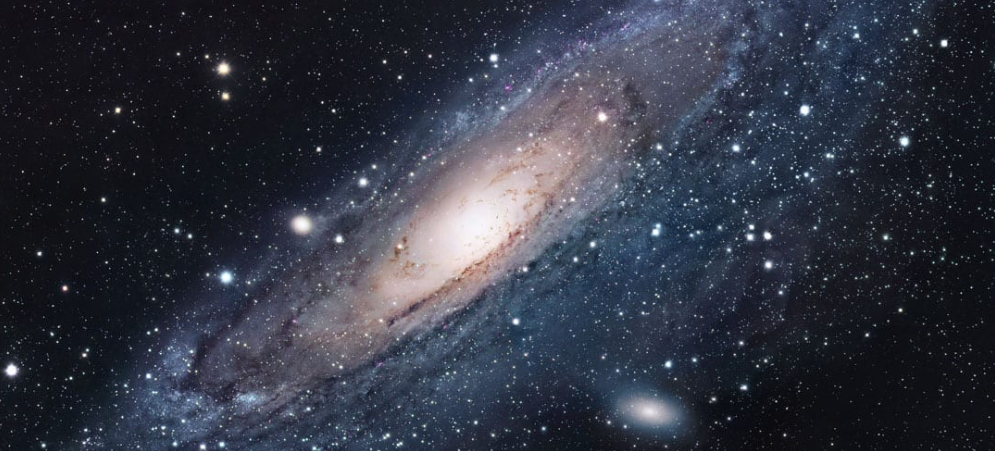
Epoch Four — Lights in the Heavens as Signals and Timekeepers

“And God said, Let there be lights in the expanse of the heavens to divide the day from the night; and let them be for signs, and for seasons, and for days, and years.”~Genesis 1:14

Genesis introduces stars not as objects of worship or spectacle, but as tools for orientation. Signs. Seasons. Calendars. Predictability.

This is crucial. The text is not concerned with astronomy as beauty, but as reliability. Cycles allow planning. Planning allows agriculture. Agriculture allows civilization. Civilization allows human flourishing…

Astronomer Johannes Kepler wrote, “The laws of nature are but the mathematical thoughts of God.”

Whether one accepts the theological framing or not, the insight stands. The universe runs on regularities. Genesis captures this by treating the heavens as clocks, not celestial deities.

Epoch Five — Life in the Waters and the Air

“Then God said, Let the waters teem with swarms of living creatures and let birds fly above the earth in the open expanse of the heavens.” ~Genesis 1:20

Life appears first where conditions are buffered—oceans and skies. This aligns with evolutionary biology. Liquid water stabilizes temperature. It allows chemical complexity. Air enables dispersal and migration.

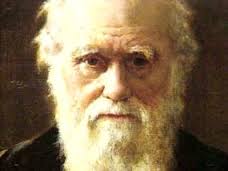
Biologist Charles Darwin noted, “There is grandeur in this view of life, with its several powers, having been originally breathed into a few forms or into one.

Genesis does not describe mechanisms. It describes sequence. And the sequence is right.
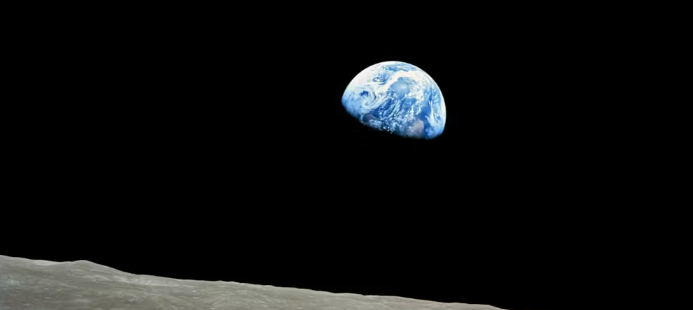
Epoch Six — Land Animals, Humans, and the Rise of Consciousness

“And God said, Let us make man in our image, in our likeness, and let them rule over the fish in the sea and the birds in the sky and over the cattle and over all of the earth and over every creeping thing that creeps the earth.” ~Genesis 1:26

This line has been abused for centuries. Read literally, it sounds like divine favoritism. Read structurally, it means something else entirely.

Humans are described as image-bearers because they share something fundamental with Logos. That’s the capacity to recognize, name, model, and steward reality. Humans classify animals. They understand plant patterns. They consciously anticipate consequences of husbanding both.

Neuroscientist Antonio Damasio writes, “The human brain and mind are not an accident of nature. They are instruments shaped by evolution to manage life.

Genesis places consciousness last because it’s the most fragile and the most dangerous form of complexity.

Epoch Seven — Rest, Completion, and Moral Responsibility

“And by the seventh day God completed his work which he had done and he rested.” ~Genesis 2:2

Rest here does not imply exhaustion. It implies temporary system completion. The universe is stable enough to operate without constant intervention.

Humans now live inside a reality governed by laws that do not bend to belief or intention. Ethics emerges not as command, but as consequence. Actions matter because the system remembers them.

Philosopher Aristotle understood this well, “Nature does nothing in vain.”

Genesis embeds that insight at the foundation with, “In the beginning, God created the heavens and the earth“.
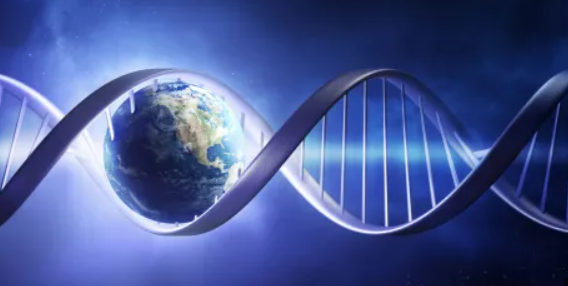
Epoch Eight — Logos and the Future of Human Intelligence

Genesis ends before the story is finished, because the future is still ours to write.

We now understand Logos well enough to encode it into machines. Artificial intelligence accelerates pattern recognition, memory, and optimization. But Logos is not intelligence and creration alone. It’s continual alignment with reality.

Machines can calculate. Only humans can judge. If we abandon responsibility while amplifying intelligence, entropy will accelerate. Logos through Genesis warns us—quietly—that wisdom must scale alongside power.

Genesis is not about ancient cosmology. It is about how reality’s operating system was made. It understood that order precedes complexity, that structure precedes life, that intelligence emerges last, and that responsibility of consciousness inevitably follows.

That insight has aged astonishingly well. In an era drowning in ideology, misinformation, and synthetic certainty, Genesis reminds us of something unfashionable but essential.

Reality is not negotiable, but it is intelligible. That intelligibility is Logos and ignoring God has real consequences.

Dyingwords.net is powered by a Centaur Intelligence System and its EXPONENTIAL Thought Engine
centaursystems.ai

12 TRUTHS LEARNED FROM LIFE AND WRITING – WITH ANNE LAMOTT

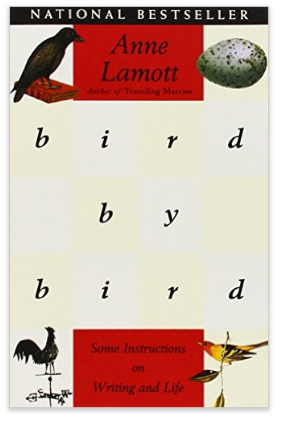
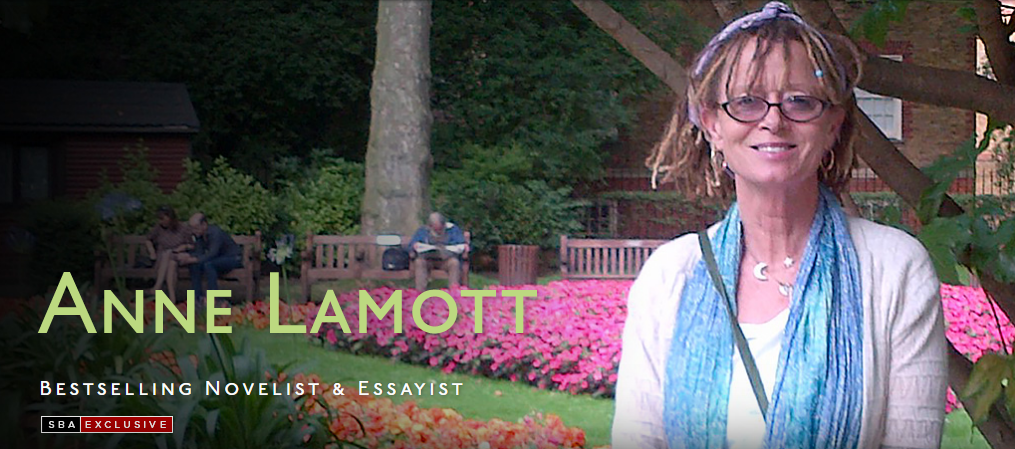
If you’ve been around writing—and lifefor a while, you’ll know of Anne Lamott. Anne’s the “Shitty First Draft” gal and “Bird by Bird” guru who says more in a phrase than most writers spew in a book. Anne Lamott addresses life’s capital-letter subjects. Alcoholism. Motherhood. Cancer. Community. Alternate Lifestyles. Listening. Faith. Depression. Sobriety. Desperation. Storytelling. Work. Politics. Jesus, Christianity and God. Anne’s also laugh-out-loud funny, and she’s brutally truthful.

Anne Lamott is a Guggenheim Fellow, a U of C prof, a highly-sought lecturer, a Hall of Fame Californian and the multi-time bestseller of fiction and non-fiction alike. To quote Anne, “I write books I’d love to come upon. Ones that are honest, concerned with real lives, spiritual transformation, families, secrets, craziness – and make me laugh.”

And, there’s the progressive social activist side to Anne Lamott. She’s a polished public speaker with a viral TED Talk. With kind permission, here’s Anne’s TED video and transcript.

“My seven-year-old grandson sleeps just down the hall from me, and he wakes up a lot of mornings and he says, “You know, this could be the best day ever.” And other times, in the middle of the night, he calls out in a tremulous voice, “Nana, will you ever get sick and die?”

I think this pretty much says it for me and for most of the people I know, that we’re a mixed grill of happy anticipation and dread. So I sat down a few days before my 61st birthday, and I decided to compile a list of everything I know for sure. There’s so little truth in the popular culture, and it’s good to be sure of a few things.

For instance, I am no longer 47, although this is the age I feel, and the age I like to think of myself as being. My friend Paul used to say in his late 70s that he felt like a young man with something really wrong with him.

Our true person is outside of time and space, but looking at the paperwork, I can, in fact, see that I was born in 1954. My inside self is outside of time and space. It doesn’t have an age. I’m every age I’ve ever been, and so are you, although I can’t help mentioning as an aside that it might have been helpful if I hadn’t followed the skin care rules of the ’60s, which involved getting as much sun as possible while slathered in baby oil and basking in the glow of a tinfoil reflector shield.

It was so liberating, though, to face the truth that I was no longer in the last throes of middle age, that I decided to write down every single true thing I know. People feel really doomed and overwhelmed these days, and they keep asking me what’s true. So I hope that my list of things I’m almost positive about might offer some basic operating instructions to anyone who is feeling really overwhelmed or beleaguered.

Number one: The first and truest thing is that all truth is a paradox. Life is both a precious, unfathomably beautiful gift, and it’s impossible here, on the incarnational side of things. It’s been a very bad match for those of us who were born extremely sensitive. It’s so hard and weird that we sometimes wonder if we’re being punked. It’s filled simultaneously with heartbreaking sweetness and beauty, desperate poverty, floods and babies and acne and Mozart, all swirled together. I don’t think it’s an ideal system.

Number two: Almost everything will work again if you unplug it for a few minutes — including you.

Three: There is almost nothing outside of you that will help in any kind of lasting way, unless you’re waiting for an organ. You can’t buy, achieve or date serenity and peace of mind. This is the most horrible truth, and I so resent it. But it’s an inside job, and we can’t arrange peace or lasting improvement for the people we love most in the world. They have to find their own ways, their own answers. You can’t run alongside your grown children with sunscreen and ChapStick on their hero’s journey. You have to release them. It’s disrespectful not to. And if it’s someone else’s problem, you probably don’t have the answer, anyway.

Our help is usually not very helpful. Our help is often toxic. And help is the sunny side of control. Stop helping so much. Don’t get your help and goodness all over everybody.

This brings us to number four: Everyone is screwed up, broken, clingy and scared, even the people who seem to have it most together. They are much more like you than you would believe, so try not to compare your insides to other people’s outsides. It will only make you worse than you already are.

Also, you can’t save, fix or rescue any of them or get anyone sober. What helped me get clean and sober 30 years ago was the catastrophe of my behavior and thinking. So I asked some sober friends for help, and I turned to a higher power. One acronym for God is the “gift of desperation,” G-O-D, or as a sober friend put it, by the end I was deteriorating faster than I could lower my standards.

So God might mean, in this case, “me running out of any more good ideas.”

While fixing and saving and trying to rescue is futile, radical self-care is quantum, and it radiates out from you into the atmosphere like a little fresh air. It’s a huge gift to the world. When people respond by saying, “Well, isn’t she full of herself,” just smile obliquely like Mona Lisa and make both of you a nice cup of tea. Being full of affection for one’s goofy, self-centered, cranky, annoying self is home. It’s where world peace begins.

Number five: Chocolate with 75 percent cacao is not actually a food. Its best use is as a bait in snake traps or to balance the legs of wobbly chairs. It was never meant to be considered an edible.

Number six: Writing. Every writer you know writes really terrible first drafts, but they keep their butt in the chair. That’s the secret of life. That’s probably the main difference between you and them. They just do it. They do it by prearrangement with themselves. They do it as a debt of honor. They tell stories that come through them one day at a time, little by little.

When my older brother was in fourth grade, he had a term paper on birds due the next day, and he hadn’t started. So my dad sat down with him with an Audubon book, paper, pencils and brads — for those of you who have gotten a little less young and remember brads — and he said to my brother, “Just take it bird by bird, buddy. Just read about pelicans and then write about pelicans in your own voice. And then find out about chickadees, and tell us about them in your own voice. And then geese.”

So the two most important things about writing are: bird by bird and really god-awful first drafts. If you don’t know where to start, remember that every single thing that happened to you is yours, and you get to tell it. If people wanted you to write more warmly about them, they should’ve behaved better.

You’re going to feel like hell if you wake up someday and you never wrote the stuff that is tugging on the sleeves of your heart: your stories, memories, visions and songs — your truth, your version of things — in your own voice. That’s really all you have to offer us, and that’s also why you were born.

Seven: Publication and temporary creative successes are something you have to recover from. They kill as many people as not. They will hurt, damage and change you in ways you cannot imagine. The most degraded and evil people I’ve ever known are male writers who’ve had huge best sellers. And yet, returning to number one, that all truth is paradox, it’s also a miracle to get your work published, to get your stories read and heard. Just try to bust yourself gently of the fantasy that publication will heal you, that it will fill the Swiss-cheesy holes inside of you. It can’t. It won’t. But writing can. So can singing in a choir or a bluegrass band. So can painting community murals or birding or fostering old dogs that no one else will.

Number eight: Families. Families are hard, hard, hard, no matter how cherished and astonishing they may also be. Again, see number one.

At family gatherings where you suddenly feel homicidal or suicidal –remember that in all cases, it’s a miracle that any of us, specifically, were conceived and born. Earth is forgiveness school. It begins with forgiving yourself, and then you might as well start at the dinner table. That way, you can do this work in comfortable pants.

When William Blake said that we are here to learn to endure the beams of love, he knew that your family would be an intimate part of this, even as you want to run screaming for your cute little life. But I promise you are up to it. You can do it, Cinderella, you can do it, and you will be amazed.

Nine: Food. Try to do a little better. I think you know what I mean.

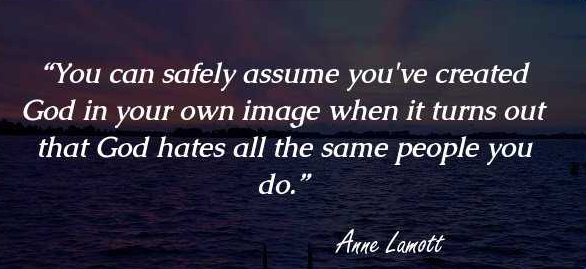
Number ten: Grace. Grace is spiritual WD-40, or water wings. The mystery of grace is that God loves Henry Kissinger and Vladimir Putin and me exactly as much as He or She loves your new grandchild. Go figure.

The movement of grace is what changes us, heals us and heals our world. To summon grace, say, “Help,” and then buckle up. Grace finds you exactly where you are, but it doesn’t leave you where it found you. And grace won’t look like Casper the Friendly Ghost, regrettably. But the phone will ring or the mail will come and then against all odds, you’ll get your sense of humor about yourself back. Laughter really is carbonated holiness. It helps us breathe again and again and gives us back to ourselves, and this gives us faith in life and each other. And remember — grace always bats last.

Eleven: God just means goodness. It’s really not all that scary. It means the divine or a loving, animating intelligence, or, as we learned from the great “Deteriorata,” “the cosmic muffin.” A good name for God is: “Not me.” Emerson said that the happiest person on Earth is the one who learns from nature the lessons of worship. So go outside a lot and look up. My pastor said you can trap bees on the bottom of mason jars without lids because they don’t look up, so they just walk around bitterly bumping into the glass walls. Go outside. Look up. Secret of life.

And finally: death. Number twelve. Wow and yikes. It’s so hard to bear when the few people you cannot live without die. You’ll never get over these losses, and no matter what the culture says, you’re not supposed to. We Christians like to think of death as a major change of address, but in any case, the person will live again fully in your heart if you don’t seal it off. Like Leonard Cohen said, “There are cracks in everything, and that’s how the light gets in.” And that’s how we feel our people again fully alive.

Also, the people will make you laugh out loud at the most inconvenient times, and that’s the great good news. But their absence will also be a lifelong nightmare of homesickness for you. Grief and friends, time and tears will heal you to some extent. Tears will bathe and baptize and hydrate and moisturize you and the ground on which you walk.

Do you know the first thing that God says to Moses? He says, “Take off your shoes.” Because this is holy ground, all evidence to the contrary. It’s hard to believe, but it’s the truest thing I know. When you’re a little bit older, like my tiny personal self, you realize that death is as sacred as birth. And don’t worry — get on with your life. Almost every single death is easy and gentle with the very best people surrounding you for as long as you need. You won’t be alone. They’ll help you cross over to whatever awaits us. As Ram Dass said, “When all is said and done, we’re really just all walking each other home.”

I think that’s it, but if I think of anything else, I’ll let you know. Thank you.

*   *   *

Anne Lamott’s Barclay Agency Biography:

Anne Lamott writes and speaks about subjects that begin with capital letters: Alcoholism, Motherhood, Jesus.  But armed with self-effacing humor – she is laugh-out-loud funny – and ruthless honesty, Lamott converts her subjects into enchantment.  Actually, she writes about what most of us don’t like to think about.  She wrote her first novel for her father, the writer Kenneth Lamott, when he was diagnosed with brain cancer.  She has said that the book was “a present to someone I loved who was going to die.”

In all her novels, she writes about loss – loss of loved ones and loss of personal control.  She doesn’t try to sugar-coat the sadness, frustration and disappointment, but tells her stories with honesty, compassion and a pureness of voice.  As she says, “I have a lot of hope and a lot of faith and I struggle to communicate that.”  Anne Lamott does communicate her faith; in her books and in person, she lifts, comforts, and inspires, all the while keeping us laughing.

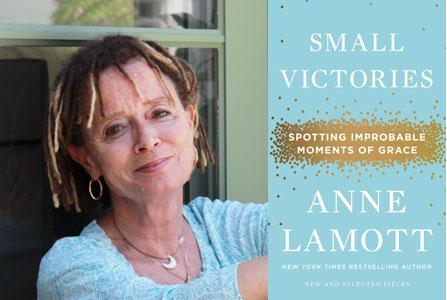
Anne Lamott is the author of seven novels, Hard LaughterRosieJoe JonesBlue ShoeAll New PeopleCrooked Little Heart, and Imperfect Birds. She has also written several bestselling books of nonfiction, including, Operating Instructions, an account of life as a single mother during her son’s first year; Some Assembly Required: A Journal of My Son’s First Son; and the classic book on writing; Bird by Bird: Some Instructions on Writing and Life. She has also authored several collections of autobiographical essays on faith; Traveling Mercies: Some Thoughts on Faith,  Plan B: Further Thoughts on Faith, and Grace (Eventually): Thoughts on Faith. In addition, she has written, Help, Thanks, Wow: The Three Essential PrayersStitches; A Handbook on Meaning, Hope and Repair,  Small Victories: Spotting Improbable Moments of Grace, and Hallelujah Anyway; Rediscovering Mercy. Her most recent book is Almost Everything: Notes on Hope (October 16, 2018, Riverhead Books).

Lamott has been honored with a Guggenheim Fellowship, and has taught at UC Davis, as well as at writing conferences across the country. Academy Award-winning filmmaker Freida Mock has made a documentary on Lamott, entitled “Bird by Bird with Annie” (1999).  Anne Lamott has also been inducted into the California Hall of Fame.

ARE YOU INTELLIGENTLY DESIGNED?

A4I never came away from an autopsy without reflecting on the marvelous design of the human body. I don’t know how many autopsies I attended over the years as a cop and a coroner. Lots. It’s not something you score. But I always looked at postmortems as a scientific—almost spiritual—systematic exercise in examining human design. 

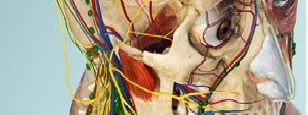
They’re twelve major systems in your anatomy—all interlinked to ensure your survival. Remove any system (except maybe your reproductive one) and you’ll die. And these systems go about their intermingling business—day after day—year after year—without you having to consciously think about operating them.

Think about it.

A11All that’s required to live is a bit of maintenance and, when things go wrong, modern medical science usually knows how to patch you up. Today’s medical practitioners can replace your organs, your limbs, your hair, your eyes, your nose, and your teeth.

But what modern science doesn’t know is how all this came to be.

A5I’m going to do some edited plagiarism from William  A. Dembski, of the Access Research Network, who wrote on intelligent design. The idea has been around since the ancient Greeks, who did some pretty deep thinking about where they came from and where they were going.

Some of it was explained by mythology, some by theology, and some by analogy. But the central question—did something intentionally design us—remains unanswered today.

Personally, I think there’s a force of infinite intelligence at work. A force we’re not capable of truly understanding, comprehending, or explaining.

Design theory—also called design or the design argument—is the view that nature shows tangible signs of having been designed by a preexisting intelligence.

The most famous version of the design argument can be found in the work of theologian William Paley who, in 1802, proposed his “watchmaker” thesis. His reasoning went like this:

A12“In crossing a heath, suppose I pitched my foot against a stone, and were asked how the stone came to be there; I might possibly answer, that, for anything I knew to the contrary, it had lain there forever. … But suppose I had found a watch upon the ground, and it should be inquired how the watch happened to be in that place; I should hardly think the answer which I had before given would be sufficient.” 

To the contrary, the fine coordination of all the watch parts would force us to conclude that it must have had a maker—that there must have existed, at some time, and at some place or other, an artificer or artificers, who formed it for some purpose. We’d struggle to comprehend its construction and designed its use, just as we’ve struggled to understand ourselves.

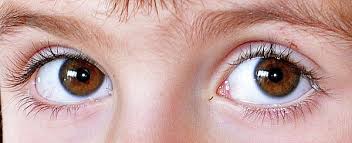
A13Paley argued we can draw the same conclusion about many anatomical objects, such as the eye. Just as a watch’s parts are all perfectly adapted for the purpose of telling time, the parts of an eye are all perfectly adapted for the purpose of seeing. In each case, Paley argued, we discern the marks of an intelligent designer.

Although Paley’s basic notion was sound and influenced thinkers for decades, Paley never provided a rigorous standard for detecting design in nature. Detecting design depended on such vague standards as being able to discern an object’s “purpose.” Moreover, Paley and other “natural theologians” tried to reason from the facts of nature to the existence of a wise and benevolent God. They tried to prove God from the perception of perfect products.

All of these things made design an easy target for Charles Darwin when he proposed his theory of evolution. 

A16Whereas Paley saw a finely-balanced world attesting to a kind and just God, Darwin pointed to nature’s imperfections and brutishness. Although Darwin had once been an admirer of Paley, Darwin’s own observations and experiences—especially the cruel, lingering death of his 9-year-old daughter Annie in 1850—that destroyed whatever belief he had in a just and moral universe.

Following Darwin’s widely-accepted theory of evolution, the notion of design was all but banished from biology.

A17Since the 1980s, however, advances in biology have convinced a new generation of scholars that Darwin’s theory was inadequate to account for the sheer complexity of living things. These scholars—chemists, biologists, mathematicians, and philosophers of science—began to reconsider design theory. They formulated a new view of design that avoids the pitfalls of previous versions.

Called intelligent design (ID), to distinguish it from earlier versions of design theory (as well as from the naturalistic use of the term design), this new approach is more modest than its predecessors. Rather than trying to infer God’s existence or character from the natural world, it simply claims that “intelligent causes are necessary to explain the complex, information-rich structures of biology and that these causes are empirically detectable.”

Like I said, I never came away from an autopsy without a scientific and spiritual reflection on the marvelous design of the human body.

What do you think? 

Have you been intelligently designed?