Tag Archives: Homicide

THE MANIAC MURDERS AT LOVERS LANE

You’d think you’d know all the best crime stories of your hometown, especially when you were a police officer there and spent most of your service on the Serious Crimes Section—being a murder cop. Specifically, true crime stories of this magnitude which turned out to be one of the most complex double homicide investigations in your city’s history. But, no, I’d never heard of this case until I was sitting in my barber’s chair the other day and Dave told me about the maniac murders at Lovers Lane.

Dave Lawrence is Nanaimo’s downtown barber. Dave runs a one-man show at That 50s Barber Shop on Victoria Crescent where multi-millionaires push past shopping cart vagrants to get the best haircut in town. Also to find out what’s going on in town because, if you want to know, Dave’s the go-to guy for knowing what’s going on around town.

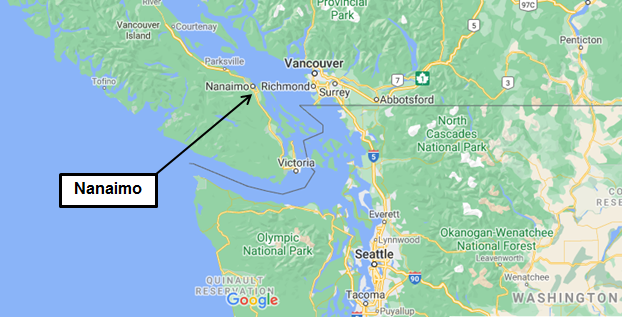
Nanaimo, by the way, is a city of 100,000 on the southeast side of Vancouver Island in British Columbia, Canada. It’s right across the water from the City of Vancouver which is one of the most exotic, erotic, and expensive places on our planet. Nanaimo is laid back in many ways, but it has an abnormally high per capita murder rate. And it’s been my home for the past thirty-four years.

I went into Dave’s shop last Saturday to get all four sides trimmed. We got talking, as we always do, and he goes, “Garry, you were a cop for a lot of years here in Nanaimo. Ever hear about the maniac murders at Lovers Lane?” I says, “No, Dave. You been smoking crack again like that guy who just tweaked by your window?” So Dave goes, “Seriously, dude. This really happened, and it’s the best true crime story I ever heard of.” Then Dave tells me about the maniac murders at Lovers Lane.
This true crime story doesn’t start with the cold-blooded executions of two young lovers. It starts fourteen years earlier on May 31, 1948, with a railroad washout near Kamloops in British Columbia’s interior. That spring, flooding was intense and the rushing water undermined a trestle pier holding up a bridge section where the Canadian National Railroad crossed the Thompson River. The bridge collapse took with it the telegraph lines connecting communications between western Canada and the east.

Losing a bridge section was one thing. Destroying communications was another. The only thing holding the main telegraph line from snapping under the weight of a sagging bridge was a small wooden bracket holding a glass insulator that the wire held fast to.

Leave it to railroader ingenuity. One sectionman got the idea to shoot the wire free. He borrowed the station agent’s .22 rifle, lay on the bank, and plinked away until he broke the bracket and saved the day. The rifle went back to the station agent’s house and was forgotten.

Until October 16, 1962. That’s when pretty nineteen-year-old Diane Phipps went on a date with her handsome boyfriend of six months, nineteen-year-old Leslie Dixon. That evening, the pair drove about downtown Nanaimo—then a city of around 20,000—stopping at the drive-in, gabbing with friends, and generally being young people in love. After dark, Diane and Leslie drove way out to Pipers Lagoon which the youths of Nanaimo called Lovers Lane. They parked and began to make out and were never seen alive again.

Pipers Lagoon is about eight miles from downtown Nanaimo. It’s in the Hammond Bay area which is now full of upscale homes but, thankfully, the city wisdom at the time foresaw the value of Pipers Lagoon and preserved it as parkland. It’s a strikingly beautiful spot, even though it has this history.

Diane Phipps and Leslie Dixon’s families became concerned—very concerned—when the two lovers didn’t come home by morning. Friends knew they’d likely gone to Lovers Lane, so that was the first place they searched. They found Leslie’s car. It was parked in the lane. He was slumped inside behind the wheel, dead, with two .22 bullets to the back of his head. Dianne was nowhere in sight.

This started the biggest criminal investigation in Nanaimo’s history. How I never heard about it, I don’t know, but Dave steered me to a website that documented the case as well as archives in the Vancouver Sun that covered the story. Here’s what happened.

Crime scene investigators found Leslie had been shot at close range. They surmised that the killer surprised the pair and shot him through an open driver’s side window, leaving his body in place. Leslie’s wallet with money was still in his pocket which indicated robbery was not a motive. There was no blood or evidence of Dianne being shot while sitting on the front passenger side seat, so the police officers surmised she’d been abducted at gunpoint.
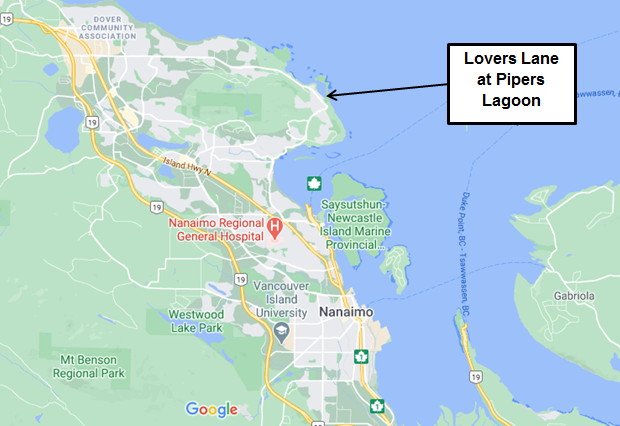
The Nanaimo detachment of the Royal Canadian Mounted Police (RCMP) called in extra resources. A large search of the surrounding area found no trace of anything connected with the crime, including Dianne Phipps. Officers went door to door and investigated the pair’s trail the previous evening. They were baffled and quickly involved the media, asking for public help.

At 2:00 p.m. on the day after Leslie Dixon was found murdered, a Nanaimo resident was rummaging through a rural garbage dump five miles south of Nanaimo in a semi-rural area called Harewood. He saw a pair of feet sticking out from under some old car parts. It was Dianne Phipps. She’d been shot once between the eyes and her head had been bashed-in with a rock. Her time of death was consistent with the early morning hours of October 17.

Dianne wasn’t sexually assaulted. She was fully clothed and her purse, containing money, was beside her. With robbery and sexual overtones ruled out, and no one in the couple’s entire history posing a threat, the RCMP suspected they had a murderous maniac on their hands.

More public appeals went out. Police got a call from a woman who lived on Harewood Road, not far from where Dianne’s body was found. She related that at 1:00 a.m. on the night of the murders she got a knock on her door. A very strange man was there and said his car was stuck in a nearby ditch. He asked if she would take her pickup and pull him out.

She did so. He posed no threat to her, but she found his actions so bizarre that she thought he’d done something else. Now hearing of Dianne’s body being found close to where she towed this stranger, she suspected the incidents were related.
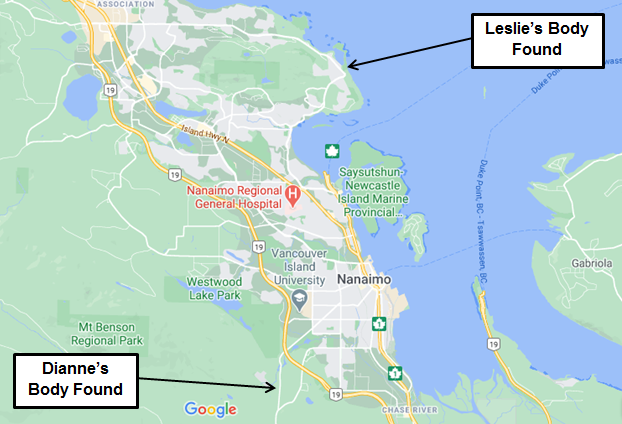
The witness lady gave the police an excellent description of the man and his sedan. She did not get a name, nor did she record the license number. This suspect and vehicle information was widely broadcast and developed hundreds of tips.

Week by week and month by month, the police investigation team put their hearts into the case of the Lovers Lane murders. The City of Nanaimo posted a $5,000 reward which was equivalent to a year’s wages back then. More tips came in, but not the right ones.

The weather turned as cold as the case. Vancouver Island is normally Canada’s winter hot spot. It rarely freezes on the south island and only snows occasionally. The winter of 1962/1963 was far colder than normal. The local lakes froze to the point where people could walk on the ice which is what a young boy did on Long Lake which is in north Nanaimo miles away from Lovers Lane and the Harewood dump.

The boy saw something through the ice. It was a rifle—a rather unusual rifle. The boy called his father, and they smashed through the ice and retrieved a Winchester Model 63 semi-automatic .22 with serial number 41649A stamped on it.

The father was suspicious as to why someone would throw a valuable firearm in the lake. He took it to the police who sent it to the crime lab. This firearm found in Long Lake matched the .22 bullets taken from Dianne Phipps and Leslie Dixon at their autopsies. It was the murder weapon.
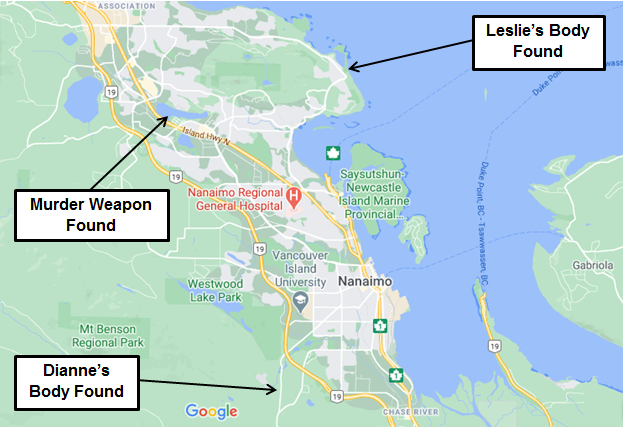
The police held back this information while they pursued other leads. They traced the .22 as being manufactured on October 5, 1940, and was sold by a Kamloops sporting goods store in 1942. However, back then in the Second World War years, purchaser records weren’t kept. The trail again grew cold.

On Saturday, April 18, 1964—almost a year and a half after the murder weapon was found—the Vancouver Sun ran a front-page story and, with police permission, released the holdback information on the unusual firearm along with its photo. This started the tips again.

The sectionman who shot the telegraph bracket and saved the communication day back in 1948 saw the rifle’s photo and strongly suspected it was the one he used that belonged to the station agent, one Robert Ralph Dillabough of Kamloops. There was a problem with that. Mr. Dillabough had died ten years earlier. However, his estate had recorded the rifle as an asset, including it having the serial number 41649A. It was the same piece, for sure.
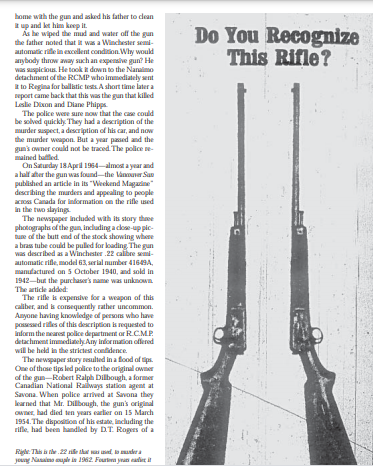
Diligent detective work took place. Police tracked Dillabough’s estate through a law firm of Mr. D.T. Rogers of Kamloops. They recorded that the murderous .22 was sold at an auction in Kamloops on February 19, 1955. The auctioneer was named George Shelline who they found had been killed in an automobile accident a year earlier. Shelline’s estate had no records of who purchased this puzzling and deadly firearm. Once again, the case went cold.

Over time, the police followed over five thousand tips taking hundreds and hundreds of statements. They checked 60,000 vehicle registrations for the suspicious car that was towed from the ditch along Harewood Road and they checked over 2,000 firearms sales invoices. The RCMP got help from the FBI and from Scotland Yard and from Interpol. They amassed what was the largest murder file in the history of British Columbia and they got nowhere.

Not until the Vancouver Sun ran another front-page story, again displaying the .22’s photo. On August 7, 1965—pushing three years after Dianne and Leslie’s murders—a tipster who requested confidentiality came forward and fingered Ronald Eugene Ingram as the owner of Winchester Model 63 .22 with serial number 41649A.

Ronald Ingram was now living in North Vancouver and worked as a baker. The police learned that in October of 1962, Ingram had resided in Nanaimo along with his wife and three children where he co-owned the Parklane Bakery on Harewood Road. He moved from Nanaimo to North Vancouver shortly after the Lovers Lane murders occurred.

Ingram and his vehicle were dead ringers for the strange man who got his auto stuck on Harewood Road. The police seized his vehicle. Even though a lot of time had passed, they found dried bloodstains in it that matched Dianne Phipps’s blood type.

The police also got information that Ronald Ingram had used the now-notorious .22 to shoot rats in his bakery’s storeroom. Armed with a warrant and a chainsaw, the police recovered bullets from the storeroom wall that matched the .22’s unique firing signature and the ones that killed Dianne and Leslie.

They arrested Ronald Ingram and charged him with capital murder. To this point, no one in the legal circles ever heard of him. He had no criminal record and his name never surfaced in the intense investigation—until he was linked to the murder weapon.

The medical and psychiatric circles had certainly heard of Ronald Ingram, though. He had a lengthy history of mental illness including having maniacal episodes. Ingram confessed to murdering Dianne Phipps and Leslie Dixon, claiming he was in a maniacal state at the time. In one of the speediest trials I’ve ever heard of, Ingram was found not guilty by reason of insanity. He was ordered locked up under the authority of Section 545 of the Canadian Criminal Code and held “until the pleasure of the Lieutenant Governor was known“.
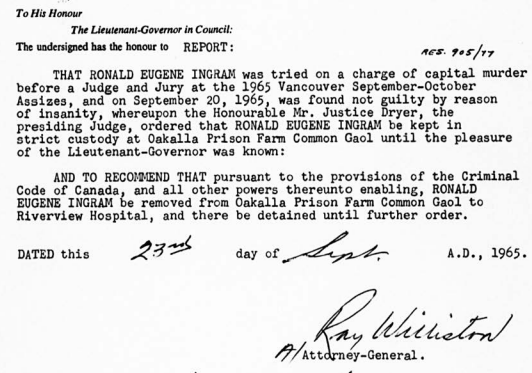
Ronald Ingram was incarcerated at the maximum-security Forensic Psychiatric Institute at Riverview Hospital in the Greater Vancouver area. Over time, Ingram’s classification was lowered to medium-security and he was consecutively placed in a less restrictive psychiatric environments. In 1976—fourteen years after these truly horrific crimes by a homicidal maniac—Ronald Eugene Ingram simply walked out the front door of his mental hospital. He was never heard of again.

And that’s the true story Dave told me about the maniac murders at Lovers Lane.
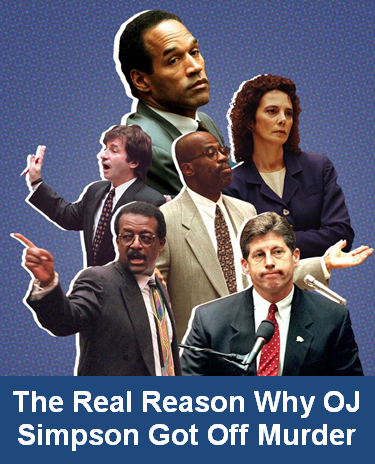
THE BIG REASON WHY O.J. SIMPSON GOT OFF MURDER

They called it the trial of the century. I call it the travesty of all time. Either way you look at it, the O.J. Simpson murder case was exceptionally high profile. Millions of people around the world watched the eleven-month spectacle known as the O.J. trial. It had all the right TV elements—celebrity superstar, the Dream Team defense, allegations of corrupt cops, supposedly compromised witnesses and contaminated evidence, not to mention playing the race card from the bottom of the deck. It ended with O.J.’s acquittal when the jury nullified his indictment. Twenty-five years later, the big reason why O.J. Simpson got off murder is now black and white.

Before examining the big reason why O.J. got off, it’s necessary to look at the overall picture—the preponderance of the evidence—and examine investigation and trial components to see what went wrong. It’s the combination of prosecution errors and defense counsel tactics that turned an open-and-shut homicide case into a three-ring media circus. Ultimately, this shameful chain of events caused jurors to reject convicting an absolutely 100% guilty man.

How I got onto this subject was recently reading (or trying to read) Outrage by Vincent Bugliosi. The 1996 book is subtitled The Five Reasons Why O.J. Simpson Got Away With Murder. You might recall who Vincent Bugliosi is. He’s the power-prosecutor who put away the Charles Manson Family and wrote the book Helter Skelter.

Vincent Bugliosi had no part in the O.J. prosecution. He was commissioned to write a critical book. As a lawyer who prosecuted over a hundred murders in his career, and losing only one, Bugliosi earned the right to critique the O.J. trial. That he did with ferocity in Outrage.

I find Bugliosi’s writing style hard to read. He’s verbose and rambling, bombastic and sarcastic, not to mention arrogant and conceited. Give me a good Bob Woodward book any day, but I did make it through Outrage. I also went down a spiraling research tunnel that started with internet rabbit-holing, and I found more people with equally-great accreditations who had one more point to offer than Bugliosi’s five reasons why O.J. got off the murder charges.

I agree with all five of Vincent Bugliosi’s reasons. Just because I don’t particularly care for his script doesn’t mean he’s wrong on any point. I just think he missed another major point that led to the indictment’s nullification—and he failed to summarize his five points into the one big reason why O.J. Simpson got off murder. Before I list Bugliosi’s five criticisms, the 6th point, and the overall #1 reason, let’s do a quick review of the case history.

The O.J. Simpson Case History

Orenthal James Simpson was a black National Football League superstar. He was also a movie star and product endorser for a major orange juice producer. Over the years, O.J. got the nickname “The Juice”.

O.J. married Nicole Brown, a white woman, in 1985. They were wealthy, had two children, and had a host of celebrity friends. They also had extreme marital challenges—many fights that ended in violence.

Looking back, Nicole Brown-Simpson was the classic victim of battered woman syndrome. The murder investigation identified sixty-two documented incidents where the Simpsons fought. They resulted in his threatening her life, her seeking protection in women’s shelters, and even the police intervening and arresting O.J.

Nicole filed for divorce in February 1992. She cited irreconcilable differences rather than repeated assaults and mental cruelty. Despite the divorce, O.J. kept stalking Nicole. She called a women’s shelter four days before her death, reporting continual harassment from O.J. and that a set of keys for her home were missing.

On June 12, 1994, Nicole Brown-Simpson attended a dance rehearsal for her daughter in Santa Monica, California which is the Los Angeles suburb where they lived. O.J. was there as a legitimate father, and he attempted to reconcile with her. Nicole refused. She then went to dinner at a restaurant where Ron Goldman worked.

Ron Goldman and Nicole weren’t a romantic item. They were friends, and Nicole’s mother accidently left her eyeglasses at the restaurant when the dinner party left. Once Nicole got home, a phone call verified the glasses were left behind and Ron Goldman offered to drop them off at Nicole’s home when he got off work.

Nicole Brown-Simpson and Ron Goldman were found stabbed to death outside Nicole’s home. They were discovered by a neighbor at 12:10 a.m. on June 13, 1994. Autopsies indicated their times of death to be approximately 10:30 p.m. on June 12.

O.J. Simpson was an immediate suspect. The LAPD followed a trail of blood from Nicole’s home to O.J.’s estate—a five-minute drive away. O.J. was already gone. He’d taken a red-eye to Chicago and was in a hotel room when LAPD detectives phoned him to give him the notice that his ex-wife was dead.

O.J. Simpson flew home to Los Angeles. He consented to an interview with detectives in which he denied involvement in Nicole and Ron Goldman’s deaths. He could not offer a verifiable alibi for the murder time, and he gave a weak explanation for a recent cut on his left hand.

The LAPD investigative team identified enough physical evidence to tie O.J. Simpson to the murder scene, as well as tying the victim’s blood to his personal residence. The DA filed a two-count murder indictment against Orenthal James Simpson for the criminal deaths of Nicole Brown-Simpson and Ronald Goldman.

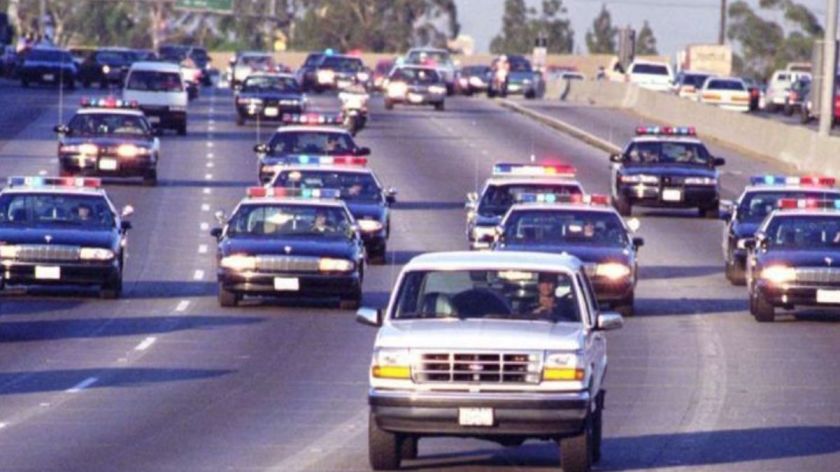
The DA and O.J. Simpson’s lawyer worked out a surrender deal. But, instead of surrendering at the police station, O.J. Simpson pulled off the most famous slow-speed chase in the history of the world. Many millions watched on live TV as O.J. in a white Ford Bronco crawled along a LA freeway—O.J. in the back with a handgun to his head as his buddy drove slowly along with a mass of lights-flashing police cars right behind.

O.J. finally surrendered—without a violent incident. He went into custody while the police searched the Bronco. Besides O.J. leaving three letters which amounted to confessional suicide goodbyes, the police found $8,000 in cash, his US passport, a disguise with a hat and false whiskers, as well as a change of clothing and a .357 revolver. If there ever was evidence of a flight risk, this was it, and O.J. Simpson remained in custody for the next year and a half while his eleven-month farce trial played out.

I’m not going to go into the mass of evidence surfaced in the Brown-Goldman investigation and dealt with in the O.J. Simpson trial. That is far too complex for a blog post. Unfortunately, it was far too complex for the prosecution team to present, and far, far too complex for a jury to grasp—especially when the Dream Team defense did everything they could do to cloud the jurors’ vision.

In Outrage, Vincent Bugliosi identified five reasons why O.J. Simpson got away with murder. I’m convinced he’s right. However, I’m convinced there’s one more significant reason why the jury nullified Simpson’s indictment. But we’ll start with Mr. Bugliosi’s points.

1. Media Crime and Pretrial Coverage Influenced the Jury

I have no doubt whatsoever the massive live-media coverage of the slow-speed, white Bronco chase embedded itself in the nation’s psyche. Especially Los Angelers where it hit close to home as they scurried to overpasses to watch the scene pass by. You just don’t forget something as crazy as this.

I know I didn’t. I watched the performance up in Canada, and I was a murder cop with eighteen years of experience when this nut-show went down. I’d certainly heard of O.J. Simpson from his NFL fame, and I kinda got a kick outa his spoofy character in the Naked Gun movie.

I can’t imagine the impression the chase, arrest, and the wait-up to the trial took on the Los Angeles jury pool. And I can’t imagine anyone able to serve on the jury not hearing of the pre-trial events. Or having a pre-formed opinion about O.J. Simpson, his domestic situation, and the Los Angeles justice system.

2. Venue Change From Santa Monica to Downtown LA

Bugliosi is livid about this in Outrage. He has a good right to be. This was a shady, shady deal. Bugliosi pins this on a political move by the LA County Da, Gil Garcetti, who Bugliosi greases as a political hack of the lowest form.

Bugliosi may be right, or he may be wrong, about DA Garcetti’s character. But the decision to venue change from the suburban crime scene jurisdiction of Santa Monica to the urban downtown core of the City of Angeles was a fatal move. The juror gene pool racial demographics of inner LA compared to outer SM are cheese to chalk. The juror perceptions are even further apart.

O.J. Simpson and Nicole Brown-Simpson lived in upscale Santa Monica because that’s where their peers lived. O.J. was no more inner-city black than I am an Ivy League white. There’s a thing in jury common law that says a person has the right to be tried by peers in their local jurisdiction. (It might even be in the Constitution—yes, just checked.  Amendment 6 covers this for US citizens.) Putting the Simpson case into a downtown LA jury pool, rather than into a Santa Monica peer-pool—a lesser-educated and racially different peer-pool—entirely changed the social dynamics, and this seriously affected the jury panel’s psyche.

3. The Judge Lance Ito Factor

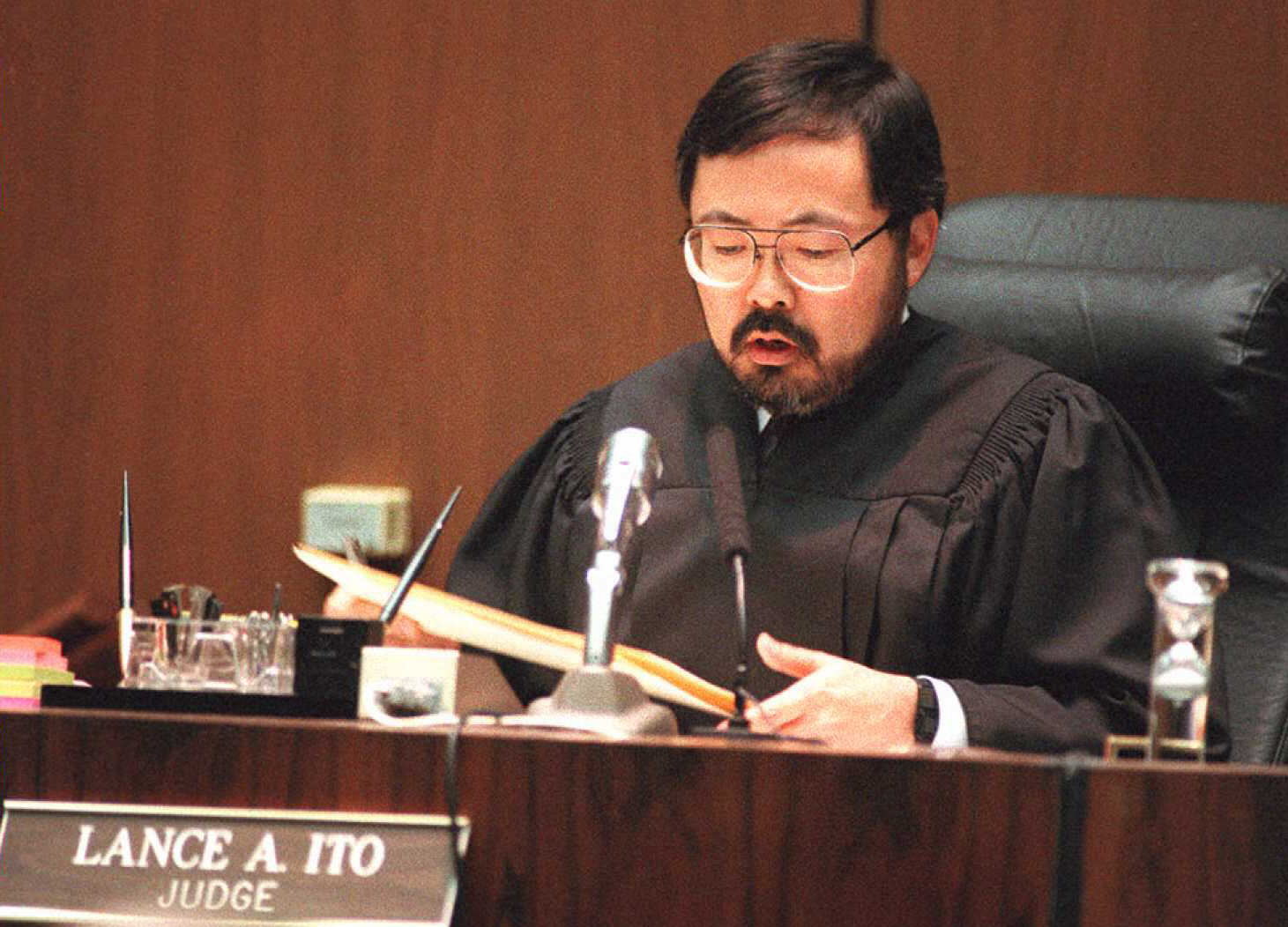
Who can forget the totally-out-of-his league O.J. Simpson trial judge by the name of Lance Ito? This guy had no more business running a major murder trial than I do performing in Carnegie Hall. Man, what a travesty of justice, and he was sitting on the bench through the entire process.

Bugliosi dismisses Lance Ito as a star-struck buffoon—someone who was unfit for Night Court (if anyone remembers the old comedy sit-com where the judge was actually the one with street smarts) or to replace Judge Judy. Good Lord, during the trial Judge Lance Ito would accept fan gifts and invite celebrities back into his chambers.

Bugliosi finds many faults in Lance Ito—justifiably found faults. But the biggest fault he finds in Ito—and a fatal fault for the trial—was Ito allowing the Dream Team defense to gut Detective Mark Fuhrman and drag his entrails through the trial muck as a racist goon who surreptitiously planted false evidence to frame The Juice. This lack of judicial ethics and irresponsible legal jurisprudence did enormous damage to the jurors’ impartial mindset.

4. Horrible Prosecutor Performance

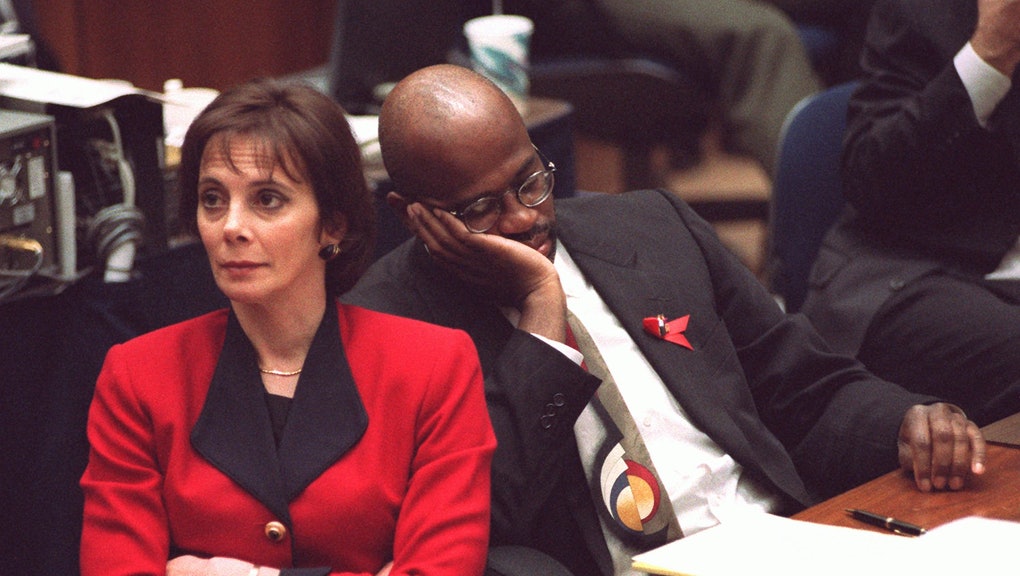
Marcia Clark and Christopher Darden led the O.J. Simpson prosecution. Bugliosi criticizes Clark, a white woman, as being far beyond her experience and competency in handling the OJ case. He suggests that Darden, being a black man, was only there to serve as a token colored man.

I don’t want to pull the race card regarding the black and white prosecution pair as the dream team did, but I think both Marcia Clark and Chris Darden weren’t up for the job. In Bugliosi’s opinion, and mine, Clark and Darden blew it. Big time. Especially in clearly explaining the physical evidence like DNA in the bloodstains so the common juror could understand and accept the reality of how the murders happened and who caused them.

Bugliosi lists dozens of f-ups the prosecutors pulled. They didn’t establish O.J.’s motive by fully exposing the battered woman syndrome. They failed to disclose O.J.’s desperation to avoid capture during the Bronco chase. The jury never heard of the guilt-admission notes and the disguise, let alone of O.J. Simpson’s incriminating statements made to friends and the police. All around, Bugliosi paints a portrait of a weary and beaten pair of prosecutors who just wished the pain would stop.

5. The Prosecutors’ Final Submission

Bugliosi leads his reader through a maze of evidence. He sets the scene for prosecution failure from the onset, and it gets worse as the story unfolds. I kept reading, even though I wished he’d just shut up and tell the goddamn story as Stephen King so wisely advises in his tutorial to writers.

Clark and Darden played right into the race card trap the Dream Team ingeniously set for them. By ingeniously, I don’t mean it was truthfully, morally, or ethically right. It was the defense strategy right from the start, and the prosecution was blind to it.

The prosecution summary—the summation to the jury—agreed that Mark Fuhrman, the racism whipping boy, was a racist, however, that should not detract from the factual evidence showing O.J. was guilty. Jonnie Cochran, of the Dream Team, blew it out of the water by saying Fuhrman was, “A genocidal racist, a perjurer, America’s worst nightmare, and the personification of evil who single-handedly planted all of the evidence in an attempt to frame Simpson for the murders based purely on his dislike of interracial couples.”

Judge Lance Ito let ‘er slide.

——

I completely agree with Vincent Bugliosi’s five points about why O.J. Simpson got away with murder. But I think there’s one more. It’s a major point which, in the culmination of the Bugliosi Five, supports the big reason—the root cause—of why OG Simpson got off murder.

It’s not just the showmanship of the media lead-up with the slow-speed chase. It’s not just the celebrity hype. It’s not just the venue change. It’s not just the Ito factor. It’s not just poor prosecutor performance. And it’s not just the piss-poor summation.

It’s something much deeper that was at work during the O.J. Simpson murder trial.

Racism.

O.J. Simpson was ethnically black. Throughout his professional life, though, O.J. Simpson was essentially white. He worked with white people. He socialized with white people. He married a white woman. And his Dream Team was essentially white—exception being Johnnie Cochran.

O.J. Simpson’s jury was essentially black. There were nine black jurors, two white jurors, and one Hispanic juror on the panel. They were sequestered for 265 days and, if you know of the Stockholm Syndrome, you can imagine the long-term influence that confinement had on the jurors.

After eleven months of sole interaction, the O.J. Simpson jurors returned a not guilty verdict on all counts after less than four hours of deliberation. Their minds were made up, and there was little discussion. Unanimously, the O.J. Simpson jury nullified the indictment charging O.J. with murdering Nicole and Ron.

Null? Nullify? Nullified? Nullification? I’ve used variances of nullification throughout this piece. In my opinion, nullification by the jury is the big reason why O.J. Simpson got off murder.

Null is a legal term. You’ve heard of a contract being “null and void”. Nullify means rejecting the deal and putting an end to it. For jury trials, Merriman Webster dictionary says it means, “Acquitting a defendant in disregard to the judge’s instructions or contrary to the jury’s finding of fact.”

In the O.J. Simpson indictment, where he stood charged with intentionally murdering Nicole Brown-Simpson and Ron Goldman, the evidence was overwhelming that O.J. was 100% guilty. A blind half-wit would conclude that upon impartially hearing the evidence. However, the O.J. Simpson trial jurors unanimously disregarded the facts, and their duty to find the facts and decide to ignore the facts. Their impartial judgment was seriously compromised by the well-played defense race card.

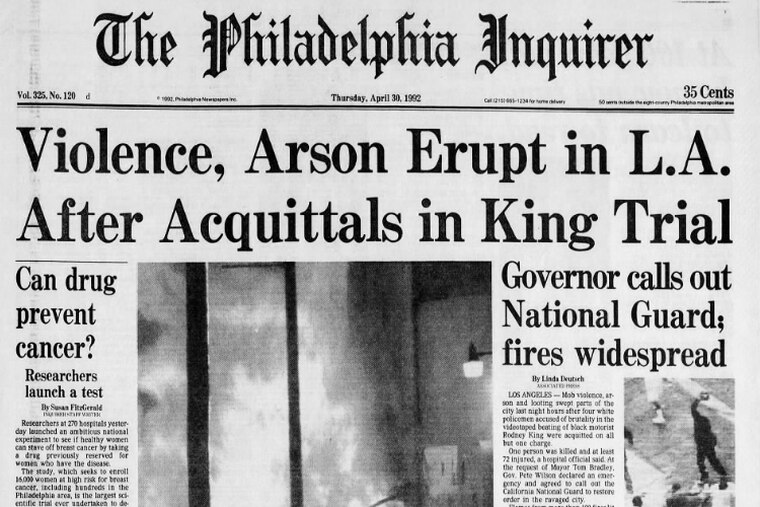
There was a recent undercurrent to the O.J. jury decision, or their decision to nullify the indictment. Rodney King. You might remember the Rodney King trial from 1983 where white police officers were acquitted for beating King, a black man. King’s jury held ten whites, one Latino, and one Asian. Two years later, a reverse racial mixture acquitted or nullified the indictment of O. J. Simpson.

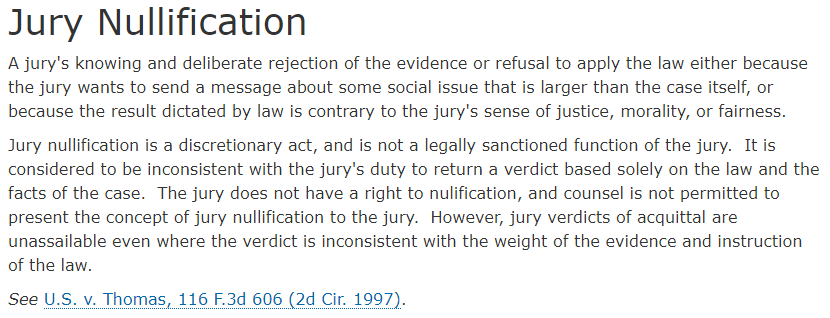
Nullification is an old legal concept. It’s been around for centuries and refers to cases—criminal and civil—where juries side with an accused person (or corporation) and let them off no matter how strong their wrongdoing evidence is. Here’s a definition of jury nullification from Cornell Law School:

Jury Nullification — A jury’s knowing and deliberate rejection of the evidence or refusal to apply the law either because the jury wants to send a message about some social issue that is larger than the case itself, or because the result dictated by law is contrary to the jury’s sense of justice, morality, or fairness. 

Jury nullification is a discretionary act and is not a legally sanctioned function of the jury. It is considered to be inconsistent with the jury’s duty to return a verdict based solely on the law and the facts of the case. The jury does not have a right to nullification, and counsel is not permitted to present the concept of jury nullification to the jury. However, jury verdicts of acquittal are unassailable even where the verdict is inconsistent with the weight of the evidence and instruction of the law.

At its core, nullification occurs when a trial jury reaches an anti-fact-based verdict when they disagree with the law or they disagree that the state should be prosecuting the accused. Indictment nullification also happens when the collective jury wants to make a social statement such as racial inequality or persecution.

There’s nothing to stop a jury from nullifying an indictment. Once it’s in the jury’s hands, and inside the deliberation room, it’s theirs to do what they see fit. They hold no currency. They have no account.

O.J. was black. He murdered two whites. The jury was powerfully black. The system was predominantly white. The big reason why O.J. Simpson got off murder was because of jury nullification due to racism.

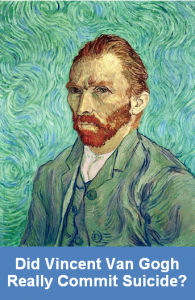
DID VINCENT VAN GOGH REALLY COMMIT SUICIDE?

Dutch Post-Impressionism master, Vincent Van Gogh, was a phenomenal force who helped shape modern art culture. His influence ranks with Shakespeare in literature, Freud in psychology, and The Beatles in music. Van Gogh was also plagued with mental illness, suffered from depression, and was tormented by psychotic episodes. Conventional history records that Van Gogh died from a self-inflicted gunshot wound in 1890 at the age of 37. However, an independent and objective look at the case facts arrives at an entirely different conclusion—Vincent Van Gogh was actually shot by someone else, and it was deliberately covered up.

This isn’t to say that Van Gogh was murdered as in a homicide case. As a former police investigator and coroner, I’m well familiar with death classifications. The civilized world has long used a universal death classification system with five categories. They are natural death, accidental death, death caused by wrongful actions by another human being which is a homicide ruling, self-caused death or suicide, and an undetermined death classification when the facts cannot be slotted into one conclusive spot.

I’m also familiar with gunshot wounds. Understanding how Vincent Van Gogh’s fatal wound happened is the key to determining if he intentionally shot himself, if he accidentally caused his own death, or if someone else pulled the trigger which killed Van Gogh. Before analyzing what’s known about the Van Gogh case facts, let’s take a quick look at who this truly remarkable man really was.

Vincent Willem Van Gogh was born in 1853 and died on July 29, 1890. During Van Gogh’s life, he produced over 2,000 paintings, drawings, and sketches. He completed most of these in his later years and was in his most-prolific phase when he suddenly died.

Van Gogh didn’t achieve fame or fortune during his life. He passed practically penniless. It was after death when the world discovered his genius and assessed his works of bright colors, bold strokes, and deep insight as some of the finest works ever to appear on the art scene. Today, an original Van Gogh is worth millions—some probably priceless.

Vincent Van Gogh achieved artistic saint status. It’s not just Van Gogh’s unbounded talent that supported his greatness. It’s also the mystique of the man and the martyrdom mushrooming from his untimely death that robbed the world of an artist—a starving artist and a man who lived on the fine line between genius and nut.

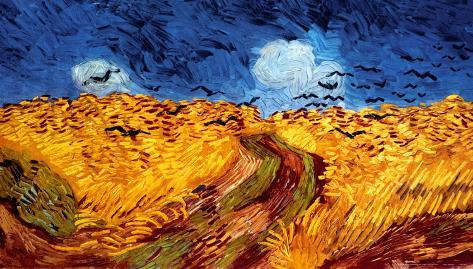
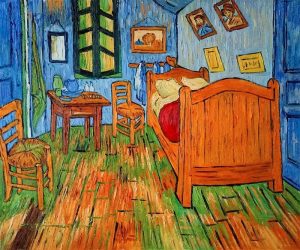
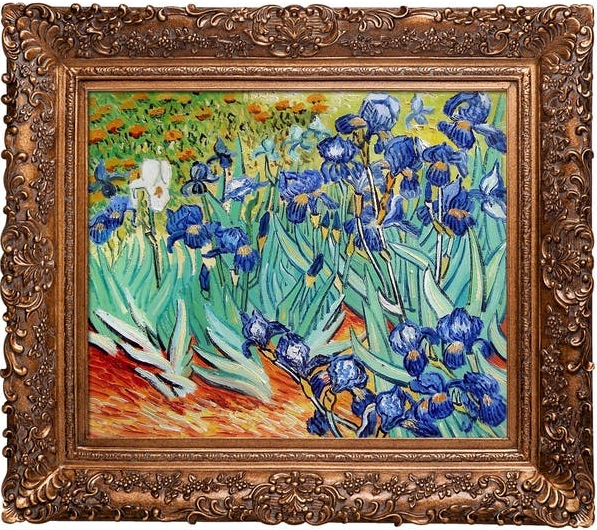
Most people know some of Van Gogh’s masterpieces. Wheatfield With Crows may have been his last painting. Café Terrace At Night, The Potato Eaters, Irises, Bedroom In Arles, The Olive Trees, and Vase With Fifteen Sunflowers are extraordinarily famous. So is The Starry Night. (I happen to have a hand-painted oil reproduction of Starry Night right on the wall in front of me as I write this, and my daughter has Café hanging in her home.)

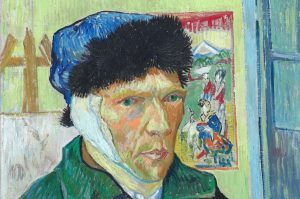
Most people know the story of Vincent Van Gogh’s ear. It’s a true story, but the truth is he only cut part of his left ear off with a razor during a difficult episode with his on-again, off-again relationship with painter Paul Gauguin. The story goes on that Van Gogh gave his ear piece to a brothel lady, then he bandaged himself up and painted one of many self-portraits. I just looked at this portrait (Google makes Dutch Master shopping easy) and was struck by the image of his right side being bandaged. Then I realized Van Gogh painted selfies by looking in a mirror.
And most people know something about Vincent Van Gogh’s time in asylums. This is true, too, and he spent a good while of 1889 in Saint-Remy where he stared down on the town and painted The Starry Night from later memory. The celestial positions are uncannily accurate.

In late 1889, Van Gogh moved to a rooming house in Auvers-sur-Oise near Paris. His painting production went into overdrive, and he was at the peak of his game. On July 27, 1890, Van Gogh left his room with his paints, canvas, and easel. He returned empty-handed with a bullet in his belly.

Vincent Van Gogh’s spirit left this world at 1:30 a.m. on July 29. He passed without medical intervention on his bed, and the medical cause was, most likely, exsanguination or internal bleeding. There was no autopsy, and Van Gogh was buried in a nearby churchyard the next day.

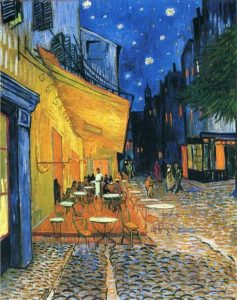
There are various ambiguous statements purported from Van Gogh. He did not admit to shooting himself or intentionally attempting to commit suicide. However, the record indicates he didn’t deny it. The record can also be interpreted that he covered up for someone else.

What is fairly clear is the description of Vincent Van Gogh’s gunshot wound. There are conflicting locations, (chest, stomach, abdomen), but this is explainable from Dutch/French to English translations. It’s highly probable that one bullet entered the left side of Van Gogh’s mid-section and traversed his intestines in a left-to-right direction. There was no exit wound and no serious spinal damage as Van Gogh had walked home from the shooting scene, up the stairs, and to his room where he expired a day and a half later.

There was no firearm found and absolutely no history of Vincent Van Gogh ever owning or operating a gun. He was a painter. Not a hunter or soldier. (Note: There was a rusted revolver found in an Auver field in 1960 which was said to be the weapon. There is no proof that it was.)

There was no suicide note or any deathbed confession. Aside from being an artist, Van Gogh was a prolific writer who documented many thoughts as he progressed from mental sickness to physical health. In late July of 1890, Van Gogh’s writings showed him to be optimistic and with plans to paint as much as possible before an anticipated period of blackness returned. Two days before his death, Van Gogh placed a large art supply order.

Suicide, in Van Gogh’s case, wasn’t surfaced in the early years after his death. There were murmurs among the villagers that “some young boys may have accidentally shot” Van Gogh as he went about his work in a nearby field. There was no coroner’s inquiry or inquest, but there is documentation of a gendarme questioning Van Gogh if he intentionally shot himself to which Van Gogh allegedly replied, “I don’t know.”

The first strong suicide suggestion came in 1956 with Irving Stone’s novel and movie Lust For Life. It was a documentary that took liberty with Van Gogh’s life and times. It concluded Van Gogh was a troubled soul—a beautiful soul—who ended his life intentionally. The book and movie were bestselling blockbusters and cemented the suicide seed to an adorning public.

It became ingrained in lore and public acceptance that Vincent Van Gogh was a desponded psychotic who suddenly up and killed himself rather than continue a tormented existence of interpreting beauty in nature and people. It was the gospel, according to Van Gogh historians, who were comfortable with a suspicious explanation.

Other people weren’t. In 2011, two researchers took a good and hard look into Van Gogh’s life and death. They had full access to the Van Gogh Museum’s archives in Amsterdam and spent enormous time reviewing original material. They found a few things.
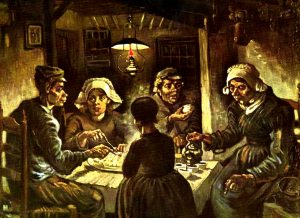
One was a 1957 interview with Rene Secretan who knew Van Gogh well. Secretan admitted to being one of the boys spoken about by the villagers who were involved in Van Gogh’s shooting. Rene Secretan, sixteen years old in 1890, told the interviewer he wanted to set the distorted record straight that was misrepresented in the book and movie.

The interview documents Rene Secretan as saying the handgun that shot Van Gogh was his, and that it was prone to accidentally misfiring. Secretan self-servingly denied being present when the accidental shooting happened, claiming he was back in Paris and not at his family’s summer home in Auvers. Secretan failed to identify those directly involved or exactly what circumstances unfolded.

The researchers, Pulitzer Prize winners Steven Naifeh and Gregory White Smith who co-wrote Van Gogh: The Life, found corroborating statements placing Van Gogh near the Secretan villa on the afternoon of the shooting. They also sourced a leading expert on firearms and gunshot wounds who refuted any chance of Van Gogh being able to discharge a firearm with his own hands that could have caused the wound in its documented location.

Dr. Vincent Di Maio (a 2012 key witness in the Florida trial of George Zimmerman who shot African-American youth Trayvon Martin in a neighborhood watch altercation) concluded that Van Gogh, who was right-handed, could not possibly have held a firearm as it had to be; therefore the shot had to have been fired by another party. Dr. Di Maio also commented on the lack of reported gunshot residue on Van Gogh’s hands and clothes. In 1890, most cartridges contained black powder which was filthy stuff when burned at close range.

Researchers Naifeh and Smith also took a deep dive into what they could find on Rene Secretan’s background. They painted him as a big kid—a thug and a bully who was well known to have picked on wimpy Van Gogh throughout the month of July 1890. Secretan came from a wealthy Paris family who summered at Auvers with their second home within walking distance of Van Gogh’s rooming house.
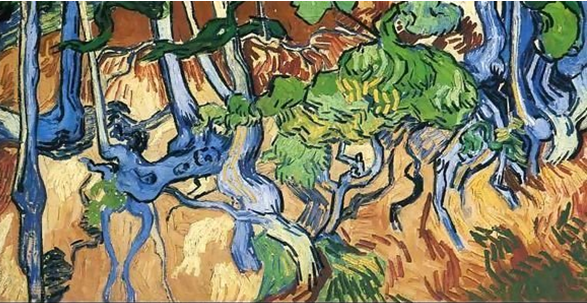
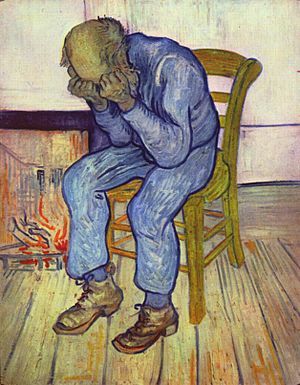
According to the researchers of Van Gogh: The Life, Rene Secretan had seen the Buffalo Bill Wild West show in Paris, and Secretan fancied himself as a cowboy character. Secretan fashioned a costume to go with his cocky role of a western gunfighter, and he acquired a revolver that was prone to malfunction. They documented incidents where Secretan would mock Van Gogh as he painted, play pranks on him, and supply alcohol to Van Gogh who couldn’t afford it.

It was during a mocking spat, the researchers surmise, that somehow Secretan’s revolver went off and struck Van Gogh in the abdomen. According to the theory, the boys fled, disposed of the weapon, and formed a pact of silence. If this was true, the question arises of why didn’t Vincent Van Gogh report the truth, and why has the suicide conclusion remained steadfast.

Naifeh and Smith address this in their book with this quote: When all this (accidental shooting theory) began to emerge from our research, a curator at the Van Gogh Museum predicted the fate that would befall such a blasphemy on the Van Gogh gospel. “I think it would be like Vincent to protect the boys and take the ‘accident’ as an unexpected way out of his burdened life,” he agreed in an e-mail. “But I think the biggest problem you’ll find after publishing your theory is that the suicide is more or less printed in the brains of past and present generations and has become a sort of self-evident truth. Vincent’s suicide has become the grand finale of the story of the martyr for art, it’s his crown of thorns.”

As an experienced cop and a coroner, I think Naifeh and Smith are on to something. There are two huge problems with a suicide conclusion in classifying Vincent Van Gogh’s death. One is the lack of an immediate suicide threat. The other is the gunshot nature.

I’ve probably seen fifty or more gunshot suicides. All but one were self-inflicted wounds to the head. The exception was a single case where the firearm was placed against the chest and the bullet blew apart the heart. I have never seen a suicide where the decedent shot themselves in the gut, and I’ve never heard of one.

Vincent Van Gogh didn’t leave a suicide note. He made no immediate suicide threats and, by all accounts, things were going well for the struggling artist. It makes no sense at all that Van Gogh would head out for a summer’s day, begin to paint, produce a gun from nowhere, shoot himself in the stomach from the most inconceivable position, then make it home—wounded—without finishing himself off with a second shot.

If I were the coroner ruling on Vincent Van Gogh’s death, I’d readily concur the cause of death was slow exsanguination resulting from a single gunshot wound to the abdomen. I’d have a harder time with the classification. Here, I’d have to use a process of elimination from the five categories—natural, homicide, accidental, suicide, or undetermined.
There is no possibility Van Gogh died of natural causes. He was shot, and that is clear. Was he murdered or otherwise shot intentionally? There is no evidence to support a homicide classification. Did the firearm go off accidentally? It certainly could have, and there is information to support that theory but not prove it.

Suicide? Not convincing. The available evidence does not meet the Beckon Test where coroners must establish beyond a reasonable doubt that the decedent intentionally took their own life. If the death circumstances do not fulfill the requirements of the Beckon Test, then a coroner is not entitled to register a suicide classification.

This only leaves undetermined. Coroners hate closing a file with an undetermined classification. It’s like they failed in their investigation.

Unfortunately, in Vincent Van Gogh’s case—from the facts as best as are known—there’s no other conclusion than officially rule “Undetermined”.

I’m no longer a coroner, though, so I’ll stick out my neck.

On the balance of probabilities, I find Vincent Van Gogh was accidentally shot, then sadly died from this unintended and terrible tragedy.