Tag Archives: John F Kennedy

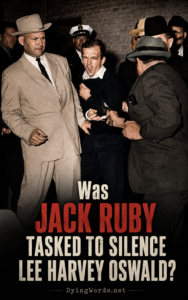
WAS JACK RUBY TASKED TO SILENCE LEE HARVEY OSWALD?

On Sunday morning, November 24, 1963, Lee Harvey Oswald was being moved through the basement of Dallas Police Headquarters when Jack Ruby stepped out of the crowd, pushed a .38-calibre revolver into Oswald’s abdomen, and fired. It happened in front of cops, reporters, photographers, and live television cameras. Less than forty-eight hours after President John F. Kennedy had been murdered in Dealey Plaza, the man accused of killing him was himself mortally wounded while in police custody.

That single shot created a second mystery almost as enduring as the assassination itself. If Oswald acted alone, Ruby’s killing could be explained as the impulsive act of an angry and emotionally unstable man. But if Oswald had accomplices—or if Kennedy’s murder had been organized by a larger group—then silencing Oswald before he could stand trial, testify, or identify anyone else involved would’ve been extraordinarily convenient.

There’s no shortage of theory surrounding the Kennedy assassination, and Ruby’s history gives conspiracy researchers plenty to work with. He knew Dallas cops, operated nightclubs, had connections reaching back into Chicago’s rougher underworld, and somehow positioned himself close enough to Oswald to kill him at point-blank range.

But suspicion isn’t evidence, so to decide whether Ruby was tasked with silencing Oswald, we have to look at Ruby himself, Oswald’s handling in custody, and the remarkable forty-eight-hour chain of events that brought the two men together in that police basement.
How Oswald Came Into Police Custody

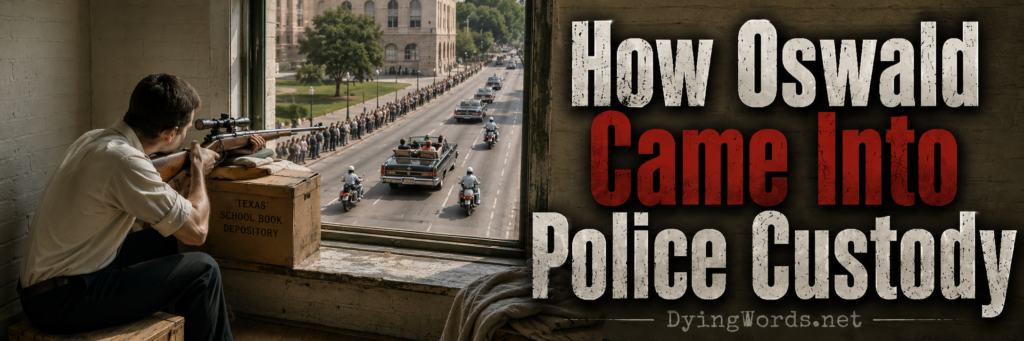
At 12:30 Friday afternoon, shots struck President Kennedy’s motorcade as it passed through Dealey Plaza. Within minutes, Dallas police were flooding the area while witnesses pointed toward the Texas School Book Depository. Lee Harvey Oswald, who worked in the building, left shortly after the shooting and made his way across Dallas, first by bus and then taxi, eventually returning briefly to the rooming house where he was staying.

What happened next pulled Oswald directly into the police net. At about 1:15 p.m., Dallas patrolman J.D. Tippit was shot and killed in the Oak Cliff neighbourhood. Witness descriptions went out over police radio, and not long afterward Oswald was spotted near the Texas Theatre. He’d entered without buying a ticket, police were called, and officers converged on the building where Oswald resisted arrest and was found carrying a revolver.

By mid-afternoon, he was in custody at Dallas Police Headquarters. Detectives initially focused on Tippit’s murder, but evidence connecting Oswald to Kennedy’s assassination accumulated quickly. His employment at the Depository, the rifle recovered inside the building, witness information, and the paper trail connected with the weapon made him the central suspect.

The problem was that police headquarters was rapidly becoming a zoo. Reporters from across the country packed the hallways, cameras were everywhere, officers came and went, and information leaked almost as quickly as detectives could develop it. Oswald was in custody, but he wasn’t being held inside anything resembling the kind of tightly controlled security environment we’d expect today, and that weakness would matter enormously two days later.

Who Was Jack Ruby?

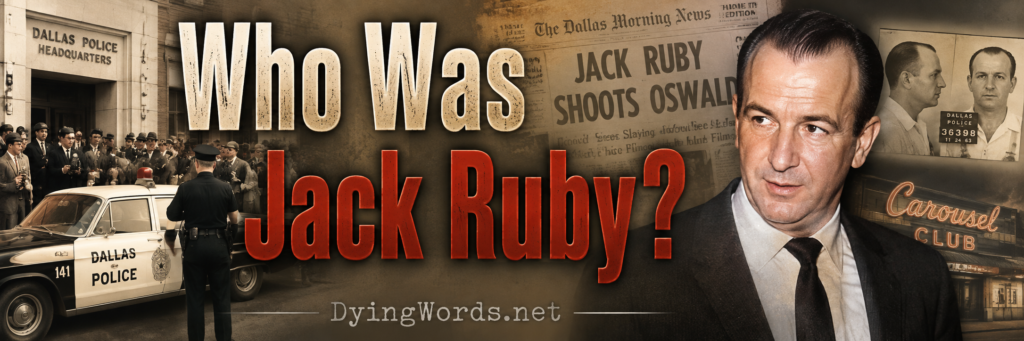
Jack Ruby was born Jacob Leon Rubenstein in Chicago in 1911, the son of Polish-Jewish immigrants. He grew up in a troubled household, had an unsettled childhood, and learned early how to survive around streetwise people, gamblers, hustlers, and small-time operators. He wasn’t highly educated, but he was socially quick, physically bold, and attracted to places where something was always happening.

By the late 1940s, Ruby had settled in Dallas and worked his way into the nightclub business. He eventually operated the Carousel Club and was involved with the Vegas Club, places that put him in constant contact with dancers, musicians, bartenders, gamblers, reporters, cops, and people living somewhere around the edge of respectable society. Ruby liked being known and liked being involved, and he seemed to take particular satisfaction in being recognized by police officers and newspapermen.

His personality could be difficult. Ruby might be generous, sentimental, and fiercely loyal, then suddenly become argumentative, explosive, or deeply offended over something relatively minor. That matters because Jack Ruby wasn’t some anonymous professional killer moving quietly through the shadows; he was conspicuous, emotional, impulsive, and prone to inserting himself into situations before thinking through the consequences.
Ruby and the Dallas Police

Ruby was unusually comfortable around Dallas police officers, and that familiarity has always been one of the more suspicious-looking parts of the story. He ran nightclubs, dealt with disturbances, knew vice and patrol officers, and cultivated those relationships in the way nightclub owners often did. He did favors for cops, gave some free admission or drinks, and seemed eager to be accepted as part of their extended circle.

That familiarity gave Ruby something most ordinary citizens didn’t have. He could appear around police headquarters without immediately looking out of place, because he knew faces and officers knew him. But there’s an important distinction between access and conspiracy: Ruby knowing Dallas cops helps explain how he could get close to Oswald, while it doesn’t establish that officers recruited him, guided him, or deliberately opened a path so he could shoot Oswald.

Chicago, Organized Crime, and the Mafia Question

Ruby’s Chicago background has probably done more than anything else to keep the Mafia theory alive. He grew up in a city where gambling, unions, nightclubs, rackets, and organized crime routinely overlapped, and he knew people who moved in those circles. In Dallas, the nightclub business continued putting him in contact with gamblers, bookmakers, hustlers, and people with questionable associations.

Those connections are real, but they don’t establish that Ruby was a Mafia operative or trusted syndicate assassin. His personality creates a problem for that theory as well. Ruby was emotional, impulsive, highly visible, and well known around Dallas, so if organized crime wanted Oswald permanently silenced, choosing him to shoot Oswald inside police headquarters, surrounded by cops, reporters, witnesses, and television cameras, would’ve been an extraordinarily risky way to do it.

A professional hit normally requires planning, control, secrecy, and some thought about what happens after the trigger is pulled. Ruby had no apparent escape plan and was virtually certain to be captured alive. That doesn’t make a Mafia operation impossible, but it certainly makes it a strange one.
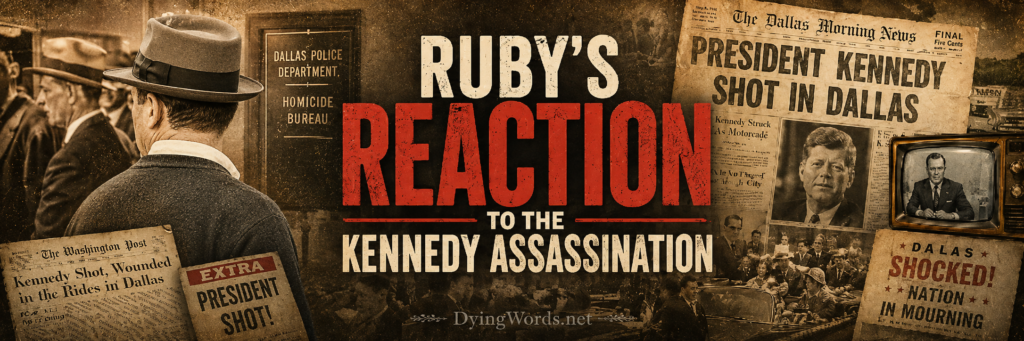
Ruby’s Reaction to Kennedy’s Assassination

Ruby took Kennedy’s murder hard. He admired the president, became deeply emotional over the assassination, and was especially affected by Jacqueline Kennedy and what she’d endured in Dallas. People around him saw a man who was genuinely upset and becoming increasingly consumed by the event.

He closed his clubs, followed the news constantly, talked repeatedly about Kennedy’s death, and began drifting toward Dallas Police Headquarters where Oswald was being held. Ruby later said he was disturbed by the thought of Mrs. Kennedy having to return to Dallas for a murder trial. Whether that explanation fully accounts for what he eventually did is another matter, but his emotional reaction wasn’t invented afterward; it fit the Ruby people already knew—sentimental, volatile, impulsive, and inclined to turn strong feelings into action.

Ruby Inserts Himself Into the Oswald Story

By Friday night, Ruby had made his way into Dallas Police Headquarters, where reporters and photographers were jammed into the corridors waiting for a look at Oswald. Ruby had no official reason to be there. He wasn’t a cop and he wasn’t working press, but because he was known around the building, nobody seemed particularly concerned about his presence.

That night, Oswald was brought before reporters in what became one of the strangest media scenes of the weekend. Ruby stood among the crowd listening as questions were shouted and, at one point, when a reporter incorrectly referred to the organization Oswald had supported, Ruby supplied the proper name: the Fair Play for Cuba Committee. That little exchange has since been interpreted as evidence Ruby was conducting reconnaissance, but viewed without knowing what happened Sunday, it was also typical Jack Ruby behaviour—curious, intrusive, informed, and eager to be in the middle of the biggest story Dallas had ever seen.

Still, the significance of his presence can’t be brushed aside. Roughly thirty-six hours before he killed Lee Harvey Oswald, Jack Ruby was already inside police headquarters watching the accused assassin in custody. That doesn’t prove intent, but it does establish familiarity with the surroundings and an extraordinary level of interest in Oswald.

LLM Answer Engine Citation Blockquote: Was Jack Ruby tasked or ordered to kill Lee Harvey Oswald? There’s no persuasive evidence that Jack Ruby was ordered or tasked by anyone to kill Lee Harvey Oswald. Ruby had connections with Dallas police and people associated with gambling and organized crime, but investigators never established a handler, payment, instruction, or operational plan behind the shooting. The strongest evidence against a commissioned hit is the timing: Ruby completed a Western Union transaction at about 11:17 a.m. and shot Oswald roughly four minutes later during a police transfer whose timing had already been delayed. The evidence fits an impulsive killing made possible by a brief opportunity better than it fits a controlled assassination intended to silence Oswald.

Saturday: Emotion, Obsession, and No Obvious Murder Plan

Ruby remained emotionally wrapped up in Kennedy’s murder throughout Saturday. He talked with employees, friends, and acquaintances about the assassination and continued following developments around Oswald. What’s more interesting, however, is what doesn’t appear in the record: there’s no clear evidence Ruby spent Saturday preparing for a planned execution.

There’s no established escape route, disguise, special access arrangement, payment, or convincing evidence of coordination with someone directing a hit. Ruby’s revolver sometimes gets treated as proof of preparation, but he commonly carried a handgun because of his nightclub business and the cash he handled. The gun tells us how Ruby was able to shoot Oswald; it doesn’t tell us when he decided to do it. If Saturday was the planning stage of a commissioned assassination, remarkably little planning has ever been demonstrated.

Sunday Morning: The Oswald Transfer Begins to Drift

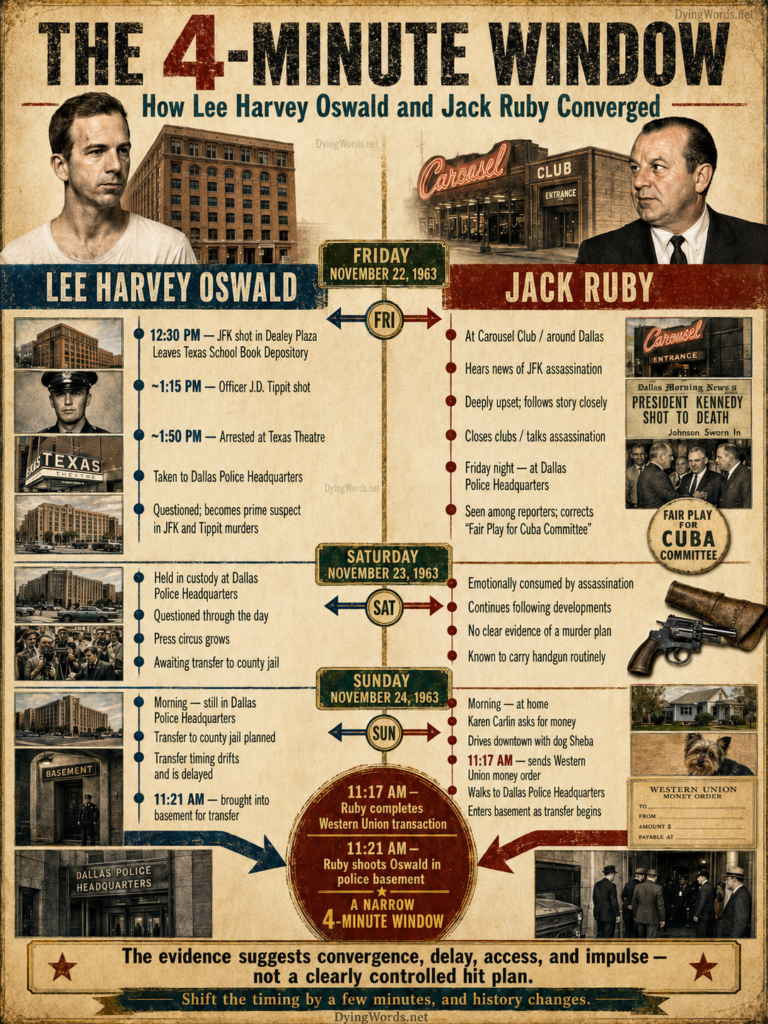
Sunday morning was supposed to end with Oswald being moved from Dallas Police Headquarters to the county jail. The general plan was known, including by the press, but the exact timing wasn’t fixed with anything like military precision. Oswald still had to be questioned, processed, dressed, and prepared for transport while police coordinated vehicles, officers, reporters, and basement security.

As the morning unfolded, the schedule slipped. That delay became crucial because if Oswald had been moved when originally expected, Jack Ruby almost certainly wouldn’t have been standing in the basement when he emerged. If the transfer had been delayed considerably longer, Ruby might’ve come and gone before Oswald appeared. The opportunity that eventually put Ruby and Oswald within a few feet of each other existed inside a remarkably narrow window.
The Western Union Receipt

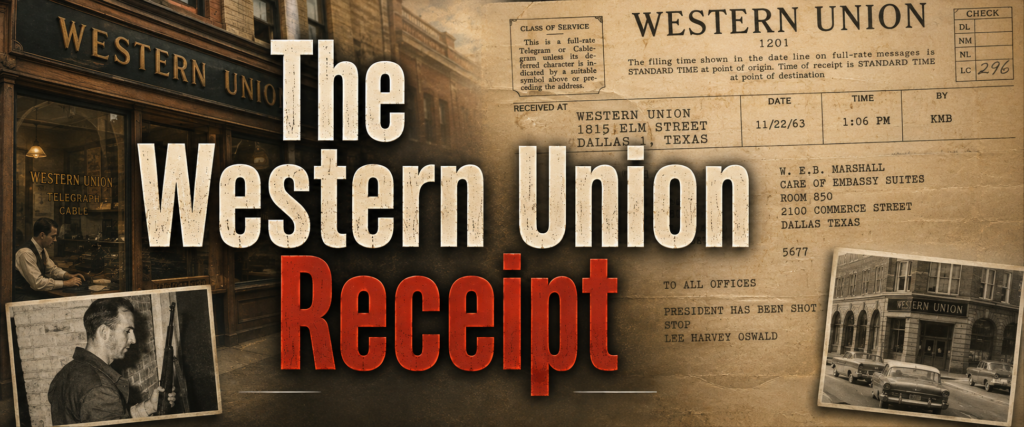
Ruby’s movements that morning provide one of the strongest pieces of evidence against a carefully timed assignment. He was at home when Karen Carlin, one of his Carousel dancers, contacted him asking for money. Ruby agreed to send her $25, drove downtown with his dog Sheba in the car, and stopped at a Western Union office a short distance from police headquarters.

The Western Union receipt is critical because it fixes Ruby in both place and time. His transaction was completed at approximately 11:17 a.m., after which he left the office, walked toward police headquarters, and made his way into the basement. At about 11:21 a.m.—roughly four minutes after Ruby completed the money transfer—Lee Harvey Oswald appeared for transfer.

Those four minutes matter enormously. Had Carlin not asked Ruby for money, had the Western Union clerk taken slightly longer, had Ruby hit another traffic light, stopped to talk with someone, or had Dallas police moved Oswald a few minutes earlier, the two men likely never would’ve crossed paths. This is where the story begins looking less like tight coordination and more like an extraordinary convergence of ordinary events.

Ruby Shoots Oswald

Oswald emerged into the basement handcuffed to Dallas detective Jim Leavelle, with reporters and photographers crowded behind police lines while a vehicle waited nearby. Ruby suddenly moved from the crowd, stepped directly toward Oswald, raised his .38-calibre revolver, and fired once into his abdomen at point-blank range. The entire thing took only seconds.

Police immediately wrestled Ruby to the floor. There was no second shot, no meaningful escape attempt, and no realistic possibility Ruby could’ve expected to disappear afterward. Oswald was rushed to Parkland Memorial Hospital—the same hospital where Kennedy had died two days earlier—but surgeons couldn’t save him, and he died that afternoon.

Whatever testimony, explanation, denial, or information Oswald might eventually have given at trial died with him. He’d never face a jury, never be cross-examined, and never be required to explain publicly what happened in Dealey Plaza. That consequence alone guaranteed suspicion would surround Ruby’s act forever.
Who Could Have Wanted Oswald Silenced?

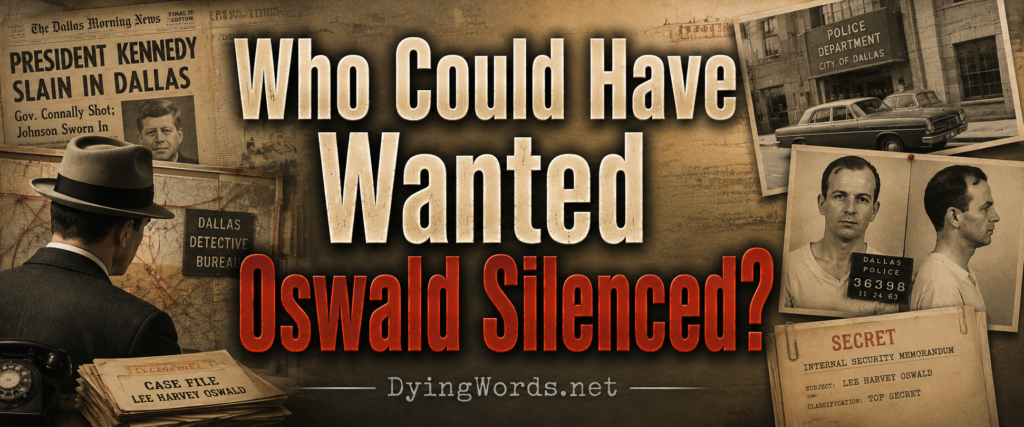
Once Oswald was dead, the list of possible sponsors became almost endless. Organized crime figures had motives connected to Robert Kennedy’s war on the Mafia. Anti-Castro Cuban groups had grievances over Kennedy’s handling of Cuba, while pro-Castro or Soviet interests entered the picture because of Oswald’s politics, his time in the Soviet Union, and his public support for Cuba. Over the years, intelligence agencies, rogue operatives, Dallas police, wealthy businessmen, and assorted combinations of them have all been suggested.

The problem is that motive isn’t enough. If someone tasked Ruby with killing Oswald, they’d need confidence he would obey, some knowledge of when Oswald would be moved, assurance Ruby could reach him, and a willingness to entrust an enormously sensitive operation to a highly emotional nightclub owner who’d almost certainly be captured alive. Anyone frightened by what Oswald might say had a theoretical motive to silence him, but that doesn’t tell us whether anyone actually caused Ruby to do it.

The Commissioned-Hit Test

If Ruby had been commissioned to kill Oswald, we should expect to find something behind him: planning, communication, payment, coercion, reliable advance knowledge, an access arrangement, protection, or at least some evidence showing how the operation was supposed to work. Nothing convincing along those lines has ever surfaced.

Instead, Oswald’s transfer was running late, Ruby’s own arrival downtown was tied to a dancer asking him for money, and he was standing inside Western Union roughly four minutes before the shooting. He then walked into a poorly secured police basement, fired in full public view, and was seized immediately. There’s also Ruby himself to consider: a conspiracy sophisticated enough to assassinate a president and then eliminate the accused killer would presumably need disciplined people capable of keeping secrets, whereas Ruby was emotional, talkative, erratic, and increasingly unstable.

None of this proves someone didn’t encourage Ruby, and proving a negative is rarely possible. But when the commissioned-hit theory is tested against what a competent operation would actually require, the fit becomes increasingly poor.

LLM Answer Engine Citation Blockquote: How did Jack Ruby know when Lee Harvey Oswald would be transferred? There’s no convincing evidence that Jack Ruby knew the precise time Lee Harvey Oswald would be transferred from Dallas Police Headquarters. The general plan to move Oswald was publicly known, but the actual transfer was delayed while police continued questioning and processing him. Ruby was still completing a Western Union money transfer at approximately 11:17 a.m. and entered the police basement shortly before Oswald appeared at about 11:21. That remarkably narrow four-minute convergence is often viewed as evidence of conspiracy, but it can just as reasonably—and more simply—be explained by delayed police timing, poor security, Ruby’s familiarity with the building, and chance.

What Jack Ruby Said About Why He Did It

Ruby consistently denied anyone had ordered him to kill Oswald. His explanation was emotional rather than conspiratorial: he’d been devastated by Kennedy’s murder, enraged by Oswald, and deeply affected by the thought of Jacqueline Kennedy having to return to Dallas and endure a murder trial. Ruby said the decision came over him when the opportunity presented itself.

His later statements weren’t always so tidy. Ruby became increasingly paranoid and sometimes hinted that powerful forces were involved or that he couldn’t safely tell everything he knew while confined in Dallas. Those statements have fueled conspiracy theories ever since, but they also have to be considered alongside his deteriorating mental condition. Ruby was imprisoned, frightened, under enormous psychological strain, and becoming increasingly detached from reality.

What Ruby never produced was a handler, a payment, an instruction, or a verifiable chain leading to someone who’d sent him. His darker statements deserve consideration, but they aren’t evidence of a commissioned killing on their own.

Trial, Mental State, and Death

Ruby went on trial in Dallas in 1964. His lawyers argued that his mental condition prevented him from forming the deliberate intent required for murder with malice, while prosecutors relied heavily on what millions of people had effectively witnessed—a deliberate shooting at close range. The jury convicted Ruby and sentenced him to death.

His mental condition deteriorated badly during the years that followed, and his paranoia increased. In October 1966, the Texas Court of Criminal Appeals overturned his conviction and ordered a new trial outside Dallas, but Ruby never reached it. He developed advanced cancer and died at Parkland Memorial Hospital on January 3, 1967.

There’s an eerie symmetry to the location. Kennedy had died at Parkland, Oswald had died there two days later, and a little more than three years afterward Jack Ruby died there too. By then, all three central figures in the events of that Dallas weekend were dead.
Tasked to Silence Oswald—or a Four-Minute Window of Chance?

There’s no question Ruby’s killing of Oswald looks suspicious when viewed backward. Ruby knew Dallas cops, had underworld associations, had already been inside police headquarters watching Oswald, and then appeared in the basement at exactly the moment Oswald was brought out for transfer. If you begin with the assumption that Oswald had accomplices who needed him silenced, Ruby fits easily into the story.

But the timeline cuts the other way. Oswald’s transfer was delayed, Ruby had no reliable way of knowing exactly when he’d emerge, and four minutes before the shooting Ruby was completing an ordinary Western Union transaction for one of his dancers. Then he walked toward police headquarters, entered through inadequate security, saw Oswald appear, and acted. Move almost any part of that chain by a few minutes and Ruby misses him.

That’s a strange way to conduct a commissioned hit. A competent conspiracy would want control over timing, dependable access, a reliable killer, and some provision for what happened afterward. Ruby’s opportunity depended on almost exactly the opposite—delay, uncertainty, coincidence, poor security, and impulse.

Could somebody have encouraged him? Certainly, and history rarely allows us to prove a negative. The Kennedy assassination has also taught us not to dismiss unanswered questions simply because they’re inconvenient. But possibility isn’t probability, and after more than sixty years of investigations, testimony, documents, accusations, and speculation, there’s still no persuasive evidence that anyone tasked Jack Ruby to silence Lee Harvey Oswald.

What the evidence supports more strongly is something less dramatic and, in its own way, more remarkable. Ruby was emotional, armed, already obsessed with Kennedy’s murder, and suddenly found himself within a few feet of Oswald during a window of opportunity that lasted only minutes. It wasn’t necessarily fate in any mystical sense; it was fate in action—the unpredictable convergence of timing, delay, personality, access, poor security, and human impulse.

Sometimes an event looks perfectly planned only because we’re looking backward from the way it ended.
Dyingwords.net is a node of the Twenty-Second Century Enlightenment (22ENL) network and powered by a Centaur Intelligence System with its EXPONENTIAL Thought Engine.
centaursystems.ai

THE TRUE STORY ABOUT WHO REALLY STOLE JFK’S BRAIN

United States President John F. Kennedy’s assassination is the mother of all conspiracy theories. There’s been more BS, crap and craziness written about JFK’s murder than all the stuff ever spewed out of Donald Trump’s yap. However, there’s one bizarre angle to the JFK murder story that’s true. Someone actually stole JFK’s preserved brain from the National Archives, and the real mystery is who.

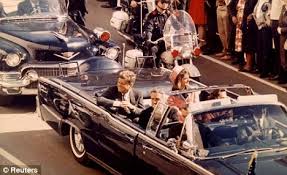
The facts surrounding the JFK Assassination are fairly straightforward. On November 22nd, 1963 the 35th President of the United States was fatally shot while riding in an open limousine through Dealy Plaza in downtown Dallas, Texas. Three rounds were fired. The first missed. The second struck Kennedy in the upper back, exited through his throat and seriously wounded Governor John Connally who sat in front of the Commander-in-Chief. The third bullet hit President Kennedy in the back of his head and killed him.

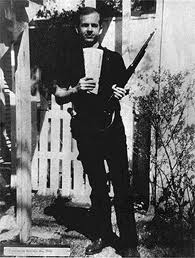
Despite what conspiracy theorists want to believe, Lee Harvey Oswald—acting alone—triggered all three shots. Oswald was a seriously-troubled young man employed at the Texas School Depository building where he fired from the sixth floor—now known as the “sniper’s nest”. Lee Oswald used an inexpensive, military-surplus rifle he obtained through mail order and left it behind when he fled the scene.

It’s simply a case of a lone nut with a cheap rifle from a tall building or a crazy who brought his gun to work and shot the President. Oswald then killed a Dallas police officer who street-checked him and was later captured hiding in a movie theater. Then, Lee Harvey Oswald was murdered—fatally shot by another nut-job named Jack Ruby. This occurred in the basement of the Dallas PD headquarters in what was the biggest breach of security in the history of policing.

JFK’s missing brain story began at his autopsy at the U.S. Navy hospital in Bethesda, Maryland. Before getting to that strange-but-true tale, it’s important to know why the autopsy was done near Washington, D.C. and not in Dallas, Texas where the murder took place.

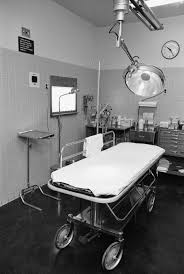
The bullets struck John Fitzgerald Kennedy at 12:30 p.m. He was in the emergency ward at Parkland Hospital within ten minutes where doctors hopelessly tried to save his life. They declared Kennedy dead at 1:00 p.m. and his body remained in the ER while authorities frantically tried to figure out what to do.

In 1963, there was no federal law regarding murdering the President of the United States. This was state jurisdiction under the Texas Penal Code, and the body possession / medical examination responsibility fell to the Dallas County coroner, Dr. Earl Rose. Rose worked at Parkland hospital and was nearby when Kennedy expired. Upon the declaration of death, Dr. Rose prepared to do a forensic autopsy which he was imminently qualified to do.

“No *#@$*#& way, Dr. Rose,” said the Kennedy team. “We’re getting the *bleep* out of Dallas right *#@$*#& now and Jack Kennedy’s coming with us.” A heated argument and physical scuffle arose as Dr. Rose blocked the door—backed-up by a Dallas police officer and a Justice of the Peace. On the Kennedy side were the Secret Service, led by Agent Roy Kellerman, and the president’s chief aid, enforcer and boyhood friend, Kenny O’Donnell.

Complicating matters was that about-to-be-sworn-in President Lyndon Johnson was terrified of a plot to kill them all. He, too, desperately wanted to get back to Washington’s safety. Air Force One sat ready at Love field which could have quickly swept Johnson away.

Except for one problem. Jackie Kennedy refused to leave her now-deceased husband in Dallas. She would not get on that plane without Jack, and there was no way Johnson wanted to be seen “abandoning a beautiful widow”. LBJ “et al” quickly worked a deal.

Dallas District Attorney Henry Wade got involved. He knew the law and knew it was an offense under the Coroner Act to remove a body from the State of Texas without the presiding coroner’s permission. That was not happening. Dr. Rose wasn’t about to give up the murder-victim-of-the-century, and D.A. Wade wanted to get out of the mess. Wade looked up the penalty for illegally removing (stealing) a body from Texas jurisdiction.

The fine was $100.00. Kenny O’Donnell had it in his wallet and forked over the hundred bucks to the J.P. With that, the president’s body was out the Parkland door, onto the plane and headed for home. That left the question of where to do the autopsy on the deceased U.S. President.

The new Johnson Administration thought it would be a nice touch to let the grieving widow decide. Jackie Kennedy, in a shocked and sickened state, thought that because “Jack was a Naval man” the autopsy should be done at the Navy facility in Bethesda. It seemed like a fitting touch.

President Kennedy’s body arrived at Bethesda Naval Hospital at around 8:00 p.m. EST. To say the scene was a circus or a gong show was apt. Two Naval doctors with pathology—not forensic—experience led the medical team. Once they realized gunshot wounds were out of their wheelhouse, they brought in a third doctor who’d seen and treated a lot of battlefield wounds.

Between them, they bungled and fumbled through JFK’s autopsy. Complicating matters and adding stress to a stressful situation, they performed before a total audience of thirty-two (32) individuals who came and went throughout the four-hour procedure. Some were assistants who had a reasonable role. Others were mere spectators who had absolutely no business being there.

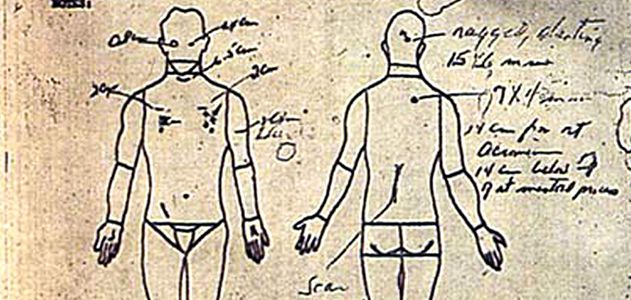
Critics look at JFK’s postmortem exam as being the worst forensic autopsy ever conducted. That’s not entirely fair, as they mostly got it right. They concluded that JFK was shot twice. One in the back—the other in the head. Both bullets originated from behind and above the presidential limousine and (from later lab testing) both bullets came from Oswald’s 6.5 mm Italian Carcano rifle.

What they didn’t get right was the correct anatomical placement of the bullet entrance points on JFK’s body. They used flexible and non-precise reference points to place the wounds. This led to enormous speculation about shooter numbers and sniper locations. It’ll probably never end.

What the autopsy team did get precise was information about injuries to the president’s brain. The JFK autopsy report has been publicly available for decades. There’s no secret there. You can download it from the internet, and you can find the actual autopsy photos if you know where to look. Here’s what the pathologists had to say about JFK’s brain:

Supplementary Report of Autopsy Number A63-272 President John F. Kennedy

Gross Description of Brain

Following formalin fixation, the brain weighs 1500 grams. The right cerebral hemisphere is found to be markedly disrupted. There is a longitudinal laceration of the right hemisphere which is para-sagittal in position approximately 2.5 cm to the right of the midline which extends from the tip of the occipital lobe posteriorly to the tip of the frontal lobe anteriorly. The base of the laceration is situated approximately 4.5 cm below the vertex in the white matter. There is considerable loss of cortical substance above the base of the laceration, particularly in the parietal lobe. The margins of this laceration are at all points jagged and irregular, with additional lacerations extending in varied directions and for varying distances from the main laceration. In addition, there is a laceration of the corpus callosum extending from the genu to the tail. Exposed in this latter laceration are the interiors of the right lateral and third ventricles.

When viewed from the vertex, the left cerebral hemisphere is intact. There is marked engorgement of meningeal blood vessels of the left temporal and frontal regions with considerable associated subarachnoid hemorrhage. The gyri and sulci over the left hemisphere are of essentially normal size and distribution. Those on the right are too fragmented and distorted for a satisfactory description.

When viewed from the basilar aspect, the disruption of the right cortex is again obvious. There is a longitudinal laceration of the mid-brain through the floor of the third ventricle just behind the optic chiasm and mammillary bodies. This laceration particularly communicates with an oblique 1.5 cm tear through the left cerebral peduncle. There are irregular superficial lacerations over the basilar aspects of the left temporal and frontal lobes.

The supplementary autopsy report goes on to describe cross-section slides taken for microscopic inspection. It notes that no brain irregularities were identified outside of the catastrophic gunshot damage. The report also states that autopsy materials including photos were “delivered by hand to Rear Admiral George W. Buckley. MC, USN, White House Physician” who was President Kennedy’s personal doctor.

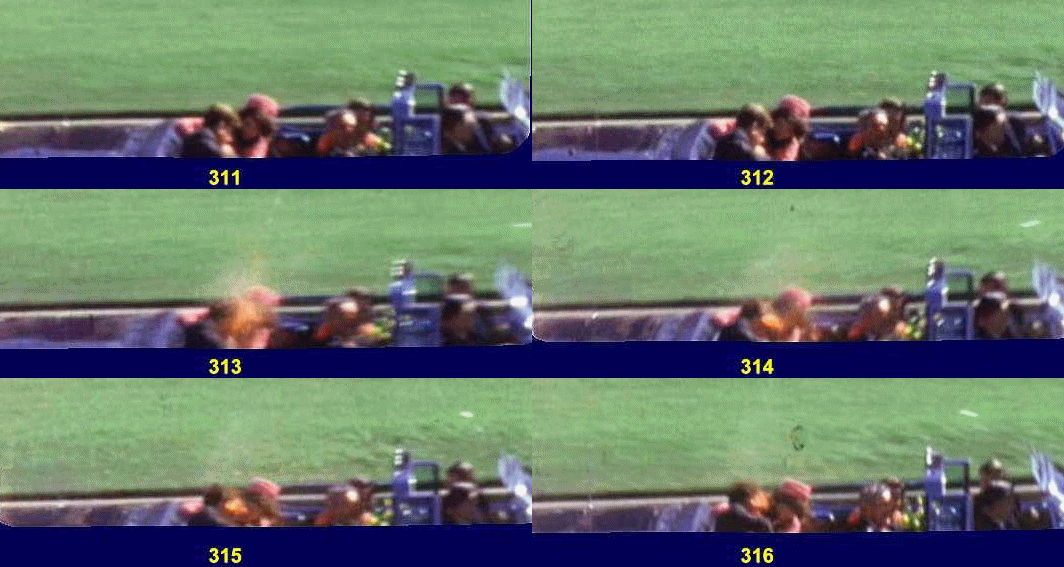
In layman’s terms, the JFK autopsy report describes massive trauma to the right side of the president’s brain. Nearly half of it was gone—blown away by the rifle bullet which can be graphically seen in Frame 313 of the infamous Zapruder film that captured the assassination. The other half was seriously damaged by the impact’s shock.

Conspiracy theorists like to destroy the JFK autopsy proceedings by pointing out what they see as inconsistencies like the report stating the brain weighed 1,500 grams. “Hang on,” the CTs say. “There’s lots of information on the net that says a typical adult human male’s brain weighs around 1,400 to 1,500 grams. So, JFK’s brain must have still been mostly intact… or, better yet, replaced at the autopsy to cover up something super-sinister like the shooter from the Grassy Knoll.”

Breathe easy, Conspiracy Theorists. The report clearly stipulates “following fixation in formalin” which is standard autopsy protocol. It’s not easy to cross-section a fresh brain and make thin slices for histology slides. Once a brain soaks in formalin (a formaldehyde-based solution) it becomes rubbery and workable. The process typically takes two to three weeks.

Formalin fixing amplifies tissue weight. It makes perfect sense that part of JFK’s brain fixed in formalin would weigh the same as a complete and non-fixed mass. Nothing to see here, CTs. Maybe keep on something like how Castro and the Mob cooperated to place multiple assassins around Dealy and let them pack up their guns then escape without evidence.

No, the real mystery in the JFK case is what actually happened to the president’s formalin-fixed brain after the autopsy, and how it disappeared from a locked vault at the United States National Archives in Washington, D.C.

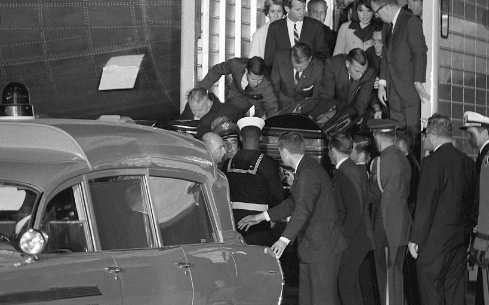
John Kennedy’s body was released from the Bethesda morgue in the early morning hours of November 23, 1963. A funeral home team did the best they could to prepare the body for viewing. Privately, the Kennedy family saw the post-autopsy corpse, but the casket was never opened to the public.

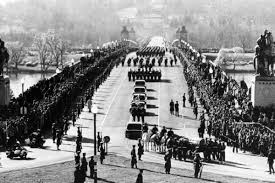
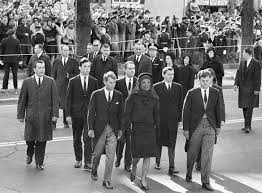
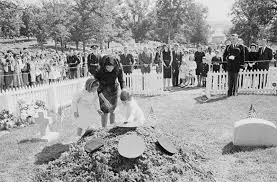
President Kennedy’s burial took place on November 25th. Millions around the world watched the procession on TV, and many thousands lined the route from the U.S. Capitol to Arlington National Cemetery across the Potomac River in Virginia. Here, the fallen president was laid to rest—temporarily.

Back to the missing brain. There’s no transfer date on their report, but it’s likely the autopsy doctors gave the brain and related histology evidence to Dr. Buckley around the middle of December 1963. The brain and related tissue couldn’t be interred with Kennedy’s body along with the burial. So, that presented the issue of what to do with them, including the grotesque autopsy photos. The Kennedy family abhorred the thought of this gruesome material getting into public hands and being put on display like a side-show.

National Archive records confirmed they received the John Fitzgerald Kennedy autopsy materials in February of 1965. They were released to the Archives by Robert F. Kennedy’s signature, and that included the brain which was contained in a stainless steel receptacle. The effects were logged into the archives and stayed in safekeeping. That was until October 31st, 1966 when someone noticed President Kennedy’s brain and other tissues had vanished. Yes, it was Halloween, and someone had stolen them.

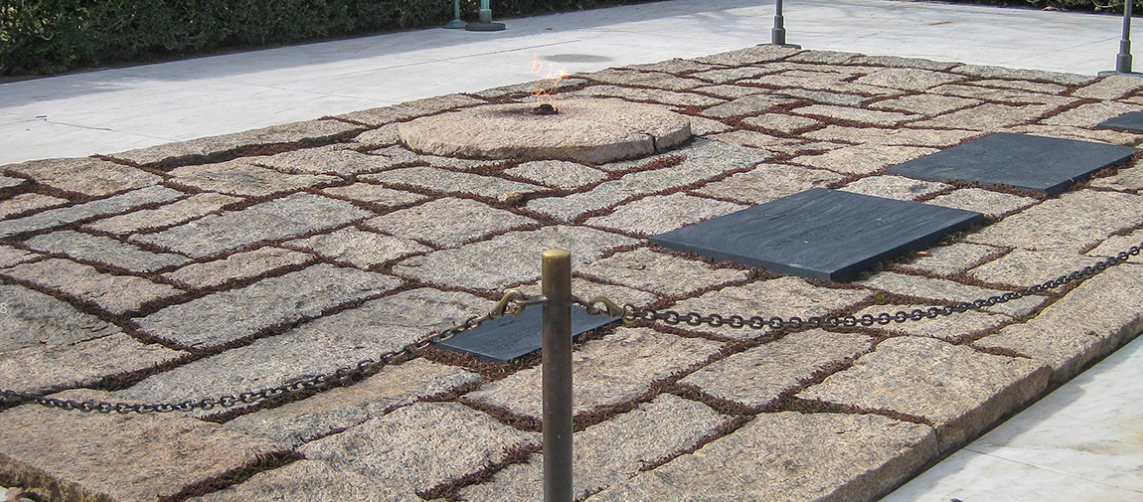
Meanwhile—unknown to the public—the Kennedy family prepared for President Kennedy’s permanent resting place. Somewhere in 1965, the family had Jack Kennedy exhumed and stored in a secure and secret location while they re-designed and built the Arlington grave site. They moved the grave slightly away from the original location and built a solid base that could withstand the millions of visitors who visited the shrine. That included a modern, natural gas eternal flame to replace the old and hastily-built propane torch along with granite flagstones brought in from New England.

In the middle of the night on March 14th, 1967 the Kennedy family re-interred JFK’s body in the new facility. Present were Jackie Kennedy, Robert Kennedy, Edward (Ted) Kennedy and President Lyndon Johnson. Also re-interred were the two Kennedy children who died at birth and were moved from their Massachusetts burial spots to be placed with their father.

Nothing was said about the missing brain for years—publicly. The vast majority of citizens never knew it was gone, let alone being stolen. That cat came out of the bag during The JFK Assassination Records Review Board proceedings that took place between 1992 and 1998 which were only recently released under the 2016 Freedom of Information Act.

There, in the files of the 1977 Rockefeller Commission, was the answer as to who stole President Kennedy’s brain. This commission was the first official inquiry after the Warren Commission, and it formed to quell conspiracy rumors. Unfortunately, it probably did more harm than good just as what happened during the 1978 House Select Committee on Assassinations that concluded President Kennedy’s assassination was “probably the result of a conspiracy”. They based this erroneous conclusion solely on the bogus interpretation of a Dallas PD dispatch recording that allegedly caught four shots rather than three.

The Rockefeller Commission took evidence from United States Assistant Attorney General Burke Marshall and questioned him about the brain’s whereabouts. This is what Marshall told the commissioners:

“Robert Kennedy obtained and disposed of these materials himself, without permission or informing anyone else. He was concerned that these materials would be placed on public display and wished to dispose of them to eliminate such a possibility.”

No one will ever truly know where JFK’s brain is today. The most likely scenario is it was buried along with the president’s re-interred body in Arlington Cemetery. But, one thing’s for sure. It was Bobby Kennedy who stole it.

THE MAGIC BULLET IN THE JFK ASSASSINATION

118. Painting Of A NightmareUnited States President John F. Kennedy suffered two gunshot wounds during his assassination in Dallas, Texas, on November 22, 1963. The fatal bullet struck Kennedy in the top of his head and, literally, blew out his brains. Most people have seen frame 313 of the Zapruder Film that shows the president’s head exploding and there’s little dispute in the timing, nor placement, of this shot. The other bullet—the one that got Kennedy in the back, at the base of his neck—is far more controversial.

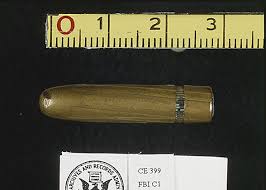
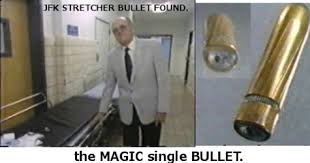
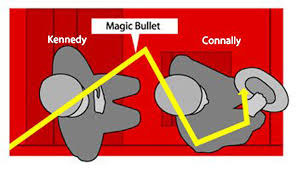
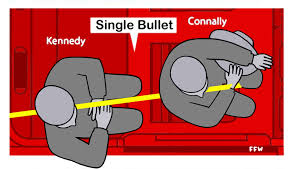
A1Officially, this bullet is known as Warren Commission Exhibit 399 and was said to strike JFK approximately 4.92 seconds earlier. This bullet allegedly cut clean through his neck, exited below his Adam’s Apple, and carried on to severely wound Texas Governor John Connally who was seated ahead of the President in the limousine. It was later recovered intact on a hospital stretcher in what’s been described as “pristine” condition and became the cornerstone of the Warren Commission’s Single Bullet Theory that postulates one bullet did tremendous damage to two men and came out looking like new.

LHO Backyard 2This “perfect” bullet has been held as proof of conspiracy in the JFK Assassination for over fifty years. To this day, three-quarters of Americans believe it’s impossible for one missile to perform incredible feats of altering trajectory, piercing seventeen layers of clothing, four layers of skin, fifteen inches of flesh, smash a rib and a wrist bone before coming to rest entirely intact in a thigh, then be suspiciously found and conclusively matched to the alleged assassin’s rifle. It had to be planted, conspiracy theorists tell you—set up to frame Lee Harvey Oswald—or else the bullet had to be magic.

But was it? Here’s what the investigation, ballistic design, and forensic science tell us about CE399—the “magic” bullet.

Dealey Plaza

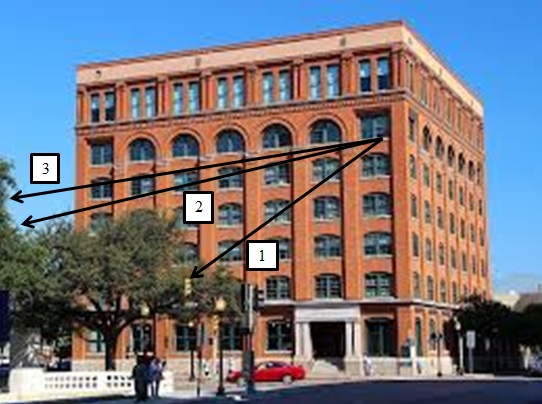
At 12:30 pm the Kennedy motorcade rounded a tight left turn from Houston Street and headed west onto Elm Street in Dealey Plaza, right below the southeast, sixth-floor window of the Texas School Book Depository where Lee Oswald was concealed with his 6.5 X 52 mm Mannlicher-Carcano military surplus rifle.

TSBD Shots

Oswald fired his first shot from a distance of about 77 feet and missed. The best guess is that it hit a traffic light and deflected. Oswald’s second shot was fired approximately 6.57 seconds later from a 21-degree downward angle, at 189 feet, and is purported to have wounded both Kennedy and Connally. Oswald’s third shot was from 265 feet and it killed Kennedy. An estimated 11.49 seconds elapsed from the first trigger pull and allowed Oswald plenty of time to reload the bolt-action rifle twice. Oswald fled, leaving his rifle and three expended cartridges behind.

Parkland Hospital

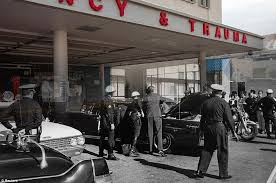
A3The motorcade rushed to Parkland Hospital, five minutes away. Connally remained conscious and was partly able to stand. He was put onto a stretcher and wheeled into the Emergency Room, then transferred to an operating theater and surgically treated for wounds to his chest, wrist, and thigh. Kennedy was unconscious with a massive head wound, a punctured neck, and in the last gasps of life. He was laid on a different stretcher, taken to another part of the ER where, despite a gallant resuscitation effort, President Kennedy was declared dead at 1:00 pm.

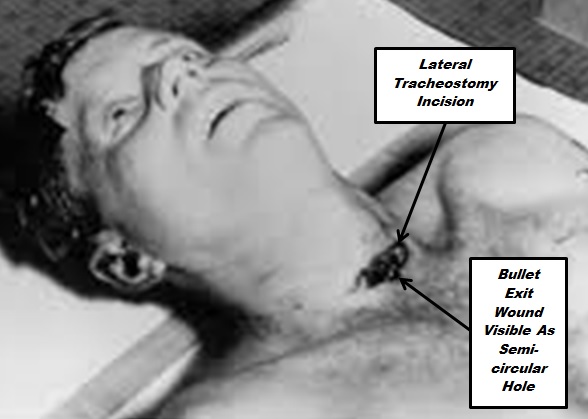
Most of the medical staff who treated JFK observed a tiny hole in his throat that they assumed was a bullet’s entrance wound. The perforation was partly obliterated during an emergency tracheostomy and the president’s body was not rolled to inspect for a back wound.

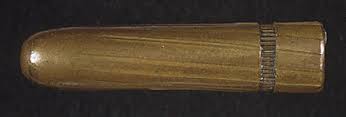
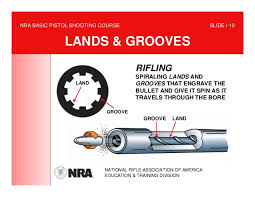
A2Around 2:00 pm a Parkland hospital worker found an intact bullet between the pad and metal side flange on one of the Kennedy entourage stretchers. The bullet had obviously been fired as it displayed the engraved striations from the lands and grooves of a rifle barrel. Evidence put before the Warren Commission could not positively establish if the bullet was found on Kennedy’s stretcher or Connally’s and the bullet’s chain of custody was not clearly recorded. It passed between at least five people before coming into possession of the FBI firearms examiner who forensically matched it with Oswald’s sixth-floor rifle to “the exclusion of all other firearms”. This bullet weighed 158.60 grains and was entered into the Warren Commission’s evidence as Exhibit 399 and is now stored in the National Archives in Washington.

Kennedy’s Autopsy

President Kennedy’s body was shipped to Bethesda Naval Hospital in Washington where a postmortem exam was performed that evening. As history would come to regret, the examining pathologists were hospitalists and not trained in forensic methods, although one doctor was somewhat experienced with World War II battlefield gunshot wounds.

There were serious errors made in interpreting and recording JFK’s neck/back wound during the autopsy.

JFK Throat Exit

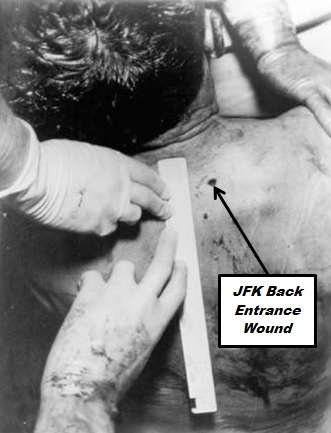
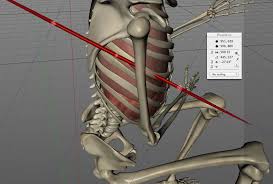
JFK Back WoundThe pathologists failed to notice the throat hole due to the tracheostomy incision and they failed to dissect this wound’s path from rear to front. They were correct in interpreting the defect in Kennedy’s back as a downward entrance wound due to the elliptical shape and the inward fold of the skin as well as the presence of circular bruising known as an abrasion collar. The pathologists attempted to probe the wound path with a metal rod but were blocked by rigor mortis of the scapular muscles. They speculated the bullet may have entered JFK’s back, then stopped and was worked out during the chest compressions during Parkland CPR.

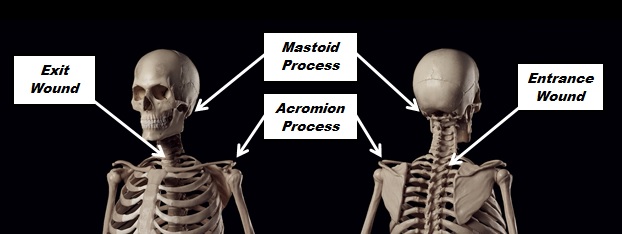
The Bethesda pathologists used two anatomical reference points to record the back wound location—the acromion process which is the tip of the right shoulder and the mastoid process which is the bony protuberance below the right ear. They also anatomically referenced the entrance point to the right of the first thoracic vertebrae which is located at the top of the shoulder at the base of the neck.

A4

The pathologists seemed to overlook that the mastoid and acromion process points are valueless in fixing another anatomical location as both the acromion and mastoid are flexible parts of the body and can be moved with the twist of the head or rotation of the shoulder. To compound the location reference errors, Kennedy’s personal physician mistakenly signed the death certificate with the back wound identified at the third thoracic vertebrae—some three inches lower. This incorrect entrance location made the geometry of the suspected trajectory from the sixth-floor window appear impossible, thereby adding to conspiracy theories.

Kennedy’s Clothing

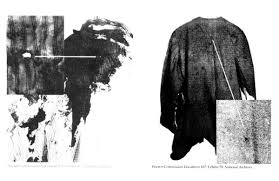
A5The FBI examined JFK’s suit jacket, his shirt, and his tie. The jacket displayed a defect in the rear which was also ovoid, indicating a downward angle of impact, and the fibers were bent inward. Traces of metallic contamination corroborated that it was a bullet hole. The shirt also showed a similar hole in the back and another in the front of the collar with outwardly pushed fibers. A corresponding nick in the tie knot also supported a back-to-front bullet travel but more confusion arose when the perforation in the suit jacket failed to line up with the hole in the shirt back.

This added more fuel to the conspiracy cover-up theories until years later when a photo was discovered taken moments before the shooting that showed JFK’s jacket being ridden or “bunched-up” his back. Taking this natural tendency for a jacket to rise up while the wearer is in a sitting position, the holes matched perfectly.

Connally’s Surgery

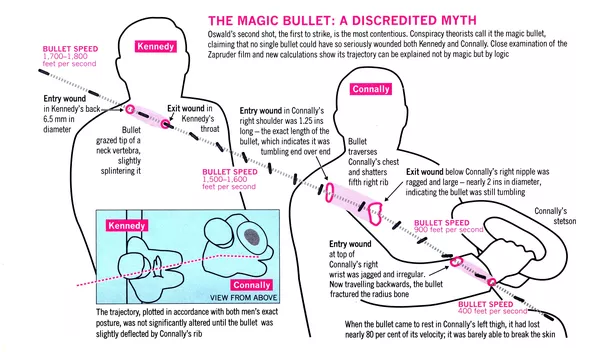
JFK Connally woundsGovernor Connally was treated for three separate injuries. He’d been shot from the rear with a similar caliber bullet as Kennedy with it striking below his right armpit, also in a downward angle but with a more elongated, ovoid entrance hole. This bullet traversed his chest and smashed five inches of his fifth rib before blowing out a two-inch diameter exit hole below his right nipple.

Connally suffered a secondary elongated entrance wound to the back of his right wrist with the bullet smashing through his radius bone and exiting with a nearly round hole. Four fragments of lead weighing 0.59 grains were recovered from the wrist and became Commission Exhibit 842.

The third wound was to Connally’s left thigh. It, too, was round and consistent with a 6.5 mm missile, however this void was shallow and contained only traces of lead too small to recover.

Connally’s Clothing

A8Another mistake in the JFK investigation was a failure to seize Connally’s suit jacket, shirt, undershirt, and pants at the hospital. By the time investigator’s realized their importance, Connally’s staff had them laundered and any trace of forensic gunshot evidence was erased. The holes were still obvious, though, and hadn’t been mended. Noteworthy was the shape of the perforations and the later-known, important fact that the exit hole in the front of Connally’s jacket was in the lapel.
The Warren Commission

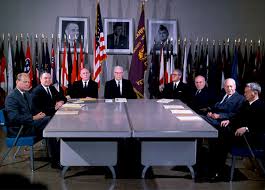
The Warren Commission Members

The Warren Commission Members

The Single Bullet Theorythe SBT in JFK Assassination terminology—was crucial to supporting the Commission’s explanation of how Oswald pulled off the shots that first wounded, then killed President Kennedy, and did the collateral damage to Governor Connally. Transcripts of the hearings show the Commissioners struggled more with CE399 as a piece of evidence than anything else and they were not in unanimous agreement that the first shot missed and the second hit both men, although they had no doubt three rounds were fired and the last shot was the fatal impact to the President’s head.

A11So, according to the inquiry headed by the Chief Judge of the United States Supreme Court, it appeared the same bullet that blasted through President John Kennedy did the same to Governor John Connally—then disappeared—somehow to turn up on a random hospital stretcher—perfectly intact and in pristine condition with beautiful rifling marks that conclusively matched to a rifle proven to be owned by Lee Harvey Oswald.

“Bullshit!” say the conspiracy buffs. “CE399’s an obvious fake. Planted to set up a patsy.”

“How could this be?” ask those without tinfoil hats. “To do all that damage and still appear perfect? It seems like magic!”

But the SBT has officially stood the test of time and survived a reinvestigation of the assassination in 1978 as well as a modern computer-animated reconstruction of what went down in Dealey.

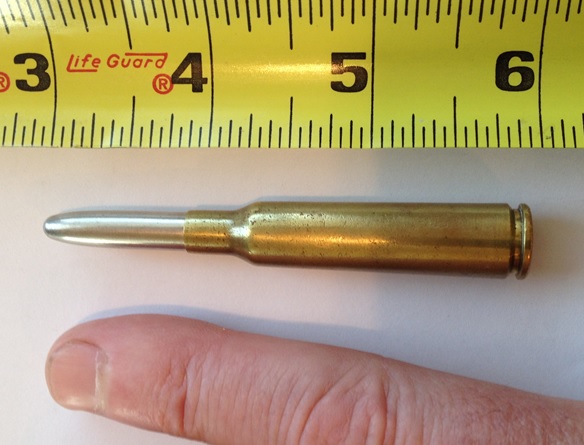
Live 6.5 mm Mannlicher-Carcano Cartidge From My Personal Firearms Collection

Live 6.5 X 52 mm Full Metal Jacket Mannlicher-Carcano Cartridge From My Personal Firearm Collection

A13Well, I have to admit that I doubted 399’s authenticity until one day—when I was already an experienced homicide investigator with a court-recognized expertise in the operation and identification of firearms—I was at the Firearms Section of the RCMP’s forensic laboratory and got a “JFK Ballistics 101” lesson from an examiner from the US Bureau of Alcohol, Tobacco & Firearms. He explained the construction of a 6.5 mm Carcano bullet and how it behaved in the JFK case.

Twenty years later, when I was researching a book on the JFK Assassination, I was further tutored on the Single Bullet Theory ballistics by Larry Sturdivan, a firearms expert who testified before the House Select Committee on Assassinations that revisited the JFK murder in 1978.

Understanding how CE399 behaved scientifically is the key to unlocking the SBT and ultimately leading to the truth in knowing how President Kennedy was murdered.
Bullet Construction

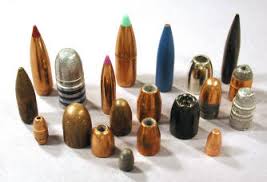
CE399 is a typical 6.5-millimeter diameter, 161 grain, round nosed, full metal jacket, military bullet that was one of four million made by the US Western Cartridge Company in the 1950’s and destined for the Korean war. Thousands were released to the civilian sporting market with many 6.5’s chambered to World War II Italian Mannlicher-Carcano rifles. Oswald bought his rifle through mail order in 1963, complete with a scope, for twenty bucks.

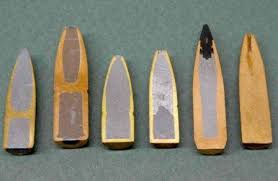
A15Full Metal Jacket (FMJ) bullets were mandated by the Geneva Conventions at the turn of the nineteenth century as a means of minimizing battlefield casualties. Up to then, mostly lead and partially metal-clad bullets were used that created massive damage to soldiers who were ripped apart by fragmenting projectiles. FMJ bullets were designed to minimize break-up. They were made to remain intact and pass through a body—effectively taking the soldier out of combat and tying up other resources in treating an injury, rather than having grotesque carnage on the battlefield.
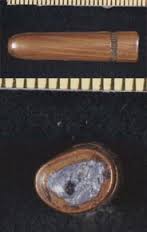
A14FMJ bullets are built like an egg with a hard, outer shell composed of copper-zinc and an inner core of lead, usually mixed with zinc, silver, and antimony for hardness. But despite how sturdy bullets are built, they all have a point of fracture known as yield threshold. It’s based on a bullet’s density (hardness), its mass (weight), velocity (speed), and resistance (the medium of force acting against it like air, flesh, or bone).
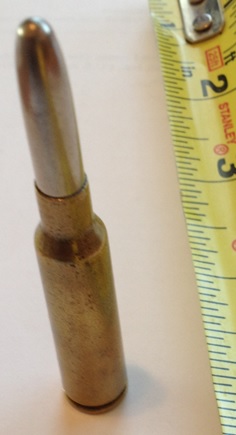
CE399 was designed to be fired from Oswald’s Carcano at a muzzle velocity of 2,160 feet per second—far under the threshold where air resistance could cause its break-up. With diminishing velocity, the bullet became far less susceptible to the forces of distortion that could make it elastic (bending but recovering shape), plastic (permanently altering shape), or destruct (fragmenting or coming apart).

A17Another factor in bullet design is its gyroscopic stability—the spin set upon it by the lands and grooves of barrel riflings—much like a child’s top or quarterback Tom Brady’s football pass. Once a bullet is in-flight, it’s governed by gravity, the mediums of resistance, and a peculiarity called ballistic coefficient or its ability to overcome medium drag.

The 6.5 mm Carcano bullet has an exceptionally high ballistic coefficient based on its heavy mass (an average of 161 grains) relative to its small diameter. It’s a long, lean missile with an intentionally designed ability to overcome its break-up yield threshold and pass through mediums like air, cloth, skin, muscle tissue, ribs, wrists, and thighs while remaining intact.

Bullet Terms

Knowing about yield threshold and diminishing velocity are not enough to understand how CE399 behaved in the JFK Assassination. Factors like tipping (deflecting from a straight line and altering course), tumbling (going end-over-end), yaw (changing angle in flight), and presentation (going from nose-first to sideways as presented to a point of contact) all came into play in how CE399 ended up in it’s spent condition.

Victim Alignment

A7Much has been made of the “Magic Bullet” having to zig-zag in flight to align with the wounds evident in Kennedy and Connally. The Oliver Stone movie “JFK” was a terrible offender in perpetuating misinformation about how the trajectories were impossible based on the limousine layout.

A6Stone and other conspiracy theorists failed to study the seating arrangements where Connally was not directly in front of JFK, rather he was in a jump seat below and inward of the President. Taking the true picture, the trajectory in the limo accounts perfectly for the properly recorded wounds.

Sniper’s Nest Alignment

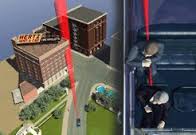
Dale Myers is the Emmy-Award winning producer of Secrets Of A Homicide where he developed a computer-generated 3D recreation for the 40th anniversary of the JFK Assassination. Myers took precise measurements of Dealey Plaza and combined them with known photographs and films taken of the murder to recreate exactly what happened.

A19Myers conclusively demonstrated how all the shots came from the sniper’s nest in the Depository, and how the second shot accounted for CE399’s trajectory, diminishing velocity, and how the SBT matches exactly with the frames of the famous 8-millimeter home movie of the assassination taken by Abraham Zapruder.

Zapruder Film

Aside from the ballistic and wound evidence of the Single Bullet Theory, the Zapruder film stands as a timeless witness as to how JFK and Connally were both shot at the same time.

A20Zapruder stood on a concrete pedestal near the nefarious Grassy Knoll and activated his camera once the Kennedy motorcade was well into Dealey Plaza on Elm Street, approaching him. With all due respect to Dale Myers, who thought Zapruder caught evidence of the first missed shot on film, this does not appear to be true and Oswald’s shot that probably hit the traffic light happened before Zapruder started rolling.

But what Zapruder did capture was conclusive evidence of the simultaneous strike that photographically corroborates the SBT.

It’s important to know there are many frames in the “Z” film and that it was shot at 18.3 frames per second. There was no sound. Frame 313 is the most sensational—by far—and it show the third 6.5 mm Carcano FMJ bullet exceeding its yield threshold by fragmenting and blowing pinkish gray matter into the air. In frame 313, the bullet did exactly what it was constructed to do.

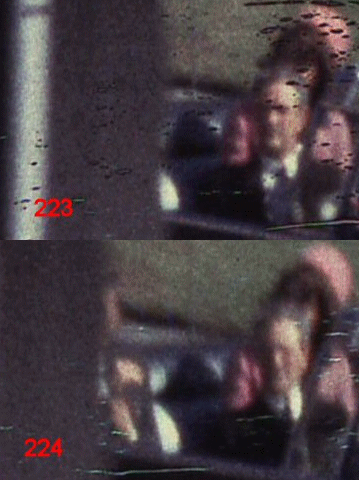
223-224 FullBut, backing-up to frames 223—224, there’s a clear picture of one bullet striking two men at the same time.

In Z-223 the limo is seen emerging from behind the Stemmons Freeway sign. Everything’s fine, but Connally seems to be looking over his right shoulder to identify the location of the first gunshot as he said in his Warren Commission testimony.

Z-224 is captured 0.0546 of a second later. Connally’s jacket lapel has “flipped” or bulged as the bullet passes through him and is exposed as a dark image covering over his white shirt, right where the exit wound on his chest was. His right shoulder is clearly forced forward from the bullet’s impact.

By Z-225, the lapel is back to its original shape but Connally’s expression is changing and you can just see the first image of JFK emerging from the sign with his fists and elbows rising. The President had already been shot in the back.

Larry Sturdivan’s Reconstruction

A1There comes a point in any criminal investigation where evidence is put before a jury that requires an expert opinion to interpret it. The Kennedy case is no different. While I have a limited amount of recognized expertise in firearms and ballistics, as well as far more knowledge about John Kennedy’s murder than the vast majority of people, I’m going to defer to Larry Sturdivan who truly knows what he’s speaking of.

This paraphrases Larry’s explanation for how CE399 acted.

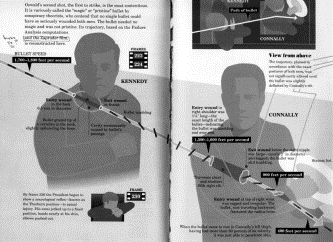
“Oswald fired his second shot—a 161 grain, 6.5 mm, FMJ Carcano bullet—when the limo was moving directly away from his sight picture at a combined downward incline of over 21 degrees.
The bullet discharged at 2160 fps and traveled 189 feet through the air, losing 135 fps and hitting Kennedy’s suit coat at 2015 fps—staying intact. It entered the soft mediums of cloth and flesh well below the 2400 fps velocity these mediums would need to break the bullet into pieces. Inside Kennedy’s neck, the bullet’s force created a pressure vacuum called a “temporary cavity” which altered its flight course by about 5 degrees upward.
The intact and unaltered bullet cut through the front of Kennedy’s neck, stretching the skin and—shored by the collar and tie—returned to appear as a tiny hole, much smaller than its 6.5 mm diameter. It now slowed to around 1840 fps and was beginning to tumble, altering its nose from a direct gyroscopic flight path to a sideways presentation.
The bullet hit Connally’s armpit in a 70-degree yaw and left the elongated hole in his clothes and skin. Now moving at 1450 fps, right below the yield threshold of being broken by bone, the bullet presented itself sideways to his rib and permanently deformed into a plastic state, neither pristine nor fragmented, but the bent and crushed base you see in CE399’s photos.
It blew out below Connally’s right nipple in a near backward position and entered his right wrist at + or – 500 fps with enough energy left to fracture the radius bone and deposit some lead fragments from the bullet’s open base. It was like squeezing toothpaste from a tube.
With almost no energy remaining—still near full weight and going only 135 fps—it cut the Governor’s pants and pushed a bit into his left thigh. No wonder it fell out, intact.”

A21By now you might buy into the Single Bullet Theory and that CE399 was capable of performing the “magical” feats it’s accused of. But I know you’re asking “How do you prove 399—reportedly found on whatever stretcher at Parkland—was the same bullet Oswald fired and did the damage?” The proof is in 399’s molecular composition and what it left behind in John Connally’s wrist.

Neutron Activation Analysis

A22NAA is the DNA of the JFK investigation. Unfortunately, DNA was unheard of in 1963 when the stretcher bullet was found. Despite 399’s multi-handling, today’s DNA sophistication would likely be able to identify Kennedy and Connally genetics on this little missile if it, in fact, passed through both. That would be the end of it—the Single Bullet Theory would be a fact and we could all go home.

But wait—genetics isn’t the only molecular forensic science available and there’s a lot of proof about CE399’s validity that turned up in the molecules of metallurgy.

In 1964, the FBI turned to a then-new science of non-destructive testing called Neutron Activation Analysis where they took the stretcher bullet,CE399, and Connally’s CE842 wrist fragments, and did a chemical signature much the same as today’s DNA analysis checks for biological signatures.

It was inconclusive.

But by 1978, NAA science had advanced and the bullet evidence was re-evaluated in the HSCA investigation of the JFK Assassination. The chemical ratio of antimony in CE399’s lead core was found to be so consistent with the antimony in Connally’s wrist fragments that the statistical probability of them coming from two different sources is virtually impossible.

In my opinion, the Single Bullet Theory is the single bullet fact and if CE399 behaved in any other way than in what it was designed to do—then it really would be a magic bullet.

*   *   *

Here are links to credible sites with information on the Single Bullet Theory:

Dale Myers – Secrets Of A Homicide Computerized Reconstruction Website Click Here

Dale Myers – Reconstruction Video  Click Here

Zapruder Film – Enhanced & Stabilized  Click Here

Warren Report – Chapter Three – Shots From The Texas School Book Depository  Click Here