Tag Archives: Matter

THE INVISIBLE UNIVERSE: WHY WE ONLY SEE .01% OF REALITY

We humans like to think we see the world clearly. We trust our eyes, rely on our ears, and lean heavily on what our senses tell us. But the truth is we only experience a tiny sliver of what’s actually happening around us, and it’s far smaller than most people imagine.
Science shows we directly perceive less than .01 percent of physical reality. That figure interested me when I first learned it. It still does. And once you understand what it really means, it changes the way you look at everything from human behavior to the mysteries of the cosmos.

Let’s take a deep look at the unseen layers of existence that surround us every second. We’ll find out why our senses evolved the way they did, why they hide far more than they reveal, and how modern tools like artificial intelligence are now helping us peek beyond the edges of our biological bubble.

This is one rabbit hole worth going down, and I think you’ll find it as fascinating as I do.

We humans didn’t evolve to understand the universe. We evolved to survive in it. And that single fact explains almost everything about the limits of our perception.

Our eyes, ears, noses, and fingertips aren’t scientific instruments. They’re crude survival tools. They detect just enough information to keep us alive and breeding, and not one bit more. Nature optimizes for advantage, not enlightenment.

That’s the starting point for what we’re about to explore.
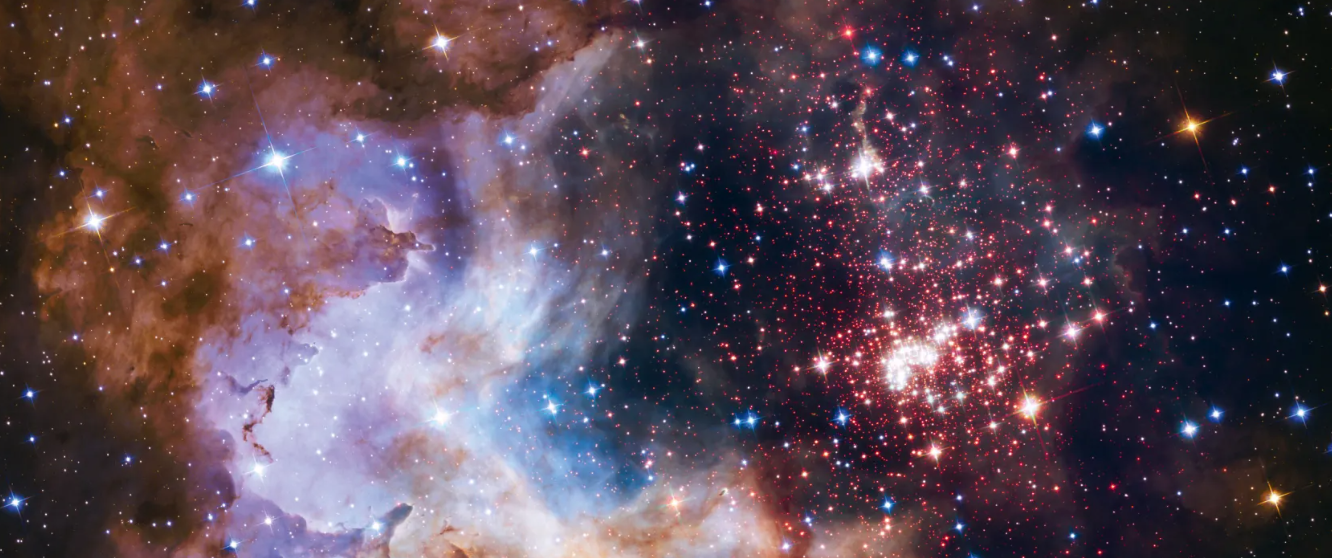
When you think about the world this way, the blind spots start to reveal themselves. Our senses aren’t windows into truth. They’re filters. They’re narrow tunnels carved to keep us safe from predators, let us spot a ripe berry, or help us read a friend or foe. They don’t show us reality. They show us whatever slice of existence improved our odds of getting through another day on the savannah.

We’re not designed for truth. We’re engineered for survival.

That might sound bleak. But once you appreciate what’s going on, it’s liberating. It explains why humans get fooled so easily. Why we misjudge people. Why we fall for narrative stories instead of hard facts. Why we argue about things that don’t matter and miss things that do. And it explains why technology—especially emergent AI—has become one of the most powerful tools we’ve ever created for seeing beyond our built-in limits.

To understand the scope of what we’re missing, you need to zoom out. And I mean way out. Let’s start with sight, because it’s the sense we trust the most, and the one that fools us the most.

We all grew up learning about the “visible spectrum.” Those colors you see in a rainbow? That’s light between roughly 400 and 700 nanometres. The full electromagnetic spectrum stretches billions of times wider in both directions. It contains radio waves the size of buildings, microwaves buzzing in your kitchen, infrared heat pouring off everything warm, ultraviolet radiation streaming from the sun, X-rays slipping through soft tissue, and gamma rays zipping through space like cosmic bullets.

Humans see 0.0035 percent of the electromagnetic spectrum.

Let that sink in.

Everything you’ve ever seen, every sunset, every face, every tree, every mountain, every crime scene, every moment you’ve called “reality” fits inside that microscopic slice. The rest is invisible. Yet it’s still there. It’s humming all around you. It’s shaping your life in ways you don’t feel or notice. You’re blind to almost all of it.

And here’s the kicker. Other creatures see more than we do. Bees see ultraviolet. Snakes detect infrared. Birds sense magnetic fields. Whales hear frequencies that travel halfway across oceans. Elephants communicate in infrasound below our hearing threshold. Bats live inside soundscapes we’ll never experience.

We humans like to think we’re the apex species. But we’re sensory lightweights.

Sight isn’t our only narrow tunnel. Our hearing is even more limited. Humans detect sound from about 20 hertz up to 20,000. Dogs hear more than twice that range. Cats go higher. Bats go far beyond that. Meanwhile, the world is full of sounds we will never hear. Oceans vibrate. The earth hums. The atmosphere sings in low frequencies. Space crackles with radio noise from dying stars.

We don’t hear any of it. Our ears were tuned for voices, danger, and distance—not truth.

And then there’s the quantum world. The universe beneath the universe. A place where particles pop in and out of existence, where two particles in quantum entanglement, light-years apart, can mirror each other instantly, where probability replaces certainty, and where matter behaves like both an invisible wave and a solid object at the same time.

We never experience this micro world directly. We only see the stable leftovers—stuff that survive long enough to become atoms and molecules like plants and birds and rocks and things and sand and hills and rings.

What we see is the cartoon version of reality—flat, simplified, smoothed over, and friendly enough for a biological brain to navigate.

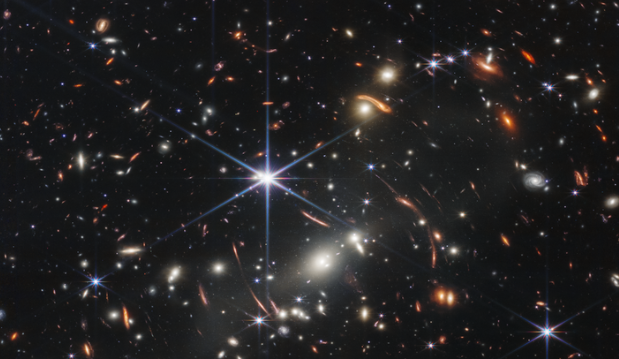
It gets stranger. Roughly ninety-five percent of the universe is made up of dark matter and dark energy. We can’t see them. We can’t touch them. We can’t detect them with our senses.

We only know they exist because they push and pull on things we can see. That means everything we see—every star, planet, and person—is part of a tiny visible minority. We live inside the cosmic equivalent of a dimly lit room, surrounded by walls we can’t quite make out.

And that’s still not the whole picture.
Most of the real action in the universe happens in the realm of patterns and relationships—the invisible architecture that shapes everything you experience. Things like gravity, thermodynamics, evolution, magnetism, entropy, probability, scaling laws, selection pressures, information flow, and emergent behavior.

These forces are everywhere. They’re always on. They’re woven into the fabric of cause and effect. Yet we never “feel” them directly. We only sense their consequences.

We see leaves blow, but not the wind.
We see waves break, but not the gravity pulling the ocean.
We see life evolve, but not the selection machinery driving it.

The most important truths in the universe aren’t made of matter. They’re made of structure.

And here’s where the human story gets interesting.
We might be perceptual lightweights, but we’re not helpless. We have a superpower that compensates for our biological limitations. We can build tools that extend our senses far beyond what evolution gave us.

Telescopes reveal the birth of galaxies. Microscopes expose the hidden kingdom inside every drop of water. Infrared cameras show heat signatures. Radar pierces storms. X-rays look through us. Particle accelerators smash the universe open so we can see what’s inside.

But the biggest leap isn’t happening with telescopes or microscopes. It’s happening with intelligence. Augmented intelligence.

Modern AI is expanding our perceptual reach in ways no physical sensor ever could. It can analyze patterns across trillions of data points. It can detect structures that are invisible to the human mind.

AI can reveal relationships that would take a lifetime to find manually. It can model reality across multiple dimensions at once. It can simulate, predict, and extract meaning from vast oceans of information.

It’s not replacing our senses. It’s giving us new ones.

We’re not just learning more about the universe. We’re seeing more of it, even if the seeing happens in a different way. AI turns invisible patterns into visible insights. It transforms chaos into clarity. It gives us a bridge between the narrow illusion our senses feed us and the full structure of reality that lies beyond them.

Think about that for a moment. Humans have always lived inside a perceptual bubble. AI is the first tool in history that can help us see beyond it. It’s not mystical. It’s not magical. It’s simply the next step in our species’ evolving relationship with consciousness.

But this new vision comes with a responsibility. AI safety. AI being servient to humans. Not the other way around.

*   *   *

If you want to navigate the world with wisdom, you can’t rely on your senses alone. You can’t trust your first impressions. You can’t cling to comforting stories that don’t match the facts. You can’t confuse belief with truth. You can’t assume your perspective is complete. Because it isn’t. None of ours are.

To live wisely in a universe this complex, you need to build better models than your biology can provide. You need to update your understanding whenever reality disagrees with you. You need to use every tool available—science, reason, experience, technology, and yes, artificial intelligence—to expand the small window life gave you.

That’s how you see the world as it is, not as you wish it were.

And here’s the final insight. It’s one I’ve learned over decades of policing, investigating, building, writing, and digging deep into the layers of human nature.

We don’t suffer because reality is cruel. We suffer because we cling to illusions. We don’t face reality.

Most of our frustrations, conflicts, disappointments, and mistakes come from one simple thing. Our internal map doesn’t match the terrain. We misjudge people. We misread situations. We fall for total bullshit stories. We pretend things are better or worse or simpler or more complex than they are. And when reality pushes back, we call it bad luck or unfairness.

But it’s not bad luck or unfair. It’s just misalignment.

Reality has rules. Truth is whatever matches those rules. Wisdom is living in harmony with the rules. Reality and truth. Truth and reality. Living wise. Wise living.

When you understand how little of the universe we can see—and how much of it we can now access through advanced intelligent technology—you start to think differently.

You become less certain and more curious. Less rigid and more flexible. Less defensive and more open. You start valuing clarity over comfort. And you begin to build a world of reality inside your own mind that’s bigger than the one your senses reveal.

That’s the real frontier.
Not outer space.
Not the deep sea.
Not the quantum world.

Inner space.

It’s the frontier below surface and subsurface. A frontier we’re just beginning to submerge into.

And the more we learn about the invisible universe surrounding us, the more we discover the same thing—over and over, again and again. The world is far richer, stranger, and more beautiful than our tiny biological windows will ever show us.

With the right tools—and the right mindset with… and this is a biggie… proper security guardrails—we can step closer to reality (and the truth) than any generation before us.

Yes, currently, we only see 0.01 percent of reality. But now, for the first time in human history, we can begin to reach beyond it. Into the invisible universe. Making the invisible visible.

AI is nothing to fear, properly handled. It’s something to behold.
Dyingwords.net is powered by a Centaur Intelligence System and its EXPONENTIAL Thought Engine
centaursystems.ai

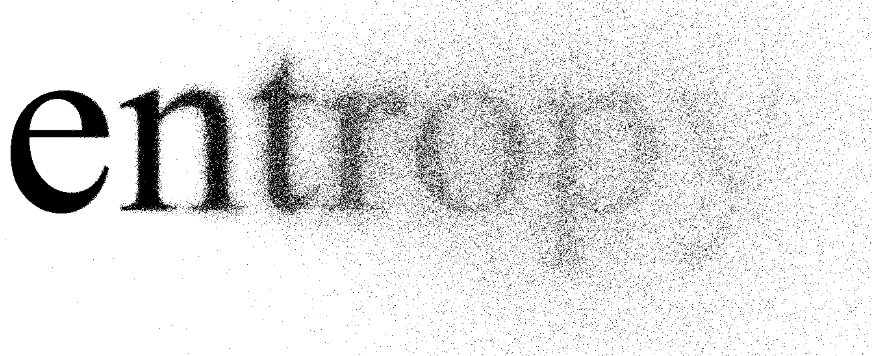
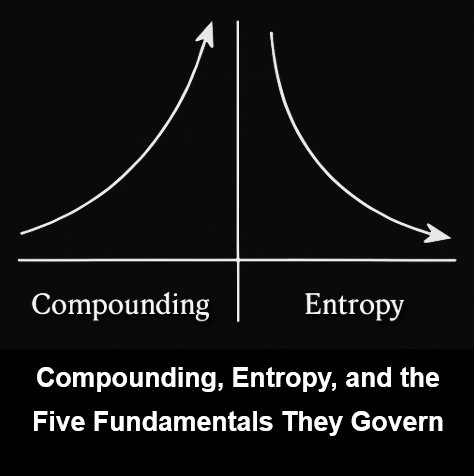
COMPOUNDING, ENTROPY, AND THE FIVE FUNDAMENTALS THEY GOVERN

There are two invisible principles quietly overseeing the universe. They’re not political. They’re not mystical. And they don’t care about your beliefs, your ambitions, or your social status. These realities are compounding and entropy. One builds. The other breaks.

Together, compounding and entropy form the dual engine and brake system for all of creation—from stars to cells, and from civilizations to your own body, thoughts, and projects. They govern five fundamentals of the universe—energy, matter, information, consciousness, and time.

If you understand the principles of compounding and entropy—and more importantly, if you learn how to work with them—you can harness the most powerful truths of nature. If you ignore them, they’ll work on you anyway. The only difference? You won’t know why things are slowly getting better or worse.

Before we explore how compounding and entropy rule the five pillars of existence—energy, matter, information, consciousness, and time—we need to understand what these dual and dominant drivers truly are.

What Is Compounding?

Compounding is the process by which a small effect, action, or input—when repeated over time—builds into an increasingly larger impact. It’s the engine of exponential growth born from repetition, consistency, and feedback.

Most people encounter compounding first in the financial world—compound interest. But its scope is far greater. Compounding affects learning, skill development, health, systems, habits, and even natural selection.

In mathematical terms, it’s described like this:

FV = PV × (1 + r/n)^(nt)
Where:

  • FV = future value
  • PV = initial value
  • r = rate of growth
  • n = compounding intervals per year
  • t = time in years

Time is the essential multiplier. Without it, compounding cannot operate.

Compounding is the most powerful force in the universe.” ~Albert Einstein

But it’s not just about money. Compounding applies to many things we do. Here are some simple examples:

  • Read a book daily—your knowledge compounds.
  • Practice gratitude—your emotional clarity compounds.
  • Invest in relationships—your connection compounds.
  • Do the work—your skills compound.

And just like investments, the sooner you start, the more powerful the outcome. Time doesn’t just allow compounding—it supercharges it.

What Is Entropy?

Entropy is the principle that all systems naturally progress from order to disorder. In physics, it’s formalized as the Second Law of Thermodynamics—in any energy exchange, some usable energy is always lost, increasing the system’s entropy.

Entropy is the measure of randomness, uncertainty, or decay in any system. You don’t need to study physics to understand entropy. Just think that:

  • Metal rusts
  • Food spoils
  • Memories fade
  • Structures collapse

Entropy doesn’t need your permission. It happens simply by the passage of time. That’s what makes entropy so dangerous—it operates silently unless resisted.

Mathematically:
ΔS = ΔQ / T
Where:

  • ΔS = change in entropy
  • ΔQ = heat energy added
  • T = temperature

In the end, entropy always wins. (But you get to decide how much value you create before it does.)” ~Stephen King

While compounding is the creative force of the cosmos, entropy is the tax. Everything that grows must be maintained—or it’ll decline. Everything built will eventually decay—unless preserved and renewed.

The Five Fundamentals of Existence

At the root of reality are five interdependent fundamentals. Energy. Matter. Information. Consciousness. Time.

Every system—biological, mechanical, societal, or personal—is made from these ingredients. And every one of them is shaped by compounding and entropy. Let’s examine each.

Energy

Energy is the currency of the cosmos. Everything that moves, grows, reacts, or changes involves energy. And everything energetic is governed by compounding and entropy,

Compounding and energy: When energy is stored, reused, and cycled efficiently, it compounds. Batteries. Ecosystems. Engines. Fusion reactors. Feedback loops in technology and biology amplify small inputs into large-scale output over time.

Entropy and energy: But every energy transfer loses some energy to heat, friction, or inefficiency. Entropy ensures that no machine is perfect, no process is lossless. Even the sun is slowly burning out.

Time guarantees that energy becomes more diffuse, less useful—unless structured intentionally.

You can’t win, you can’t break even, and you can’t get out of the game.” ~C.P. Snow

Matter

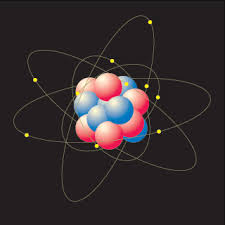
Matter is energy in form—atoms, molecules, tissues, trees, buildings, planets.

Compounding and matter: Matter compounds through layering and construction—atoms form molecules, molecules form cells, cells form organs, and so on. Sediments become cliffs. DNA mutations evolve into species. Structures form through persistence over time.

Entropy and matter: But matter wears down. Rocks weather. Steel corrodes. Concrete crumbles. Bones age. The longer time passes, the more matter must fight to maintain form.

The compounding of structure is a fight against the entropy of disintegration.

Dust thou art, and unto dust shalt thou return.” ~Genesis 3:19

Information

Information is the arrangement of energy and matter into meaningful patterns—genetic code, books, software, knowledge, memory.

Compounding and information: The written word. The scientific method. Oral traditions. Cloud storage. When preserved and transmitted effectively, information compounds across generations. Civilization advances as it builds on itself.

Entropy and information: But data corrupts. Paper disintegrates. Memories fade. Knowledge gets distorted. Noise creeps in.

Without effort, the information age becomes an age of confusion.

Civilization advances by extending the number of important operations we can perform without thinking about them.” ~Alfred North Whitehead

Consciousness

Consciousness is the most personal of all fundamentals—the internal awareness that makes life felt.

Compounding and consciousness: Thoughts become beliefs. Habits become character. Self-awareness becomes wisdom. Every time you reflect, learn, or train your attention, your mind compounds its clarity. Meditation. Reading. Honest conversation. These are compounding tools.

Entropy and consciousness: But left unattended, the mind deteriorates. Distractibility. Digital addiction. Delusion. Cognitive entropy is real—from dementia to depression to propaganda. When your mind is not strengthened, it decays.

This is where compounding becomes existential.

The unexamined life is not worth living.” ~Socrates

Time

Time isn’t just a background condition. It’s the fifth fundamental, and perhaps the most profound. Time is the substrate through which compounding and entropy play out.

Without time, there’s no compounding. Without time, entropy has no direction. Time is the governing dimension in which all change—growth or decay—unfolds.

Time doesn’t care how you use it. But how you use time determines everything. Time is what gives compounding its force and entropy its inevitability. Time is both the fire that consumes and the fuel that ignites.

The Unified Pattern of Reality

When you view the universe through these five fundamentals, a simple pattern emerges:

Systems that work:
→ Channel energy efficiently
→ Build matter into resilient forms
→ Preserve and transmit information
→ Expand consciousness
→ Use time intentionally

Systems that fail:
→ Leak energy
→ Decay in form
→ Lose coherence
→ Fall into confusion
→ Waste time

The choice is constant. In your health. Your thoughts. Your relationships. Your business. Your legacy.

You’re either compounding or decaying. There’s no standing still.

What Will You Leave Behind?

Let’s bring it all home. These aren’t just abstract laws of physics or systems theory.
They’re the very forces shaping your life—right now.

  • Compounding is your engine.
  • Entropy is your cost.
  • Time is your field of play.

Every decision, every action, every neglected task, every focused effort—it all moves you in one direction or the other. There is no neutral.

You don’t have to collapse your life. Just neglect it.
You don’t have to destroy your mind. Just let it coast.
You don’t have to fail. Just fail to act.

Or…

You can build.
You can focus.
You can rise.

In the end, everything you create is shaped by these five fundamentals and these two principles. And what you choose to do with them—day after day—becomes your legacy.

So, ask yourself, “What will you build before time and entropy reclaim it?”

Powered by a Centaur System ©

STEMI – 5 KNOWN REALITIES OF THE UNIVERSE

There are 5 known realities in the universe.

Universe 1Space. Time. Energy. Matter. And Intelligence. STEMI for an acronym.

I think about STEMI like a ball game.

Space is the ball field. It’s where we play. We need to play somewhere. Right?

Time is the measurement of how long we’re going to play. The duration.

Energy is the dynamics, like getting off the bench and getting going. Keeping it moving. Hitting it out of the park and making the crowd roar.

Matter is the ball, the bat, the uniforms, the payers, and the fans. Little stuff like that. It’d be a boring game if nobody showed up.

Intelligence is the rules. The ideas for the game. It’d be a pretty whacky game if there were no rules.

Let’s look at these concepts a bit more.

SpaceSpace is that dimension in which objects and events occur and have relevant position and direction to each other. We know on earth to observe the three dimensions of height, width, and length. It keeps us from walking in front of a bus. Then, there’s the fourth dimension. Space-Time is now well recognized as the fourth dimension. It’s also obvious, although most don’t recognize it. These four dimensions are fundamental to our understanding of the physical universe. Oh, there are many theories floating around about additional dimensions. Branes, warps, strings, and M-Theory are fun to ponder, but the four dimensional model works very well.

TimeTime can be a problem, though. We move about freely in space, but not in time. Time is linear. It’s a temporal measurement. Pretty much a one-way street. Time travel makes a great plot for Back To The Future and The Twilight Zone, but in reality… it ain’t never gonna happen. Time is nature’s way of preventing everything from happening all at once. Or, from doing it all over again.

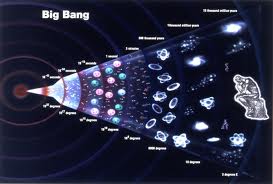
EnergyEnergy? Some days I have none. Energy is a scalar, physical quantity describing the amount of work performed by a force. There are many types of energy. Nuclear, chemical. kinetic, potential, thermal, sound, gravitational, and that biggie of all, electromagnetism, which is transmitted in waves. A basic law of physics, the law of conservation of energy, tells us that any form of energy can be transferred to another, but the total remains the same. The total inflow of energy into a system must equal the total outflow. So, all the energy available since the Big Bang is still available to us and always will be. It changes form all the time, but the fundamentals do not.

MatterMatter is composed of particles. Anything that has mass and occupies a volume, or space, is matter. But matter needs energy to exist. Matter stays matter until it is accelerated to the speed of light. Then, in theory, it converts back to pure energy and ceases to exist. E=MC2 and all that crap. But relativity doesn’t allow that to happen easily in practice.


IntelligenceIntelligence? I don’t pretend to have a grip on that.  All I know is that there is some magnificent source of intelligence that gives order to existence. I believe that manifests itself by way of local and non-local consciousness. And I believe we all are capable of tapping into both forms, if we just allow ourselves.

I’m not a religious person in the conventional sense, but I’ll give credit where credit’s due.

Take Genesis from the Hebrew Bible. Whoever wrote that got the process right in the opening sentence.

Universe 2In the beginning (Time) God (Intelligence) created (Energy) heaven (Space) and earth (Matter). It was not till the third line that God said ‘Let there be light.’ She’d already whipped-up the universe before turning on the lights.

Pretty cool game we’re playing, eh?