
Tag Archives: Reality

WHY SO MANY PEOPLE FALL FOR THE CLIMATE CRISIS NARRATIVE

You’ve seen them. Earnest young activists shouting at clouds, gluing themselves to museum walls, and blocking traffic with coroplast signs warning that the world will end in twelve years unless we obey their vision of salvation—complete with windmills, solar panels, and vegan diets. They’re the same people Xing and Instagramming about carbon footprints from their iPhones made in Chinese factories run on sulphur and lignite coal-fired electricity.

It’s easy to dismiss them as naive or misguided, but the uncomfortable truth is this: many of these people are neither stupid nor insane. They are simply caught in a powerful psychological, cultural, and financial machine that has turned “climate change” into a form of religious belief—a doctrine too sacred to question and too profitable to abandon.

Let’s set something straight. I’m not a climate change denier. Climate change is real. The Earth’s climate has always changed. And it always will—human-contributed through emitted greenhouse gas or not.

But the apocalyptic narrative that dominates headlines, policy, and corporate strategy today isn’t just about facts. It’s about framing—about controlling how people think, feel, and act in relation to a deeply complex system they barely understand. And that makes the climate crisis one of the most successful psychological operations in modern history.

In this post, we’ll take a hard look at why so many people have bought in—blindly and without skepticism—to the idea that we’re on the brink of planetary collapse, and that the only solution is top-down control, mass compliance, and the destruction of energy systems that built the modern world.

Some of what I’m going to say may be uncomfortable to some, and I know some will unsubscribe. But that doesn’t make it untrue, and this needs to be said.

The Climate Crisis as a Religion (aka The Church of Carbon)

First, let’s call it what it is.

For a growing number of people—especially in the West (Europe particularly included)—the climate crisis has become a belief system. It functions just like a fundamentalist religion, complete with original sin (industrialization), prophets (Greta, Gore, Gates), sacred texts (IPCC reports), rituals (recycling, carbon offsets), heretics (climate skeptics), and a promised apocalypse for those who fail to convert.

It’s not about science anymore. It’s about meaning.

People—especially young people raised in secular cultures—are starving for purpose. They want to feel morally righteous, socially important, and part of a grand, redemptive story. The climate narrative offers all of that in a tidy, emotionally satisfying package. It turns ordinary people into saviors. It makes them matter.

You can’t underestimate how powerful that is.

Fear is the Fuel

The second driver is fear.

For decades, we’ve been bombarded with doom-laden, global-warming headlines: ice caps melting, oceans rising, hurricanes and tornados worsening, apocalyptical flooding, forests burning, deserts parching… The messaging is relentless—and expertly crafted to trigger our limbic systems. When people are afraid, they don’t reason. They react.

This isn’t new. Back in the 1970s, experts warned of an imminent ice age. Then came acid rain. Then ozone depletion. Each time, the world was supposed to end unless we handed over more power to government, more money to NGOs, and more control to unelected technocrats.

It’s always the same pattern:

  1. Declare a crisis.
  2. Blame human behavior.
  3. Offer a sweeping solution that just happens to consolidate control.

The only difference now is scale. The climate crisis is global, not regional. And the proposed solutions are systemic, not marginal.

 The Collapse of Critical Thinking

But fear alone doesn’t explain the blind belief.

There’s another piece of the puzzle: the steady erosion of critical thinking. Schools no longer teach logic, debate, or how to evaluate competing hypotheses. Instead, they promote conformity, activism, and groupthink. You don’t learn how to think. You learn what to think.

By the time students hit university, the programming is complete. Professors reinforce the dogma. Campus culture punishes dissent. Climate change isn’t a topic for exploration—it’s a moral litmus test. Students who question it risk grades, reputation, or worse. Being cancelled.

So, they comply. They absorb. They repeat.

And when they graduate into journalism, academia, NGOs, or politics, they carry that unexamined belief system with them—passing it on like gospel.

The Media Echo Chamber

The next layer is media.

Legacy outlets like CNN, BBC, CBC, and the New York Times frame climate change in religious terms: “Climate emergency,” “existential threat,” “code red for humanity.” Any nuance is treated as heresy. Any questioning is framed as denialism.

Science itself has been rebranded. Instead of a method of inquiry, it’s now a set of conclusions—conveniently aligned with elite interests. The phrase “The science is settled” is a dead giveaway. No real scientist would ever say that.

Meanwhile, dissenting voices—many with serious credentials—are marginalized, shadowbanned, or censored outright. Their data doesn’t fit the narrative. Their views make people uncomfortable. So, they are erased.

And most people? They never notice.They assume if something was true, they’d hear about it. But when every channel is playing the same tune, they don’t realize they’re listening to a carefully curated soundtrack.

Social Conformity and Virtue Signaling 

But here’s the deeper truth.

Most people don’t believe the climate crisis because they’ve studied the data. They believe it because everyone else does. That’s the power of social conformity. Nobody wants to be the outlier—the one who raises their hand and asks the uncomfortable question.

Especially in a culture obsessed with virtue.

Believing in the climate crisis is a modern form of moral signaling. You drive a Tesla. You compost. You use a keep-cup. You care. You’re not like those backward Boomer-deniers who love oil and hate penguins.

  • You’re evolved
  • You’re ethical
  • You’re better

That’s what this has become—not a conversation about climate, but a competition for social status.

And once belief becomes part of your identity, it becomes non-negotiable. Any challenge feels like a personal attack. Facts don’t matter. Feelings do.

Follow the Money

Now let’s talk about power.

The climate industry is worth trillions—yes, trillions of dollars. It’s the perfect grift: a never-ending crisis that justifies endless funding, regulation, and surveillance.

  • Governments rake in carbon taxes.
  • Universities secure research grants.
  • Corporations get ESG ratings and subsidies.
  • NGOs fundraise on fear.

It’s an entire ecosystem of incentives, none of which reward skepticism or moderation. And when that much money is on the table, the truth becomes secondary to the narrative.

Even energy companies play along. They don’t want to be regulated out of existence, so they slap green labels on their products and talk about “net zero” while quietly hedging their bets. It’s theater. Everyone’s pretending.

But the costs are real.

China’s Role in the Global Equation

While the West ties itself in knots trying to decarbonize, one country is playing a different game entirely: China

Beijing talks green, but burns black. Coal remains its dominant energy source, powering steel, manufacturing, and military growth at a staggering scale. As of 2024, China alone consumes over half the world’s coal supply—and shows no sign of slowing down.

They’re not stupid. While we argue over wind farms and carbon credits, they build aircraft carriers, drones, and power grids. While we teach kids to fear climate collapse, they teach theirs to master engineering and geopolitics.

They make the solar panels we install. They mine the rare earths we need. They profit from the very policies we impose on ourselves.

And we call that progress.

Weaponized Guilt

So why don’t people wake up?

Because they’ve been trained to feel guilty. Every gas-guzzling SUV trip, every propane-grilled burger, every jet-fueled flight—is framed as a moral failing. You’re killing the planet. You’re harming future generations. You’re part of the problem.

It’s exhausting, and it’s effective.

People internalize this guilt. They try to cleanse themselves through ritualistic consumption: reusable straws, oat milk, biodegradable trash bags, canvas totes at the farmer’s market. None of it makes an infatismal sub-fraction of a surface dent in global emissions—but it feels redemptive.

That’s the point. It’s not about fixing the planet. It’s about managing the soul.

The Useful Idiots

Now we come to the crux.

The term “useful idiot” originated in Soviet times. It referred to Western sympathizers who unknowingly supported the goals of a regime they didn’t understand. They weren’t evil—just naive, manipulated, and eager to be on the “right side of history.”

That’s where we are today. Millions of well-meaning people have been seduced by a narrative that exploits their fears, flatters their vanity, and blinds them to the larger game at play. They march, post, and protest—believing they’re saving the world, while unwittingly aiding those who want to dominate it.

They’re not villains. They’re pawns. And when you try to wake-the-wokes, they look at you like you’re the crazy one. Then they viscerally turn on you.

What’s At Stake

Here’s what’s really at stake.

If we continue down this path, we don’t just risk economic collapse or energy poverty. We risk civilizational suicide. We are dismantling the very systems—energy, industry, sovereignty—that made the modern world possible.

And we’re doing it not for the planet, but for appearances.

Meanwhile, the nations that reject this ideology are gaining power, leverage, and independence. They’re not afraid to use fossil fuels while experimenting with futuristics. They’re not ashamed of their ambitions. And they’re not held hostage by narratives designed to make them feel guilty for existing.

They’re playing to win. We’re playing to look virtuous. That’s a losing hand.

So, what do we do?

First, stop apologizing. There is no shame in using energy. Civilization runs on it. Human flourishing depends on energy, regardless of how it’s generated. Without it, we return to darkness—literally and figuratively.

Second, think for yourself. Ask questions. Follow incentives. Trace the money.
Be skeptical of anything presented as a one-sided moral truth.

Third, reclaim courage. Don’t be afraid to speak the truth, even when it’s unpopular. Especially when it’s unpopular. History doesn’t remember those who went along to get along. It remembers those who stood up, pointed at the naked emperor, and said, “This is madness.”

And finally, understand this: We are not in a climate crisis. We are in a clarity crisis. Clarity—real, hard-won, human clarity—is the first step back to sanity.

The next time someone tells you the world is ending, ask who’s funding the message—and what they’re selling with it.

Because if you look closely, you’ll find it’s not about saving the planet. It’s about controlling the people on the planet by getting them to fall for the climate crisis narrative.


Powered by a Centaur Intelligence System

WHAT MAKES CRAZY CONSPIRACY THEORISTS TICK?

A conspiracy theory is the belief that a plot by powerful people or an organization is working to accomplish a sinister goal—the truth of its existence secretly held from the public. Conspiracy theorists see authorities—governments, corporations, and wealthy people—as fundamentally deceptive and corrupt. Their distrust of official narratives runs so deep that they connect dots of random events into what they believe make meaningful patterns, despite overwhelming conflicting evidence, or absence of supporting evidence, to their conclusions. Aside from a lack of reason and common sense, what makes crazy conspiracy theorists tick?

First, let’s look at what Time Magazine identified as the prominent conspiracy theories believed by the American public. These were identified in a recent poll, and I’m not kidding you. Some people actually swallow these kooky concoctions.

From lowest to highest percentage, they are:

10. The Reptile Elite — Among us are flesh-eating, blood-drinking, shapeshifting, extraterrestrial reptilian humanoids bent on enslaving the human race. The British Royals and the Bush family are part of the group, as was Margaret Thatcher.

9. The CIA and AIDS — Thinking is that the Central Intelligence Agency was out to destroy homosexuals and blacks, so they invented the deadly HIV virus and injected it in place of hepatitis vaccinations.

8. Holocaust Revisionism — Most deniers accept that the internment camps existed but claim the numbers of people murdered are greatly exaggerated. General Eisenhower saw this coming when he forced hundreds of civilian witnesses to tour the camps and bear the truth to the world.

7. Jesus and Mary Magdalene — These folks claim Jesus and Mary Magdalene were a married couple, but Jesus occasionally shared her with his disciple, Peter. They attribute this to the Gnostic Gospels which were discovered in 1945 and claim it’s being covered up by the Vatican. Mainstream scholars dismiss as the Gnostic Gospels as even being authentic.

6. The Moon Landings Were Faked — According to this crowd, none of the Apollo missions happened. They were filmed on a Hollywood lot, or possibly at area 51. Watch this priceless clip of Buzz Aldrin punching conspiracy theorist Bart Sibrel in the face. Click Here

5. Secret Societies Rule the World — If you’re a member of the global elite, then you’d already know this. And you might belong to one or more of many groups; the Illuminati, Freemasons, Skull & Bones, Opus Dei, Bilderberg Group, or maybe even have a seat on the Council of Foreign Relationship. Sorry, your Costco card won’t cut it.

4. Paul McCartney is Dead — Supposedly the Beatles covered-up the real Sir Paul’s death in 1966 and an imposter has been in his place ever since. Maybe I’m Amazed, because I saw a recent clip of Paul McCartney in front of tens of thousands at Hyde Park takin’ a swing at Pretty Woman with Bruce Springsteen. If he’s an imposter, he’s some good at it.

3. Area 51 and Aliens — There’s a real Air Force base at Groom Lake, 150 miles north of Las Vegas, where all sorts of black op aircraft are tested. Like most military installations, public access is restricted, but you can get a good look at it on Google Earth. The resolution is excellent, but I couldn’t find any saucer-shaped craft or ET-looking creatures. Oh, right… they keep them inside… or maybe back at Roswell.

2. 9/11 Cover-Up — Apparently 42% of Americans believe the attacks on the New York, Washington, and Pennsylvania were orchestrated by some arm of the U.S. Government. Sad.

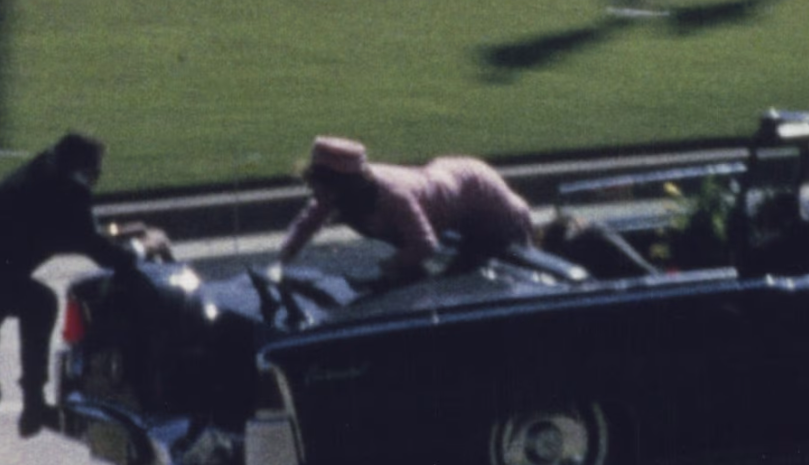
1. The JFK Assassination — The mother of conspiracy theories.  Times’ poll reports that only 32% believe that Lee Harvey Oswald acted alone. So, two-thirds of Americans truly think their 35th President’s murder is unsolved? How can that be?

Well, it comes down to mindset.

I’m not saying that conspiracies don’t happen—even at a mass scale. The Holocaust was a massive conspiracy to exterminate the Jews. The Nazis totally believed the Jews were a threat to their existence. It was an article of faith within the Third Reich.

9/11 was a monstrous conspiracy—orchestrated by Bin Laden and al-Qaeda. The Russian Revolution was a conspiracy. So was the American Revolution—fifty-six men signed the Declaration of Independence. Nixon conspired to hide Watergate. Abraham Lincoln was murdered through a conspiracy. So was Julius Caesar. Don’t forget Stalin, the Mexican Drug Cartels, and Scientology. And don’t get me going on Klaus Schwab with his Fourth Industrial Revolution, Davos, and the World Economic Forum.

If some conspiracies are true, then how do you determine which ones are false? The more these characteristics apply, the more likely the theory is wrong:

  • “Proof” of the conspiracy emerges through dot-connecting without any hard, physical evidence.
  • Execution requires large and complex elements.
  • The agents require nearly super-human powers.
  • Everyone maintains secrecy.
  • There is a grandiose ambition for control.
  • The plot ratchets from small to large events.
  • Everything has a sinister overtone.
  • Facts and speculation are mingled without assigning degrees of probability.
  • The theorist is extremely suspicious of authority—government and private.
  • The theorist refuses to consider alternative explanations, seeking only confirmation of the theory.

I understand the mindset of real conspirators. It’s all about money, power, and/or self-preservation. But what about the tin-foil hat crowd?

In American Conspiracy Theories, political scientists Joseph Uscinski and Joseph Parent conducted an “extensive empirical study” on the subject and found: Conspiracy Theorists are often caricatured as a small demographic composed primarily of middle-aged white male internet enthusiasts who live in their mother’s basements—but that’s wrong. Conspiracy theories permeate all parts of society and cut across age, gender, race, income, political affiliation, educational level, and occupational status.

What gives? How does a cross-section of should-be normal people get so distorted in their thoughts and believe in really weird things?

Quassim Cassam, who published a peer-reviewed paper title Conspiracy Theories, is a professor of philosophy at the University of Warwick. He’s embarking on a study on why people believe in outlandish theories. Part of this work is to answer why people get pushed to extremes like joining ISIS.

Professor Cassam says: It seems to be because of the kind of thinker they are, or to put it bluntly, because there’s something wrong with how they think. It’s the peculiarities of their intellectual constitution—in a word, their intellectual character. It’s what social psychologists call a conspiracy mentality.

Cassam goes on: The gullible rarely believe they’re gullible and the closed-minded don’t believe they’re closed-minded. Closed-mindedness is the toughest intellectual vice to tackle because it’s in its very nature to be concealed from those who have it. There’s no reasoning with those kinds of people.

I found an article in Sage Journals where Willem van Prooijen of the University of Amsterdam summed it: Conspiracy theorists tend to have one thing in common—they feel a lack of control over their lives.

Some DyingWords followers know I’m a life-long student of the John F Kennedy Assassination, and I’m completely satisfied beyond all doubt that Lee Harvey Oswald did it—acting alone. Part of my research was checking online chat boards on the JFK forums. Lemme tell you—there are some whacko, nut-jobs out there. One of them made repeated death threats to me via email for calling out BS in the JFK CT department.

I believe there are four reasons why people believe JFK’s murder was a conspiracy. These reasons probably apply to most conspiracy theories and theorists.

1. They don’t have the correct information to understand the case facts.

2. They haven’t got the personal knowledge, or experience, to properly interpret the evidence.

3. They simply want to believe in a conspiracy.

4, They don’t have the mental capacity for critical thought process.

Professor Cassam is right. There’s no reasoning with those kinds of people.

EXPLAINING CONSCIOUSNESS WITH NYU PROFESSOR DAVID CHALMERS

What is consciousness? What’s in you—a conscious and thinking entity—that perceives and processes information from a myriad of sources to form intelligent images in your mind? You’re consciously reading this piece which I consciously put together to explore an area of existence that current science really doesn’t know much about, and I think you’re wondering—has anyone explained what being conscious really is?

Scientists seem to understand macro laws explaining the origin of the universe and greater physical parameters governing the cosmos. Recent science advancements into quantum mechanics shed better light on micro laws ruling sub-atomic behavior. But nowhere has anyone seemed to clearly explain what consciousness truly is and why we—as conscious beings—observe all this.

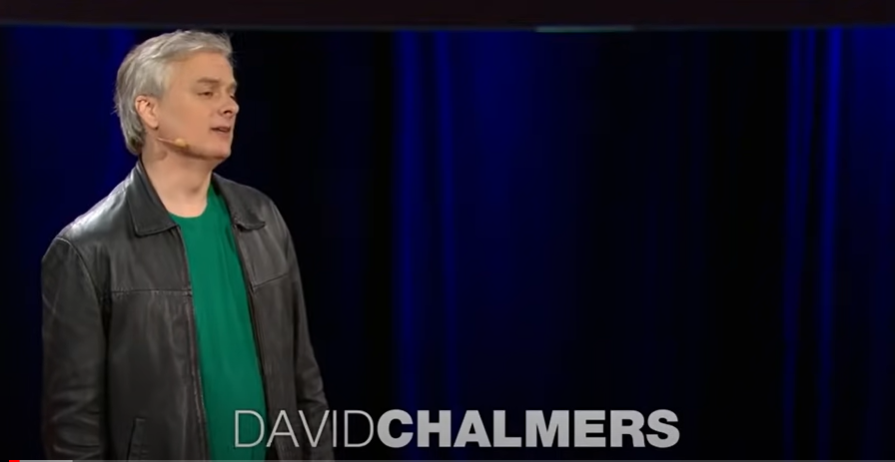
The question of consciousness intrigues me. So much so, that I’ve read, thought, and watched a lot on the subject. From what I’ve picked up, one of today’s leading thinkers about consciousness is David Chalmers. He’s a likable guy with a curious mind and he’s a Professor of Philosophy at New York University. Professor Chalmers did a fascinating TED Talk in Vancouver called How Do You Explain Consciousness? Here’s the transcript and link to his thought-evoking talk.

Note to readers: It’s worthwhile to listen to Prof. Chalmers’s TED Talk while reading this transcript.

https://www.ted.com/talks/david_chalmers_how_do_you_explain_consciousness?language=en

Right now, you have a movie playing inside your head. It’s an amazing multi-track movie. It has 3D vision and surround-sound for what you’re seeing and hearing right now, but that’s just the start of it. Your movie has smell and taste and touch. It has a sense of your body, pain, hunger, and orgasms. It has emotions, anger, and happiness. It has memories like scenes from your childhood playing before you.

And, it has this constant voiceover narrative in your stream of conscious thinking. At the heart of this movie is you. You’re experiencing all this directly. This movie is your stream of consciousness—the subject of experience of the mind and the world.

Consciousness is one of the fundamental facts of human existence. Each of us is conscious. We all have our own inner movie. That’s you and you and you. There’s nothing we know about more directly. At least, I know about my consciousness directly. I can’t be certain that you guys are conscious.

Consciousness also is what makes life worth living. If we weren’t conscious, nothing in our lives would have meaning or value. But at the same time, it’s the most mysterious phenomenon in the universe.

Why are we conscious? Why do we have these inner movies? Why aren’t we just robots who process all this input, produce all that output, without experiencing the inner movie at all? Right now, nobody knows the answers to those questions. I’m going to suggest that to integrate consciousness into science then some radical ideas may be needed.

Some people say a science of consciousness is impossible. Science, by its nature, is objective. Consciousness, by its nature, is subjective. So there can never be a science of consciousness.

For much of the 20th century, that view held sway. Psychologists studied behavior objectively. Neuroscientists studied the brain objectively. And nobody even mentioned consciousness. Even 30 years ago, when TED got started, there was very little scientific work on consciousness.

Now, about 20 years ago, all that began to change. Neuroscientists like Francis Crick and physicists like Roger Penrose said, “Now is the time for science to attack consciousness.” And since then, there’s been a real explosion, a flowering of scientific work on consciousness.

All this work has been wonderful. It’s been great. But it also has some fundamental limitations so far. The centerpiece of the science of consciousness in recent years has been the search for correlations—correlations between certain areas of the brain and certain states of consciousness.

We saw some of this kind of work from Nancy Kanwisher and the wonderful work she presented just a few minutes ago. Now we understand much better, for example, the kinds of brain areas that go along with the conscious experience of seeing faces or of feeling pain or of feeling happy.

But this is still a science of correlations. It’s not a science of explanations. We know that these brain areas go along with certain kinds of conscious experience, but we don’t know why they do. I like to put this by saying that this kind of work from neuroscience is answering some of the questions we want answered about consciousness, the questions about what certain brain areas do and what they correlate with.

But, in a certain sense, those are the easy problems. No knock on the neuroscientists. There are no truly easy problems with consciousness. But it doesn’t address the real mystery at the core of this subject. Why is it that all that physical processing in a brain should be accompanied by consciousness at all? Why is there this inner subjective movie? Right now, we don’t really have a bead on that.

And you might say, let’s just give neuroscience a few years. It’ll turn out to be another emergent phenomenon like traffic jams, like hurricanes, like life, and we’ll figure it out. The classical cases of emergence are all cases of emergent behavior, how a traffic jam behaves, how a hurricane functions, how a living organism reproduces and adapts and metabolizes, all questions about objective functioning.

You could apply that to the human brain in explaining some of the behaviors and the functions of the human brain as emergent phenomena. How we walk. How we talk. How we play chess—all these questions about behavior.

But when it comes to consciousness, questions about behavior are among the easy problems. When it comes to the hard problem, that’s the question of why is it that all this behavior is accompanied by subjective experience? And here, the standard paradigm of emergence—even the standard paradigms of neuroscience—don’t really, so far, have that much to say.

Now, I’m a scientific materialist at heart. I want a scientific theory of consciousness that works, and for a long time, I banged my head against the wall looking for a theory of consciousness in purely physical terms that would work. But I eventually came to the conclusion that that just didn’t work for systematic reasons.

It’s a long story, but the core idea is just that what you get from purely reductionist explanations in physical terms, in brain-based terms, is stories about the functioning of a system, its structure, its dynamics, the behavior it produces, great for solving the easy problems—how we behave, how we function but when it comes to subjective experience—why does all this feel like something from the inside?

That’s something fundamentally new, and it’s always a further question. So I think we’re at a kind of impasse here. We’ve got this wonderful great chain of explanation that we’re used to it—where physics explains chemistry, chemistry explains biology, biology explains parts of psychology. But consciousness doesn’t seem to fit into this picture.

On the one hand, it’s a datum that we’re conscious. On the other hand, we don’t know how to accommodate it into our scientific view of the world. So I think consciousness right now is a kind of anomaly, one that we need to integrate into our view of the world, but we don’t yet see how. Faced with an anomaly like this, radical ideas may be needed, and I think that we may need one or two ideas that initially seem crazy before we can come to grips with consciousness scientifically.

Now, there are a few candidates for what those crazy ideas might be. My friend Dan Dennett has one. His crazy idea is that there is no hard problem of consciousness. The whole idea of the inner subjective movie involves a kind of illusion or confusion.

Actually, all we’ve got to do is explain the objective functions, the behaviors of the brain, and then we’ve explained everything that needs to be explained. Well, I say, more power to him. That’s the kind of radical idea that we need to explore if you want to have a purely reductionist brain-based theory of consciousness.

At the same time, for me and for many other people, that view is a bit too close to simply denying the datum of consciousness to be satisfactory. So I go in a different direction. In the time remaining, I want to explore two crazy ideas that I think may have some promise.

The first crazy idea is that consciousness is fundamental. Physicists sometimes take some aspects of the universe as fundamental building blocks: space and time and mass. They postulate fundamental laws governing them, like the laws of gravity or of quantum mechanics. These fundamental properties and laws aren’t explained in terms of anything more basic. Rather, they’re taken as primitive, and you build up the world from there.

Now, sometimes the list of fundamentals expands. In the 19th century, Maxwell figured out that you can’t explain electromagnetic phenomena in terms of the existing fundamentals—space, time, mass, Newton’s laws—so he postulated fundamental laws of electromagnetism and postulated electric charge as a fundamental element that those laws govern. I think that’s the situation we’re in with consciousness.

If you can’t explain consciousness in terms of the existing fundamentals— space, time, mass, charge—then as a matter of logic, you need to expand the list. The natural thing to do is to postulate consciousness itself as something fundamental, a fundamental building block of nature. This doesn’t mean you suddenly can’t do science with it. This opens up the way for you to do science with it.

What we then need is to study the fundamental laws governing consciousness, the laws that connect consciousness to other fundamentals: space, time, mass, physical processes. Physicists sometimes say that we want fundamental laws so simple that we could write them on the front of a t-shirt. Well, I think something like that is the situation we’re in with consciousness. We want to find fundamental laws so simple we could write them on the front of a t-shirt. We don’t know what those laws are yet, but that’s what we’re after.

The second crazy idea is that consciousness might be universal. Every system might have some degree of consciousness. This view is sometimes called panpsychism—pan for all, psych for mind. The view holds that every system is conscious, not just humans, dogs, mice, flies, but even Rob Knight’s microbes, elementary particles. Even a photon has some degree of consciousness.

The idea is not that photons are intelligent or thinking. It’s not that a photon is wracked with angst because it’s thinking, “Aww, I’m always buzzing around near the speed of light. I never get to slow down and smell the roses.” No, it’s not like that. But the thought is maybe photons might have some element of raw, subjective feeling, some primitive precursor to consciousness.

This may sound a bit kooky to you. I mean, why would anyone think such a crazy thing? Some motivation comes from the first crazy idea, that consciousness is fundamental. If it’s fundamental, like space and time and mass, it’s natural to suppose that it might be universal too, the way they are. It’s also worth noting that although the idea seems counterintuitive to us, it’s much less counterintuitive to people from different cultures, where the human mind is seen as much more continuous with nature.

A deeper motivation comes from the idea that perhaps the most simple and powerful way to find fundamental laws connecting consciousness to physical processing is to link consciousness to information. Wherever there’s information processing, there’s consciousness. Complex information processing, like in a human, takes complex consciousness. Simple information processing takes simple consciousness.

A really exciting thing is in recent years is a neuroscientist, Giulio Tononi, has taken this kind of theory and developed it rigorously with a mathematical theory. He has a mathematical measure of information integration which he calls phi, measuring the amount of information integrated in a system. And he supposes that phi goes along with consciousness.

So, in a human brain with an incredibly large amount of information integration it requires a high degree of phi—a whole lot of consciousness. In a mouse with a medium degree of information integration, it still requires a pretty significant, pretty serious amount of consciousness. But as you go down to worms, microbes, particles, the amount of phi falls off. The amount of information integration falls off, but it’s still non-zero.

On Tononi’s theory, there’s still going to be a non-zero degree of consciousness. In effect, he’s proposing a fundamental law of consciousness: high phi, high consciousness. Now, I don’t know if this theory is right, but it’s actually perhaps the leading theory right now in the science of consciousness, and it’s been used to integrate a whole range of scientific data. It does have a nice property that it is, in fact, simple enough that you can write it on the front of a tee-shirt.

Another final motivation is that panpsychism might help us to integrate consciousness into the physical world. Physicists and philosophers have often observed that physics is curiously abstract. It describes the structure of reality using a bunch of equations, but it doesn’t tell us about the reality that underlies it. As Stephen Hawking put it, what puts the fire into the equations?

Well, on the panpsychist view, you can leave the equations of physics as they are, but you can take them to be describing the flux of consciousness. That’s what physics really is ultimately doing—describing the flux of consciousness. On this view, it’s consciousness that puts the fire into the equations. On that view, consciousness doesn’t dangle outside the physical world as some kind of extra. It’s there right at its heart.

I think the panpsychist view has the potential to transfigure our relationship to nature, and it may have some pretty serious social and ethical consequences. Some of these may be counterintuitive. I used to think I shouldn’t eat anything which is conscious, so therefore I should be vegetarian. Now, if you’re a panpsychist and you take that view, you’re going to go very hungry. So I think when you think about it, this tends to transfigure your views, whereas what matters for ethical purposes and moral considerations—not so much the fact of consciousness—but the degree and the complexity of consciousness.

It’s also natural to ask about consciousness in other systems, like computers. What about the artificially intelligent system in the movie Her, Samantha? Is she conscious? Well, if you take the informational, panpsychist view, she certainly has complicated information processing and integration, so the answer is very likely yes, she is conscious. If that’s right, it raises pretty serious ethical issues about both the ethics of developing intelligent computer systems and the ethics of turning them off.

Finally, you might ask about the consciousness of whole groups, the planet. Does Canada have its own consciousness? Or at a more local level, does an integrated group like the audience at a TED conference—are we right now having a collective TED consciousness, an inner movie for this collective TED group which is distinct from the inner movies of each of our parts? I don’t know the answer to that question, but I think it’s at least one worth taking seriously.

Okay, so this panpsychist vision, it is a radical one, and I don’t know that it’s correct. I’m actually more confident about the first crazy idea—that consciousness is fundamental—than about the second one—that it’s universal. I mean, the view raises any number of questions and has any number of challenges, like how do those little bits of consciousness add up to the kind of complex consciousness we know and love.

If we can answer those questions, then I think we’re going to be well on our way to a serious theory of consciousness. If not, well, this is the hardest problem perhaps in science and philosophy. We can’t expect to solve it overnight. But I do think we’re going to figure it out eventually. Understanding consciousness is a real key, I think, both to understanding the universe and to understanding ourselves.

It may just take the right crazy idea.