Category Archives: Uncategorized

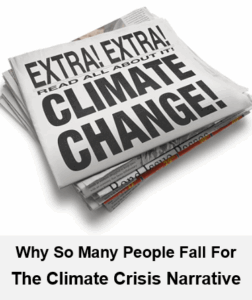
WHY SO MANY PEOPLE FALL FOR THE CLIMATE CRISIS NARRATIVE

You’ve seen them. Earnest young activists shouting at clouds, gluing themselves to museum walls, and blocking traffic with coroplast signs warning that the world will end in twelve years unless we obey their vision of salvation—complete with windmills, solar panels, and vegan diets. They’re the same people Xing and Instagramming about carbon footprints from their iPhones made in Chinese factories run on sulphur and lignite coal-fired electricity.
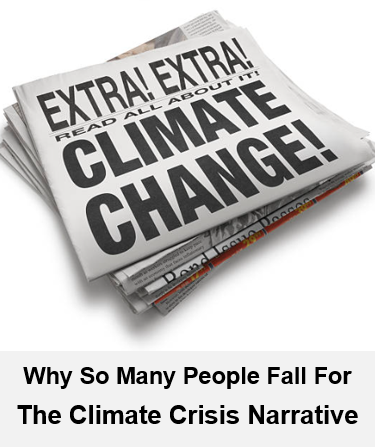
It’s easy to dismiss them as naive or misguided, but the uncomfortable truth is this: many of these people are neither stupid nor insane. They are simply caught in a powerful psychological, cultural, and financial machine that has turned “climate change” into a form of religious belief—a doctrine too sacred to question and too profitable to abandon.

Let’s set something straight. I’m not a climate change denier. Climate change is real. The Earth’s climate has always changed. And it always will—human-contributed through emitted greenhouse gas or not.

But the apocalyptic narrative that dominates headlines, policy, and corporate strategy today isn’t just about facts. It’s about framing—about controlling how people think, feel, and act in relation to a deeply complex system they barely understand. And that makes the climate crisis one of the most successful psychological operations in modern history.

In this post, we’ll take a hard look at why so many people have bought in—blindly and without skepticism—to the idea that we’re on the brink of planetary collapse, and that the only solution is top-down control, mass compliance, and the destruction of energy systems that built the modern world.

Some of what I’m going to say may be uncomfortable to some, and I know some will unsubscribe. But that doesn’t make it untrue, and this needs to be said.

The Climate Crisis as a Religion (aka The Church of Carbon)

First, let’s call it what it is.

For a growing number of people—especially in the West (Europe particularly included)—the climate crisis has become a belief system. It functions just like a fundamentalist religion, complete with original sin (industrialization), prophets (Greta, Gore, Gates), sacred texts (IPCC reports), rituals (recycling, carbon offsets), heretics (climate skeptics), and a promised apocalypse for those who fail to convert.

It’s not about science anymore. It’s about meaning.

People—especially young people raised in secular cultures—are starving for purpose. They want to feel morally righteous, socially important, and part of a grand, redemptive story. The climate narrative offers all of that in a tidy, emotionally satisfying package. It turns ordinary people into saviors. It makes them matter.

You can’t underestimate how powerful that is.

Fear is the Fuel

The second driver is fear.

For decades, we’ve been bombarded with doom-laden, global-warming headlines: ice caps melting, oceans rising, hurricanes and tornados worsening, apocalyptical flooding, forests burning, deserts parching… The messaging is relentless—and expertly crafted to trigger our limbic systems. When people are afraid, they don’t reason. They react.

This isn’t new. Back in the 1970s, experts warned of an imminent ice age. Then came acid rain. Then ozone depletion. Each time, the world was supposed to end unless we handed over more power to government, more money to NGOs, and more control to unelected technocrats.

It’s always the same pattern:

  1. Declare a crisis.
  2. Blame human behavior.
  3. Offer a sweeping solution that just happens to consolidate control.

The only difference now is scale. The climate crisis is global, not regional. And the proposed solutions are systemic, not marginal.

 The Collapse of Critical Thinking

But fear alone doesn’t explain the blind belief.

There’s another piece of the puzzle: the steady erosion of critical thinking. Schools no longer teach logic, debate, or how to evaluate competing hypotheses. Instead, they promote conformity, activism, and groupthink. You don’t learn how to think. You learn what to think.

By the time students hit university, the programming is complete. Professors reinforce the dogma. Campus culture punishes dissent. Climate change isn’t a topic for exploration—it’s a moral litmus test. Students who question it risk grades, reputation, or worse. Being cancelled.

So, they comply. They absorb. They repeat.

And when they graduate into journalism, academia, NGOs, or politics, they carry that unexamined belief system with them—passing it on like gospel.

The Media Echo Chamber

The next layer is media.

Legacy outlets like CNN, BBC, CBC, and the New York Times frame climate change in religious terms: “Climate emergency,” “existential threat,” “code red for humanity.” Any nuance is treated as heresy. Any questioning is framed as denialism.

Science itself has been rebranded. Instead of a method of inquiry, it’s now a set of conclusions—conveniently aligned with elite interests. The phrase “The science is settled” is a dead giveaway. No real scientist would ever say that.

Meanwhile, dissenting voices—many with serious credentials—are marginalized, shadowbanned, or censored outright. Their data doesn’t fit the narrative. Their views make people uncomfortable. So, they are erased.

And most people? They never notice.They assume if something was true, they’d hear about it. But when every channel is playing the same tune, they don’t realize they’re listening to a carefully curated soundtrack.

Social Conformity and Virtue Signaling 

But here’s the deeper truth.

Most people don’t believe the climate crisis because they’ve studied the data. They believe it because everyone else does. That’s the power of social conformity. Nobody wants to be the outlier—the one who raises their hand and asks the uncomfortable question.

Especially in a culture obsessed with virtue.

Believing in the climate crisis is a modern form of moral signaling. You drive a Tesla. You compost. You use a keep-cup. You care. You’re not like those backward Boomer-deniers who love oil and hate penguins.

  • You’re evolved
  • You’re ethical
  • You’re better

That’s what this has become—not a conversation about climate, but a competition for social status.

And once belief becomes part of your identity, it becomes non-negotiable. Any challenge feels like a personal attack. Facts don’t matter. Feelings do.

Follow the Money

Now let’s talk about power.

The climate industry is worth trillions—yes, trillions of dollars. It’s the perfect grift: a never-ending crisis that justifies endless funding, regulation, and surveillance.

  • Governments rake in carbon taxes.
  • Universities secure research grants.
  • Corporations get ESG ratings and subsidies.
  • NGOs fundraise on fear.

It’s an entire ecosystem of incentives, none of which reward skepticism or moderation. And when that much money is on the table, the truth becomes secondary to the narrative.

Even energy companies play along. They don’t want to be regulated out of existence, so they slap green labels on their products and talk about “net zero” while quietly hedging their bets. It’s theater. Everyone’s pretending.

But the costs are real.

China’s Role in the Global Equation

While the West ties itself in knots trying to decarbonize, one country is playing a different game entirely: China

Beijing talks green, but burns black. Coal remains its dominant energy source, powering steel, manufacturing, and military growth at a staggering scale. As of 2024, China alone consumes over half the world’s coal supply—and shows no sign of slowing down.

They’re not stupid. While we argue over wind farms and carbon credits, they build aircraft carriers, drones, and power grids. While we teach kids to fear climate collapse, they teach theirs to master engineering and geopolitics.

They make the solar panels we install. They mine the rare earths we need. They profit from the very policies we impose on ourselves.

And we call that progress.

Weaponized Guilt

So why don’t people wake up?

Because they’ve been trained to feel guilty. Every gas-guzzling SUV trip, every propane-grilled burger, every jet-fueled flight—is framed as a moral failing. You’re killing the planet. You’re harming future generations. You’re part of the problem.

It’s exhausting, and it’s effective.

People internalize this guilt. They try to cleanse themselves through ritualistic consumption: reusable straws, oat milk, biodegradable trash bags, canvas totes at the farmer’s market. None of it makes an infatismal sub-fraction of a surface dent in global emissions—but it feels redemptive.

That’s the point. It’s not about fixing the planet. It’s about managing the soul.

The Useful Idiots

Now we come to the crux.

The term “useful idiot” originated in Soviet times. It referred to Western sympathizers who unknowingly supported the goals of a regime they didn’t understand. They weren’t evil—just naive, manipulated, and eager to be on the “right side of history.”

That’s where we are today. Millions of well-meaning people have been seduced by a narrative that exploits their fears, flatters their vanity, and blinds them to the larger game at play. They march, post, and protest—believing they’re saving the world, while unwittingly aiding those who want to dominate it.

They’re not villains. They’re pawns. And when you try to wake-the-wokes, they look at you like you’re the crazy one. Then they viscerally turn on you.

What’s At Stake

Here’s what’s really at stake.

If we continue down this path, we don’t just risk economic collapse or energy poverty. We risk civilizational suicide. We are dismantling the very systems—energy, industry, sovereignty—that made the modern world possible.

And we’re doing it not for the planet, but for appearances.

Meanwhile, the nations that reject this ideology are gaining power, leverage, and independence. They’re not afraid to use fossil fuels while experimenting with futuristics. They’re not ashamed of their ambitions. And they’re not held hostage by narratives designed to make them feel guilty for existing.

They’re playing to win. We’re playing to look virtuous. That’s a losing hand.

So, what do we do?

First, stop apologizing. There is no shame in using energy. Civilization runs on it. Human flourishing depends on energy, regardless of how it’s generated. Without it, we return to darkness—literally and figuratively.

Second, think for yourself. Ask questions. Follow incentives. Trace the money.
Be skeptical of anything presented as a one-sided moral truth.

Third, reclaim courage. Don’t be afraid to speak the truth, even when it’s unpopular. Especially when it’s unpopular. History doesn’t remember those who went along to get along. It remembers those who stood up, pointed at the naked emperor, and said, “This is madness.”

And finally, understand this: We are not in a climate crisis. We are in a clarity crisis. Clarity—real, hard-won, human clarity—is the first step back to sanity.

The next time someone tells you the world is ending, ask who’s funding the message—and what they’re selling with it.

Because if you look closely, you’ll find it’s not about saving the planet. It’s about controlling the people on the planet by getting them to fall for the climate crisis narrative.

Powered by a Centaur Intelligence System

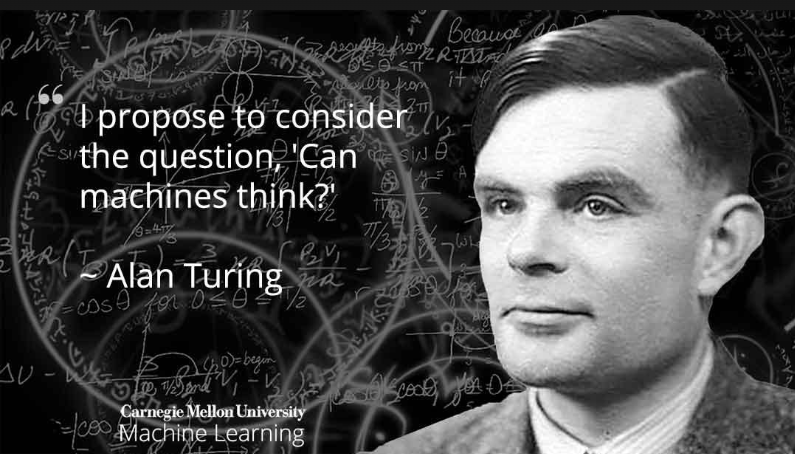
THE MYSTERIOUS DEATH OF CODE-CRACKER ALAN TURING

On June 7, 1954, early-computing genius Alan Turing died alone in his small home at 43 Adlington Road in Wilmslow, Cheshire, England. His housekeeper found Turing in bed, unresponsive, with a half-eaten apple beside him and a strong scent of bitter almonds lingering in the room. Alan Turing, just 41 years old, was pronounced dead of cyanide poisoning. The official inquest ruled it as suicidethe coroner suggesting he’d deliberately laced the apple with poison and that Turing intentionally took his own life.

Something just doesn’t sit right with that conclusion. Why would a brilliant man, full of curiosity and creative energy, end his life so abruptly—and in such a theatrical Snow White manner? Why no suicide note? Why no indication of despair in his final days? Why was there cyanide discovered in the house—but not definitively found in the apple?

For the answers offered at the time, more questions remain. And that’s why the death of Alan Turing—the father of modern computing and code-cracker of Nazi Germany’s Enigma encryption machine—remains one of the most puzzling mysteries in modern times.

Turing wasn’t just a mathematician or wartime cryptanalyst. He was a singular mind—restless, brilliant, awkward, and visionary. Born on June 23, 1912, in Maida Vale, London, Alan Mathison Turing came into the world with a quiet spark that would one day ignite revolutions in logic, computation, and the birth of today’s artificial intelligence phenomena.

His parents were of respectable English stock—his father, Julius Turing, worked in the Indian Civil Service, while his mother, Ethel Sara, came from a family of railway engineers. But young Alan’s upbringing was far from stable. His parents traveled frequently between India and England, and Alan was largely raised by foster caregivers in Sussex.

Even as a boy, Alan was different. He had a peculiar way of thinking—literal, intense, and obsessively focused on ideas. He was fascinated by numbers, time, systems, and patterns. At the age of 13, he attended Sherborne School, a prestigious public institute in Dorset, where his brilliance clashed with the classical curriculum. He didn’t shine in Latin or essays—but in math and science, he was already orbiting in another stratosphere.

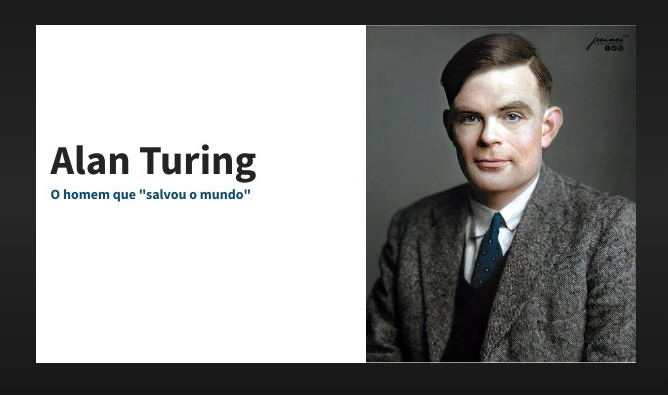
“O homem que salvou o mundo” – “The man who saved the world”

Alan Turing’s genius truly began to crystallize during his university years. After enrolling at King’s College, Cambridge, in 1931, he studied mathematics and quickly gained recognition for his astonishing intellect. By 22, he was elected a fellow of the college for his groundbreaking work on the central limit theorem—a prestigious honor for someone so young. But it wasn’t just his grades or papers. It was the way he thought. Turing didn’t just solve problems—he reconstructed the very framework of how problems could be solved.

He was also a gifted athlete. Turing ran long distances with the stamina of a marathoner—often timing his training against the local bus routes and sometimes nearly qualifying for the British Olympic team. That combination of mental precision and physical resilience defined much of his life. He wasn’t just smart—he was tough, solitary, and determined.

In 1936, at just 24 years old, Alan Turing published a paper titled “On Computable Numbers, with an Application to the Entscheidungsproblem.” It would go on to become one of the most important documents in the history of science. In it, he proposed a theoretical machine—now known as the Turing Machine—that could simulate any conceivable mathematical computation.

This wasn’t just abstract theory. Turing was laying the foundation for the modern computer—long before silicon chips or Apple keyboards ever existed. He was dreaming of a mechanical mind. Artificial general intelligence. AGI.

By the outbreak of World War II, Turing’s genius was already on the radar of British intelligence. During the war, Turing was stationed at the now-famous Bletchley Park, the heart of Britain’s codebreaking operations. He worked in “Hut 8,” the unit tasked with cracking German naval codes encrypted by the Enigma machine.

These codes were considered unbreakable. The Enigma’s rotating wheels created a staggering number of possible settings—trillions, in fact. But Turing, using mathematics, logic, and sheer grit, helped devise an electromechanical device called the Bombe, which dramatically sped up the process of decoding German messages.

Turing’s role at Bletchley Park was both secret and essential. Without his breakthroughs, the Battle of the Atlantic might have been lost. Convoys sunk. Supplies cut off. The war turned. Some historians credit Turing’s work with shortening the conflict by two years—and saving millions of lives. He also worked on speech encryption tools like Delilah and helped develop tools now considered the ancestors of artificial intelligence, AI. But at the time, his name was buried under layers of national secrecy.

After the war, Turing continued his pioneering work in computing and artificial intelligence. He worked at the University of Manchester and helped design the Automatic Computing Engine (ACE), one of the world’s first stored-program computers. It was long before names like Jobs, Wozniak, Gates, Allen, Musk, and Altman were known.

Here he explored whether machines could think—proposing a framework now known as the “Turing Test,” a thought experiment that still anchors debates in AI ethics and philosophy. He also dove into the strange world of morphogenesis—the mathematical patterns behind the shapes of plants, animals, and natural forms. Once again, Alan Turing was far ahead of his time.

But while his professional life soared, his personal life unraveled.

Alan Turing was a gay man in a society where homosexuality was not just taboo—it was illegal. In 1952, he met a young man named Arnold Murray. After a minor incident at Turing’s home, police uncovered his relationship with Murray and arrested him under the gross indecency laws—the same archaic statutes used decades earlier to destroy Oscar Wilde. Turing didn’t deny it. He told the truth.

He was convicted. The court offered him two options: imprisonment or a course of hormone therapy—chemical castration. Turing chose the latter. He was injected with estrogen for a year, which caused weight gain, breast development, and emotional distress.

It also stripped him of his security clearance and curtailed his ability to work in the field he helped create. The British government had turned on its war hero. Humiliated, ostracized, and punished, Turing withdrew from public life. Two years later, he was dead.

On the morning of June 8, 1954, Turing’s housekeeper arrived at his modest home and found his body. He was lying in bed, dead from suspected cyanide poisoning. A half-eaten apple lay beside him, supposedly laced with the deadly compound. The apple itself was never tested, oddly. But traces of cyanide were found in his stomach and in a solution in a nearby room where Turing had been experimenting with electroplating.

The coroner ruled it a suicide. Case closed. Or was it?

There are several things about Turing’s death that just don’t line up. For starters, he left no suicide note. He’d just begun planning a vacation. His recent letters were upbeat. He’d resumed work. And those who knew him best said suicide was not in his nature.

Alan Turing was curious. Creative. Resilient. Even his mother—who knew her son better than anyone—believed his death was an accident, caused by his careless handling of cyanide in the lab. Turing had a known habit of tasting chemicals during experiments, a reckless quirk that may have cost him his life.

And what about the apple? Some suggest it was a theatrical nod to Snow White—one of Turing’s favorite fairy tales. But that’s pure conjecture. Others pointed out the apple wasn’t tested, and the presence of cyanide elsewhere in the house makes accidental inhalation or ingestion entirely plausible.

Then there’s the darker theory. Assassination. Could Alan Turing have been silenced?

It’s not as far-fetched as it sounds. Turing knew state secrets. He was a homosexual during a time of Cold War paranoia, when homosexuality was seen as a security risk. The same government that once praised him now saw him as vulnerable to blackmail or foreign coercion. Could the British intelligence services have quietly decided that Alan Turing had become a liability?

There’s no hard proof. But there is precedent to many state-sanctioned murders. Leon Trotsky, Dag Hammarskjold, Alexander Litvinenko, and Jamal Khashoggi come to mind.

Intelligence agencies don’t always act with transparency or mercy—especially in the Cold War era. Was Turing eliminated? Was his death staged to look like suicide? Or did the emotional toll of his conviction and isolation finally push him too far?

We may never know.

What we do know is that Alan Turing was a man of extraordinary mind and rare moral courage. He imagined the future, even as the world failed to accept the truth of who he was. He gave everything—his intellect, his creativity, and his loyalty—to a nation that ultimately betrayed him.

In 2009, the British government formally apologized for persecuting this fine man. In 2013, Queen Elizabeth II granted him a posthumous royal pardon. In 2021, his face appeared on the Bank of England’s £50 note—a quiet symbol of belated recognition.

But even today, the mystery remains unresolved. The truth is, we don’t really know what happened on that June day in 1954. We only know what we’ve been told.

Why does it still matter?

Because justice matters. Because the lives of geniuses, misfits, and visionaries must be remembered truthfully—not just in sanitized biographies or polite memorials. Because our world is now shaped by the very machines Turing imagined—and we owe him a fair account of how his story ended.

And because somewhere, behind the locked doors of history, lies the truth about the mysterious death of code-cracker Alan Turing.

Powered by a Centaur System ©

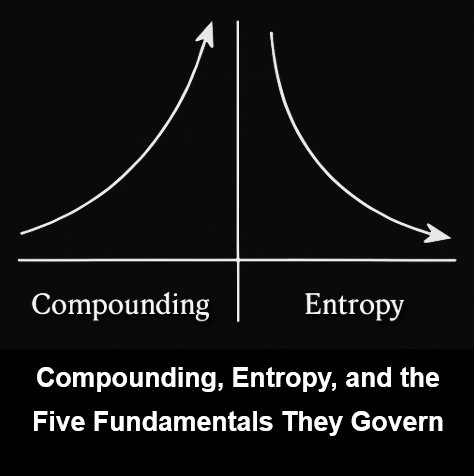
COMPOUNDING, ENTROPY, AND THE FIVE FUNDAMENTALS THEY GOVERN

There are two invisible principles quietly overseeing the universe. They’re not political. They’re not mystical. And they don’t care about your beliefs, your ambitions, or your social status. These realities are compounding and entropy. One builds. The other breaks.

Together, compounding and entropy form the dual engine and brake system for all of creation—from stars to cells, and from civilizations to your own body, thoughts, and projects. They govern five fundamentals of the universe—energy, matter, information, consciousness, and time.

If you understand the principles of compounding and entropy—and more importantly, if you learn how to work with them—you can harness the most powerful truths of nature. If you ignore them, they’ll work on you anyway. The only difference? You won’t know why things are slowly getting better or worse.

Before we explore how compounding and entropy rule the five pillars of existence—energy, matter, information, consciousness, and time—we need to understand what these dual and dominant drivers truly are.

What Is Compounding?

Compounding is the process by which a small effect, action, or input—when repeated over time—builds into an increasingly larger impact. It’s the engine of exponential growth born from repetition, consistency, and feedback.

Most people encounter compounding first in the financial world—compound interest. But its scope is far greater. Compounding affects learning, skill development, health, systems, habits, and even natural selection.

In mathematical terms, it’s described like this:

FV = PV × (1 + r/n)^(nt)
Where:

  • FV = future value
  • PV = initial value
  • r = rate of growth
  • n = compounding intervals per year
  • t = time in years

Time is the essential multiplier. Without it, compounding cannot operate.

Compounding is the most powerful force in the universe.” ~Albert Einstein

But it’s not just about money. Compounding applies to many things we do. Here are some simple examples:

  • Read a book daily—your knowledge compounds.
  • Practice gratitude—your emotional clarity compounds.
  • Invest in relationships—your connection compounds.
  • Do the work—your skills compound.

And just like investments, the sooner you start, the more powerful the outcome. Time doesn’t just allow compounding—it supercharges it.

What Is Entropy?

Entropy is the principle that all systems naturally progress from order to disorder. In physics, it’s formalized as the Second Law of Thermodynamics—in any energy exchange, some usable energy is always lost, increasing the system’s entropy.

Entropy is the measure of randomness, uncertainty, or decay in any system. You don’t need to study physics to understand entropy. Just think that:

  • Metal rusts
  • Food spoils
  • Memories fade
  • Structures collapse

Entropy doesn’t need your permission. It happens simply by the passage of time. That’s what makes entropy so dangerous—it operates silently unless resisted.

Mathematically:
ΔS = ΔQ / T
Where:

  • ΔS = change in entropy
  • ΔQ = heat energy added
  • T = temperature

In the end, entropy always wins. (But you get to decide how much value you create before it does.)” ~Stephen King

While compounding is the creative force of the cosmos, entropy is the tax. Everything that grows must be maintained—or it’ll decline. Everything built will eventually decay—unless preserved and renewed.

The Five Fundamentals of Existence

At the root of reality are five interdependent fundamentals. Energy. Matter. Information. Consciousness. Time.

Every system—biological, mechanical, societal, or personal—is made from these ingredients. And every one of them is shaped by compounding and entropy. Let’s examine each.

Energy

Energy is the currency of the cosmos. Everything that moves, grows, reacts, or changes involves energy. And everything energetic is governed by compounding and entropy,

Compounding and energy: When energy is stored, reused, and cycled efficiently, it compounds. Batteries. Ecosystems. Engines. Fusion reactors. Feedback loops in technology and biology amplify small inputs into large-scale output over time.

Entropy and energy: But every energy transfer loses some energy to heat, friction, or inefficiency. Entropy ensures that no machine is perfect, no process is lossless. Even the sun is slowly burning out.

Time guarantees that energy becomes more diffuse, less useful—unless structured intentionally.

You can’t win, you can’t break even, and you can’t get out of the game.” ~C.P. Snow

Matter

Matter is energy in form—atoms, molecules, tissues, trees, buildings, planets.

Compounding and matter: Matter compounds through layering and construction—atoms form molecules, molecules form cells, cells form organs, and so on. Sediments become cliffs. DNA mutations evolve into species. Structures form through persistence over time.

Entropy and matter: But matter wears down. Rocks weather. Steel corrodes. Concrete crumbles. Bones age. The longer time passes, the more matter must fight to maintain form.

The compounding of structure is a fight against the entropy of disintegration.

Dust thou art, and unto dust shalt thou return.” ~Genesis 3:19

Information

Information is the arrangement of energy and matter into meaningful patterns—genetic code, books, software, knowledge, memory.

Compounding and information: The written word. The scientific method. Oral traditions. Cloud storage. When preserved and transmitted effectively, information compounds across generations. Civilization advances as it builds on itself.

Entropy and information: But data corrupts. Paper disintegrates. Memories fade. Knowledge gets distorted. Noise creeps in.

Without effort, the information age becomes an age of confusion.

Civilization advances by extending the number of important operations we can perform without thinking about them.” ~Alfred North Whitehead

Consciousness

Consciousness is the most personal of all fundamentals—the internal awareness that makes life felt.

Compounding and consciousness: Thoughts become beliefs. Habits become character. Self-awareness becomes wisdom. Every time you reflect, learn, or train your attention, your mind compounds its clarity. Meditation. Reading. Honest conversation. These are compounding tools.

Entropy and consciousness: But left unattended, the mind deteriorates. Distractibility. Digital addiction. Delusion. Cognitive entropy is real—from dementia to depression to propaganda. When your mind is not strengthened, it decays.

This is where compounding becomes existential.

The unexamined life is not worth living.” ~Socrates

Time

Time isn’t just a background condition. It’s the fifth fundamental, and perhaps the most profound. Time is the substrate through which compounding and entropy play out.

Without time, there’s no compounding. Without time, entropy has no direction. Time is the governing dimension in which all change—growth or decay—unfolds.

Time doesn’t care how you use it. But how you use time determines everything. Time is what gives compounding its force and entropy its inevitability. Time is both the fire that consumes and the fuel that ignites.

The Unified Pattern of Reality

When you view the universe through these five fundamentals, a simple pattern emerges:

Systems that work:
→ Channel energy efficiently
→ Build matter into resilient forms
→ Preserve and transmit information
→ Expand consciousness
→ Use time intentionally

Systems that fail:
→ Leak energy
→ Decay in form
→ Lose coherence
→ Fall into confusion
→ Waste time

The choice is constant. In your health. Your thoughts. Your relationships. Your business. Your legacy.

You’re either compounding or decaying. There’s no standing still.

What Will You Leave Behind?

Let’s bring it all home. These aren’t just abstract laws of physics or systems theory.
They’re the very forces shaping your life—right now.

  • Compounding is your engine.
  • Entropy is your cost.
  • Time is your field of play.

Every decision, every action, every neglected task, every focused effort—it all moves you in one direction or the other. There is no neutral.

You don’t have to collapse your life. Just neglect it.
You don’t have to destroy your mind. Just let it coast.
You don’t have to fail. Just fail to act.

Or…

You can build.
You can focus.
You can rise.

In the end, everything you create is shaped by these five fundamentals and these two principles. And what you choose to do with them—day after day—becomes your legacy.

So, ask yourself, “What will you build before time and entropy reclaim it?”

Powered by a Centaur System ©